Every month, Indian HR teams juggle PF, ESI, Professional Tax, TDS, and LWF filings across multiple states. One missed deadline means interest, penalties, and a compliance notice sitting on the CEO's desk. The right payroll software makes this pain disappear by automating calculations, filings, and reporting in a single system.
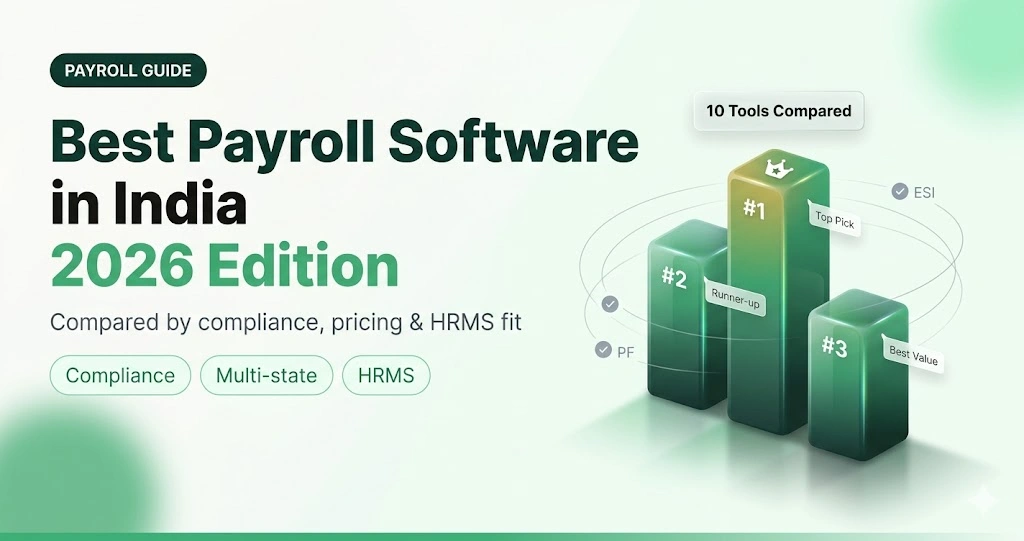
This guide covers the 10 best payroll software in India for 2026, ranked by compliance depth, HRMS integration, and fit for Indian SMBs and mid-market businesses. Each entry breaks down key features, pricing, and the types of business and industry it best suits.
Key Takeaways
- Explore the 10 best payroll software options in India for 2026 based on compliance depth, HRMS integration, and SMB/enterprise fit.
- Understand how payroll software automates PF, ESI, PT, TDS, LWF, salary calculations, and generation of Form 16/Form 24Q.
- Indian payroll compliance complexity (central + state-wise rules) is the key factor in choosing the right software.
- Multi-state compliance support is critical for businesses with distributed workforces across India.
- Unified HRMS platforms are preferred over standalone payroll tools for seamless HR, attendance, and payroll integration.
- Payroll automation reduces errors, penalties, and manual workload through audit-ready reporting.
What is Payroll Software?
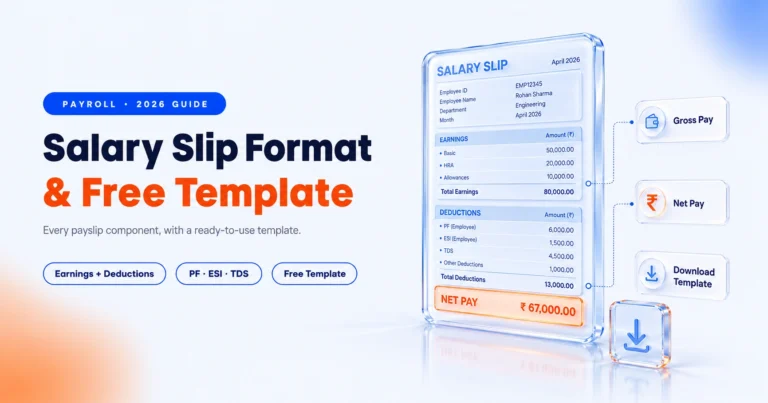
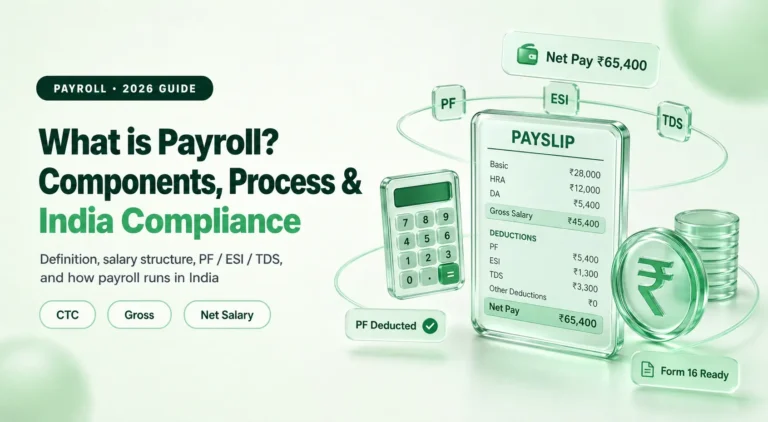
Payroll software is a system that automates the process of calculating employee salaries, managing deductions, and handling statutory compliance. It ensures that wages are processed accurately and on time while reducing manual work for HR and finance teams.
Even with software, it helps to know the workflow first. See our step-by-step guide on how to run payroll in India.
In India, payroll software also manages complex compliance requirements such as PF, ESI, Professional Tax, TDS, and LWF. It automatically applies the correct rules based on employee salary structures and state-specific regulations.
The 10 Best Payroll Software in India for 2026
This list was built on three criteria: depth of Indian statutory compliance, strength of HRMS integration, and fit for Indian SMBs and mid-market businesses.
1. factoHR India
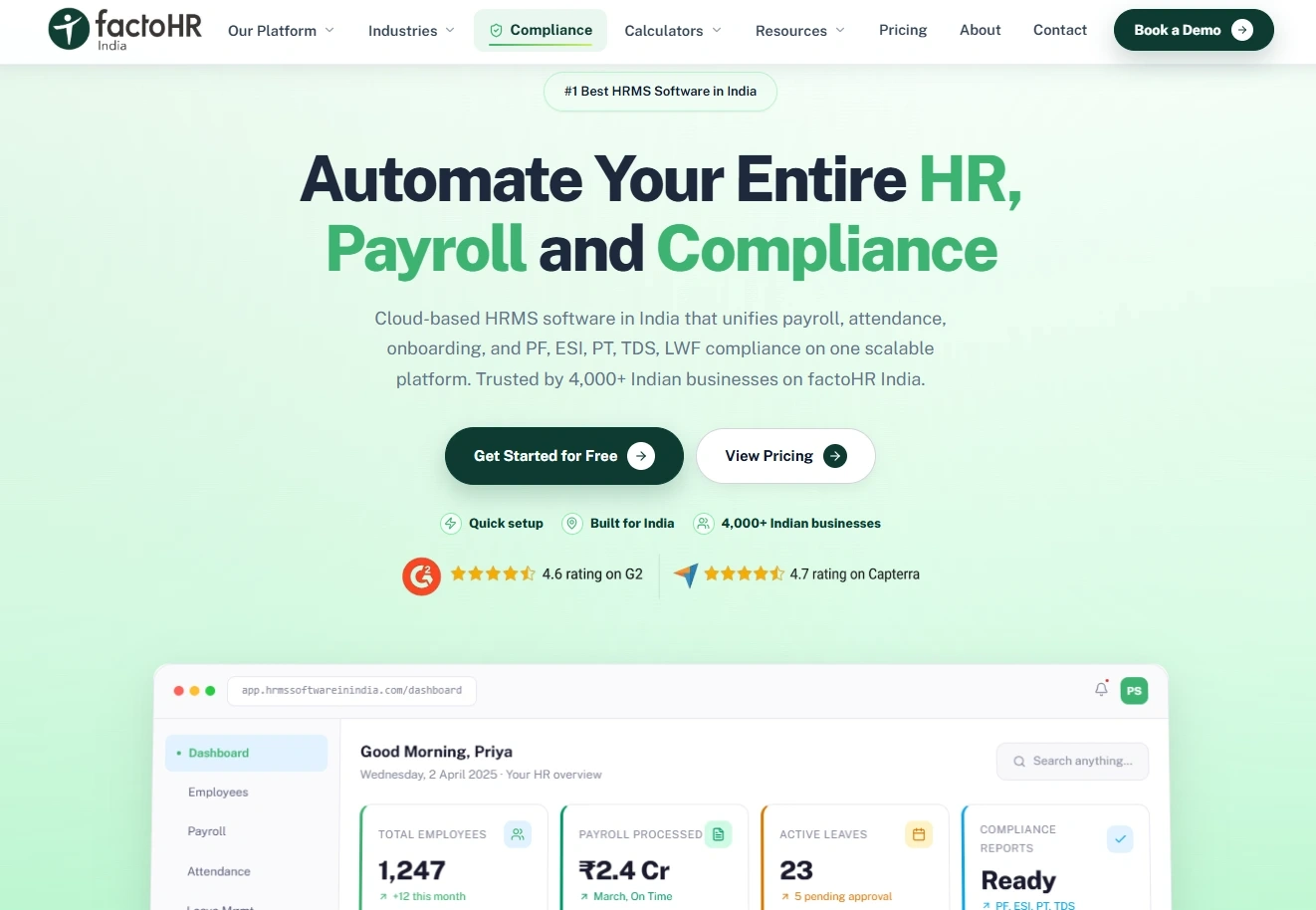
factoHR India is an HRMS and payroll platform built for Indian SMBs and mid-market businesses. It unifies payroll, attendance, leave, recruitment, performance, and statutory compliance in one system. Multi-state Professional Tax, LWF, PF, ESI, and TDS are all handled, with rules updated as state governments revise slabs. Backed by factoHR.
Key Features
- Automated PT, LWF, PF, ESI & TDS across states
- All-in-one HRMS: attendance, leave, hiring & performance
- Employee portal with payslips, Form 16 & IT declarations
- Biometric & geo-fenced attendance synced to payroll
- Auto-generated Form 16 & 24Q
- Dedicated compliance & account support
- Audit-ready PF, ESI, PT & TDS registers
Pros:
- Unified HRMS and payroll
- Deep multi-state compliance
- Dedicated account manager
- Audit-ready statutory registers
- Scales across business sizes
Cons:
- Custom pricing only
- Setup needs onboarding time
- Not for micro-teams
Pricing: Custom pricing based on employee count and modules. Book a free demo to get a quote.
Best suited for: Indian SMBs and mid-market businesses seeking a unified HRMS with built-in statutory compliance.
2. Saral PayPack
Saral PayPack is an established Indian payroll software with both on-premise and cloud deployments. It is widely used by Indian SMEs that want a familiar payroll engine with strong PF, ESI, PT, and TDS handling, plus standard statutory reports.
Key Features
- PF, ESI, PT & TDS calculation
- Form 16, Form 24Q, and Form 12BA generation
- On-premise and cloud deployment options
- Statutory registers and reports
- Bank advice file generation
Pros:
- Established Indian payroll vendor
- Strong statutory report library
- On-premise option for IT-controlled environments
- Familiar to legacy payroll teams
- Cost-effective for small teams
Cons:
- Older user interface
- Limited HRMS modules outside payroll
- Mobile experience trails newer platforms
- Implementation may need consultant support
Pricing: Quote-based, varies by deployment model and user count.
Best suited for: Indian SMEs with traditional payroll teams that want a payroll-focused engine.
Free hands-on payroll walkthrough.
We'll run your salary structure & states — live, 20 mins.
3. Keka
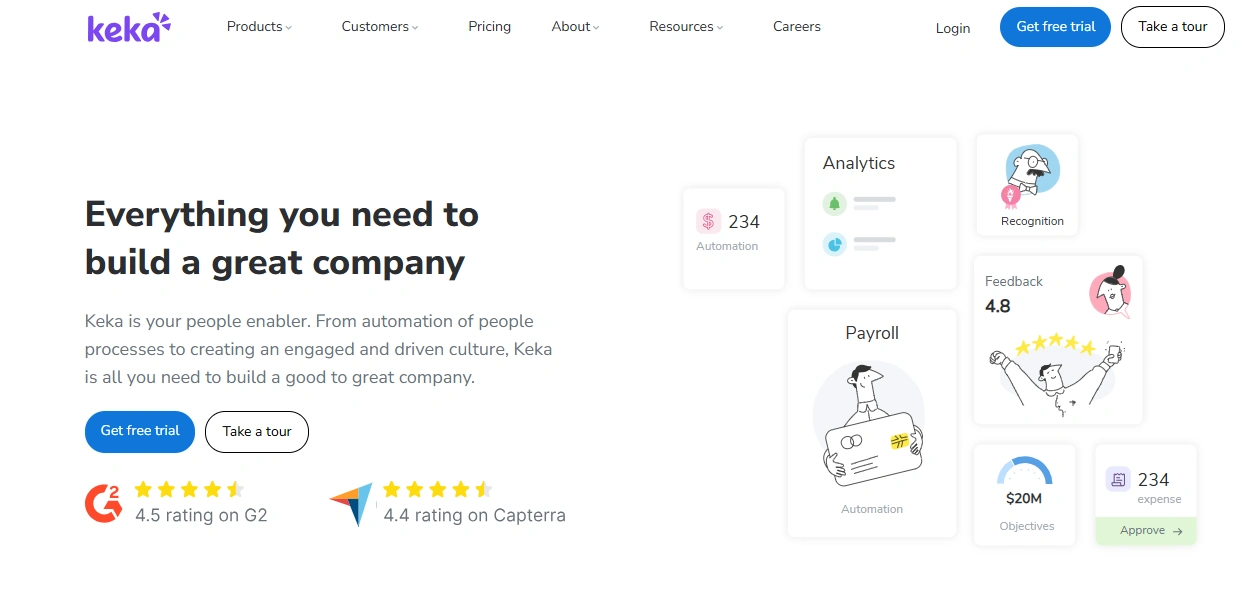
Keka is a modern HRMS and payroll platform popular with Indian mid-market companies. It offers a clean interface, strong automation, and covers the full employee lifecycle from hiring to exit. Payroll is one module inside a broader HR suite.
Key Features
- Multi-state PF, ESI, PT & TDS automation
- Flexible salary structures & benefits
- Built-in performance & hiring tools
- Mobile self-service app
- Integrates with Tally & QuickBooks
Pros:
- Clean modern interface
- Strong performance management
- Full HR lifecycle coverage
- Good mobile app
- Active product updates
Cons:
- High minimum spend
- Support via tickets only
- Steep SME pricing
- Limited outsourcing options
Pricing: Custom pricing based on company size.
Best suited for: Companies that want a modern UI and are ready to commit to a higher minimum spend.
4. Zoho Payroll
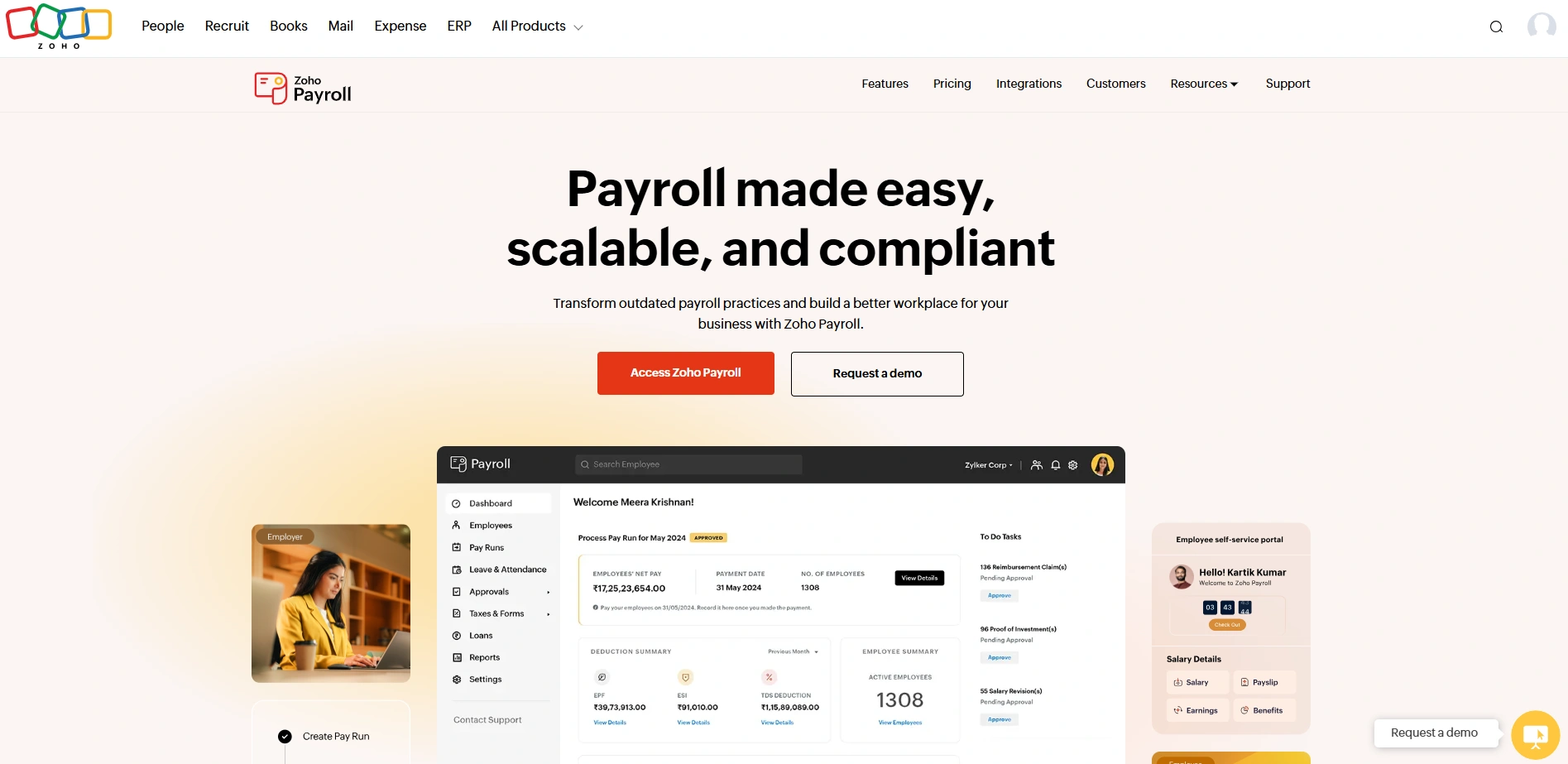
Zoho Payroll is part of the wider Zoho ecosystem. It works best if your business already uses Zoho Books, Zoho People, or Zoho Expense. The pricing is predictable per user, and the platform covers Indian statutory compliance for core payroll needs.
Key Features
- Automated PF, ESI, PT, and TDS calculations
- Deep integration with Zoho Books and Zoho People
- Employee Self-Service portal
- Multi-state Professional Tax support
- Form 16 and Form 24Q generation
Pros:
- Predictable per-user pricing
- Deep Zoho ecosystem fit
- Clean modern interface
- Strong core payroll
- Quick setup process
Cons:
- Needs Zoho People separately
- Fragmented across Zoho apps
- No managed payroll services
- Limited outside Zoho users
Pricing: Custom pricing based on company size.
Best suited for: Companies already in the Zoho ecosystem looking for a predictable per-user cost.
5. greytHR
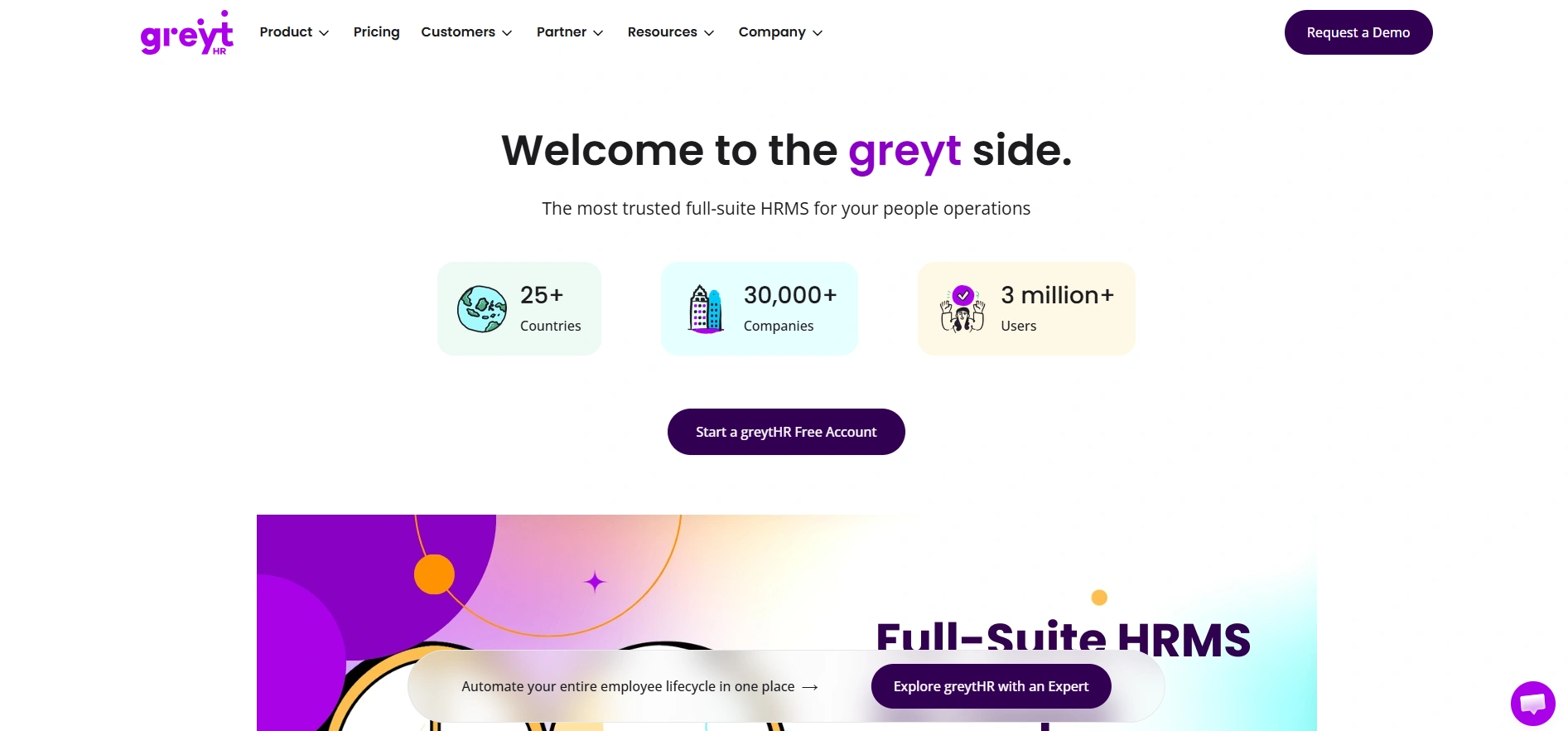
greytHR is one of the oldest payroll platforms in India, with strong adoption among SMBs and early-stage companies. It is priced affordably and focuses on foundational payroll and compliance rather than advanced HRMS features.
Key Features
- Automated PF, ESI, PT, TDS with state-wise support
- Strong statutory document library and reports
- Employee Self-Service portal and mobile app
- Leave and attendance management
- Form 16 generation
Pros:
- Affordable entry pricing
- Solid core payroll
- Strong document library
- Reliable for SMBs
- Easy employee onboarding
Cons:
- No native recruitment module
- Generic customer support
- Manual state filings sometimes
- Limited advanced analytics
Pricing: Starts at ₹3,495/month for up to 50 employees on the Starter plan.
Best suited for: Small retail, NGOs, startups, and small manufacturing industries that are cost-conscious.
6. Darwinbox
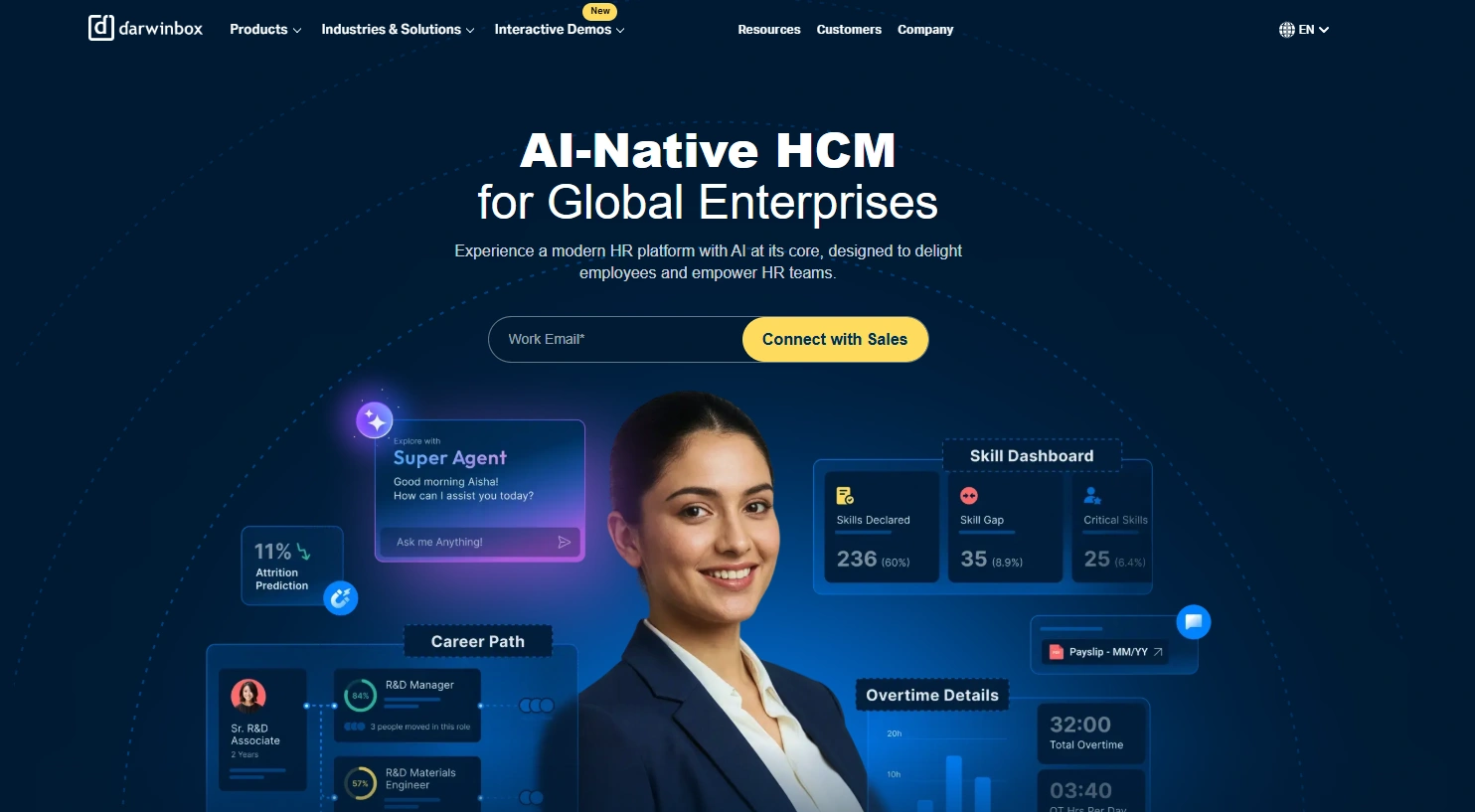
Darwinbox is an enterprise HCM platform used by large Indian and Asian corporations. It offers a unified payroll, HR, and workforce management system with a polished employee experience and strong analytics.
Key Features
- Automated compliance with audit trails
- All-in-one HR, payroll, attendance & performance
- 200+ APIs for ERP & finance integrations
- Mobile-first employee experience
- Power BI dashboards & analytics
Pros:
- Enterprise-grade scalability
- 200+ integration APIs
- Advanced analytics dashboards
- Mobile-first employee experience
- Multi-country payroll support
Cons:
- Expensive for SMBs
- Long implementation cycles
- Complex configuration
- Overkill for small teams
Pricing: Custom pricing based on company size.
Best suited for: Enterprises with complex approval workflows and multi-country payroll needs.
7. ADP
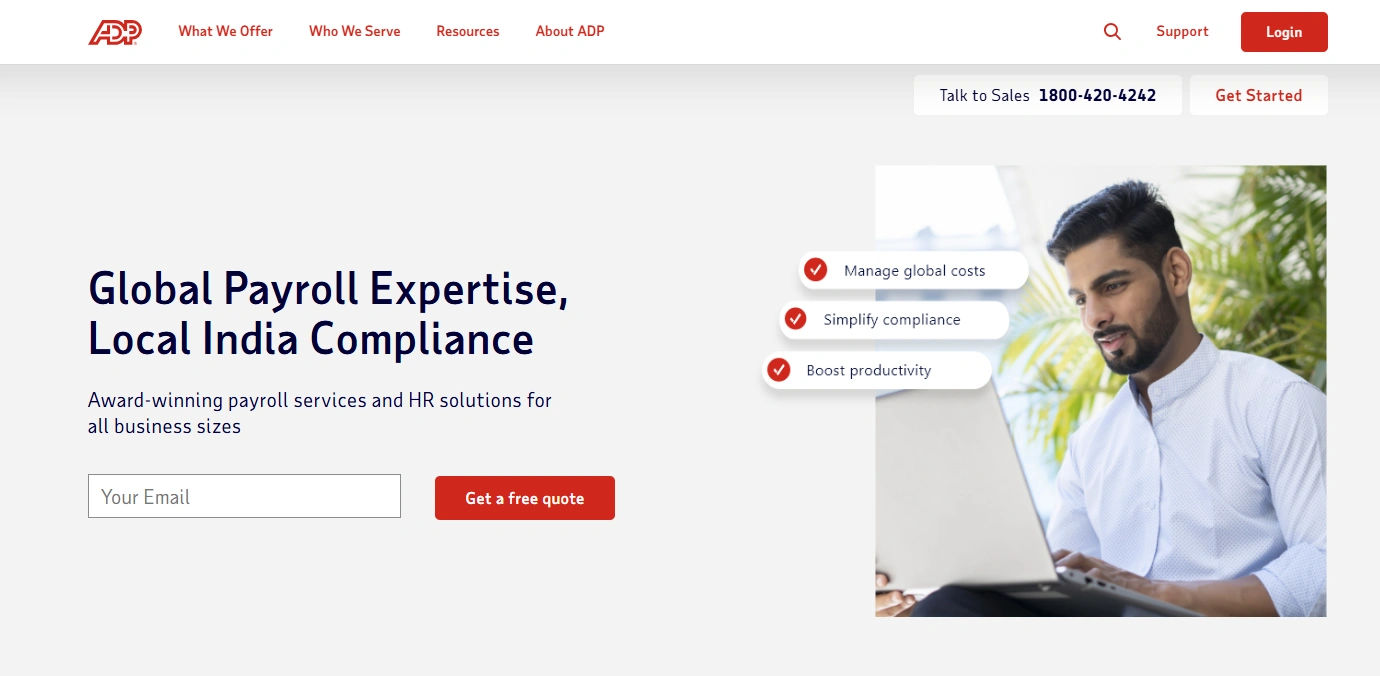
ADP is a global payroll provider with 25+ years in the Indian market. It offers strong payroll outsourcing and software for growing businesses, backed by a large support team and a focus on scalable, globally ready payroll.
Key Features
- Automated PF, ESI, PT & TDS compliance
- Managed & outsourced payroll options
- Advanced payroll analytics & reports
- Multi-country payroll support
- Dedicated onboarding & support
Pros:
- Trusted global brand
- Strong managed services
- Multi-country payroll ready
- Dedicated onboarding support
- Advanced reporting tools
Cons:
- Higher pricing tiers
- UI feels dated
- Slow feature releases
- Limited SMB fit
Pricing: Custom pricing based on headcount and services.
Best suited for: Businesses that want a mix of software and outsourced processing with a trusted global brand.
8. RazorpayX Payroll
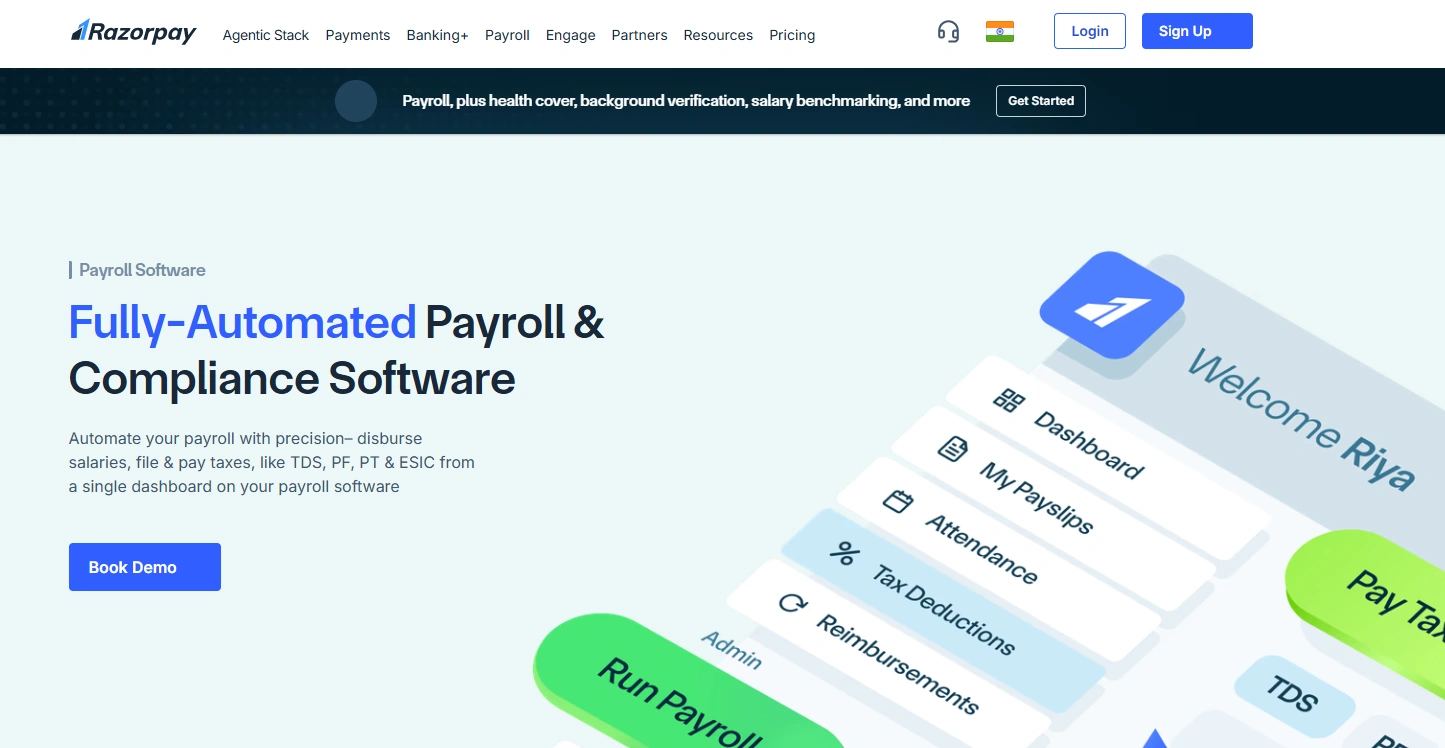
RazorpayX Payroll is built for Indian startups. It automates salary disbursement, tax filings, and compliance with a clean, founder-friendly interface. It is not a full HRMS, but it handles payroll and basic HR well for smaller teams.
Key Features
- Automated PF, ESI, PT, TDS & Form 16
- One-click payouts via RazorpayX neo-banking
- Auto-filing for TDS, PF & ESI
- Basic HRMS: leave & attendance
- 25+ integrations (HRMS, insurance, benefits)
Pros:
- Fast founder-friendly setup
- One-click salary payouts
- Auto-filed tax returns
- Clean minimal interface
- Strong startup fit
Cons:
- Not a full HRMS
- Limited for larger teams
- No performance module
- Weak for enterprise
Pricing: Custom pricing based on headcount and services.
Best suited for: Startups and small service businesses that want fast setup and minimal configuration.
9. HROne
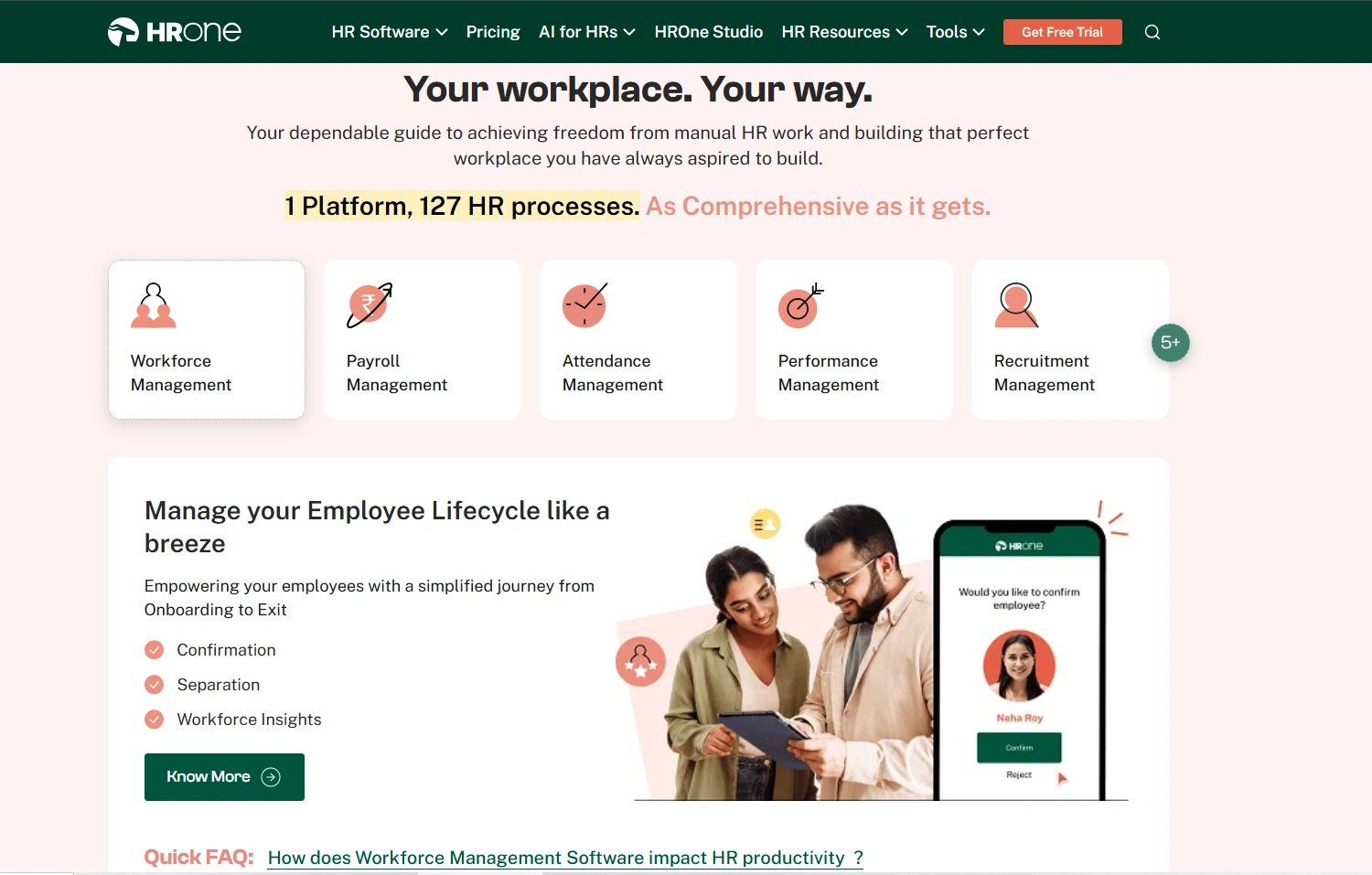
HROne is a cloud HR and payroll platform targeting Indian SMBs and mid-market companies. It is known for its automation-first approach, inbox-style task management, and strong integrations.
Key Features
- Automated PF, ESI, PT & TDS
- Smart payroll checks with error detection
- 10+ HR modules (hiring, performance, engagement, expenses)
- Mobile app with 127+ custom workflows
- Integrates with SAP, Tally & ERP systems
Pros:
- Inbox-style task management
- Strong workflow automation
- 10+ integrated modules
- Good error detection
- Wide ERP integrations
Cons:
- High implementation cost
- Steeper learning curve
- No managed services
- Dense feature set
Pricing: Basic plan starts at ₹4,950/month for up to 50 users, with ₹99/month per additional user.
Best suited for: Large companies and MNCs that want heavy automation and don't mind a longer learning curve.
10. SumHR
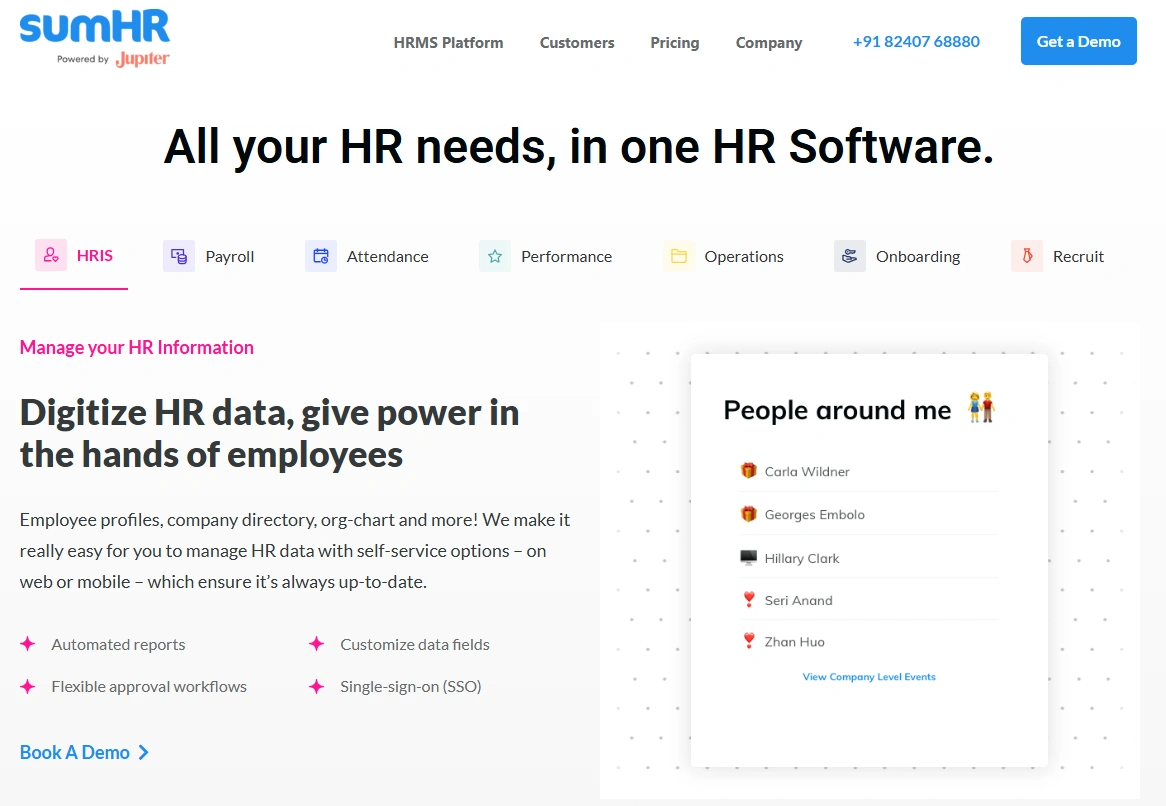
SumHR is a lightweight HRMS and payroll platform designed for startups and small businesses that want simplicity and quick setup. It focuses on essential HR features without overwhelming users with enterprise-level complexity.
Key Features
- Payroll and statutory compliance automation
- Leave and attendance tracking system
- Employee self-service portal
- Simple UI for quick adoption
- Basic HR workflow automation
Pros:
- Very quick setup
- Low per-user pricing
- Trial payroll run option
- Minimal learning curve
- Unlimited salary components
Cons:
- Slow for large teams
- Clunky interface reports
- Limited custom reporting
- Weak for enterprise
Pricing: Basic plan starts from ₹49 per user/month, billed annually.
Best suited for: Startups and very small businesses in industries like IT and retail.
Quick Comparison Table
The table below compares all 10 tools on the dimensions Indian buyers ask about most: payroll depth, HRMS coverage, compliance, mobile support, and best-fit segment.
| Software | Payroll | HRMS Coverage | Compliance | Best For |
|---|---|---|---|---|
| factoHR India | Advanced | Full-suite | Multi-state + structured reports | SMBs & mid-market |
| Saral PayPack | Strong | Payroll-focused | Standard registers | SMEs with payroll teams |
| Keka | Strong | Full-suite | Multi-state | Mid-market companies |
| Zoho Payroll | Core payroll | Partial | Strong | Zoho users |
| greytHR | Core payroll | Basic HRMS | Strong | Small businesses |
| Darwinbox | Enterprise-grade | Full-suite | Advanced + audit trails | Enterprises |
| ADP | Advanced | Payroll-focused | Strong | Global businesses |
| RazorpayX Payroll | Startup-friendly | Basic HRMS | Automated filings | Startups |
| HROne | Advanced | Full-suite | Automated | Large SMBs & MNCs |
| SumHR | Basic | Basic HRMS | Standard | Startups & very small businesses |
How Do You Choose the Right Payroll Software?
Choose payroll software by matching your business size, state footprint, and compliance load to the tool's coverage. Follow these five steps to narrow from 10 to 1.
1. Match the tool to your business size and growth stage
A 10-person startup and a 500-person mid-market company have different needs. Early-stage tools suit startups, while other platforms fit growing SMBs, cover mid-market, or support enterprise scale.
2. Map compliance coverage to every state you operate in
If you have employees across multiple states, the tool must handle each state's PT slab and LWF schedule correctly. Ask the vendor for a demo that runs payroll across all your states.
3. Pick a unified HRMS over a standalone payroll engine
Standalone payroll tools force you to buy leave, attendance, and recruitment separately. A unified HRMS keeps everything connected, with attendance syncing directly into payroll without the need for exports or imports.
4. Evaluate total cost of ownership, not just per-user price
Some tools advertise a low per-user price but charge extra for implementation, integrations, advanced reports, or compliance filings.
5. Book demos with your top 2 or 3 before committing
Shortlist two or three tools and book a live demo with each. Run your actual payroll scenario — your salary structures, your states, your LOP rules.
Why Does Compliance Decide the Winner?
In India, payroll software is not judged by features alone — it is decided by how well it handles compliance every month without errors.
- Indian payroll is complex: PF, ESI, TDS, Professional Tax, and LWF all follow different rules.
- These rules change by state and are updated frequently, making manual tracking risky.
- A small mistake in filings can lead to penalties, interest, and legal notices for the business.
- Compliance failures directly impact both cash flow and employee trust.
- The best payroll software ensures zero-error salary processing, automatic filings, and updated statutory rules.
That is why in India, compliance accuracy matters more than UI, pricing, or extra features when choosing payroll software.
Final Word
Choosing the best payroll software in India comes down to one question: Does the tool handle every compliance rule that applies to your workforce automatically, every month? Price matters, but a cheaper tool that misses a PT filing or produces incorrect Form 16s costs you far more in penalties and employee disputes.
Shortlist two or three tools from this list based on your business size and state footprint. The right choice will save your HR team dozens of hours every month and keep your compliance clean.
Frequently Asked Questions
Which is the best payroll software for small businesses in India?
The best payroll software for small businesses in India depends on the growth stage. Small teams need simple payroll tools, while growing businesses benefit from structured systems. HRMS Software in India offers a comprehensive HRMS platform with payroll, compliance, and employee management.
Which is the best HRMS software in India with payroll built in?
HRMS Software in India is the top HRMS software in India with native payroll for SMBs and mid-market businesses. It combines payroll, attendance, leave, recruitment, and performance in one unified platform, with multi-state PT, LWF, ESI, PF, and TDS compliance handled automatically.
How does payroll software handle Indian statutory compliance?
Payroll software automates every Indian statutory deduction at the moment of payroll processing. It calculates PF on the eligible basic salary, ESI on gross below the threshold, Professional Tax by state slab, and TDS by tax regime.
Can payroll software manage multi-state PT and LWF?
Yes. The best payroll software in India includes a multi-state tax engine that applies the correct Professional Tax slab and LWF calendar based on each employee's work state. A multi-state engine removes the need for manual tracking across state lines.
Does payroll software generate Form 16 and Form 24Q automatically?
Yes. Leading Indian payroll platforms generate Form 16 for every employee and Form 24Q for quarterly TDS filings automatically. Form 16 is password-protected and can be emailed to employees in bulk. Form 24Q is exported in the exact format required for submission to the Income Tax department.
Is cloud-based payroll software safe for Indian companies?
Yes. Leading cloud payroll platforms use bank-grade encryption, role-based access, and secure Indian or global cloud hosting. Cloud platforms are generally safer than Excel files on laptops, which remain the biggest source of payroll data leaks in Indian SMBs.