Attendance management in India has moved far beyond registers and basic punch-in systems. With hybrid work, field teams, and multiple office locations, businesses now need real-time visibility into who is working, where, and for how long. Modern attendance systems combine GPS tracking, geo-fencing, biometric integration, and payroll sync to eliminate errors and improve accountability.
This guide covers the 12 best attendance management systems in India for 2026, including features, pros, cons, pricing, and the type of businesses they are best suited for.
Key Takeaways
- Explore the 12 best attendance management systems in India for 2026 based on biometric depth, GPS/geo-fencing capabilities, and HRMS integration fit.
- Understand how modern attendance software automates punch capture, shift rules, overtime calculations, and real-time attendance tracking.
- Learn why manual attendance methods like registers and spreadsheets are a major compliance risk under India's labour regulations in 2026.
- See why payroll-integrated attendance systems are essential for error-free salary processing, including LOP and overtime automation.
- Understand how multi-location and multi-shift support is critical for distributed Indian workforces across states and job roles.
- Learn why cloud-based attendance systems provide audit-ready, tamper-proof records that simplify inspections and compliance checks.
The 12 Best Attendance Management Systems in India for 2026
This list was built on four criteria: depth of attendance features (biometric, GPS, geo-fencing, shift management), integration with payroll and HRMS, Indian market presence, and fit for SMBs, mid-market, and enterprise buyers.
1. factoHR India
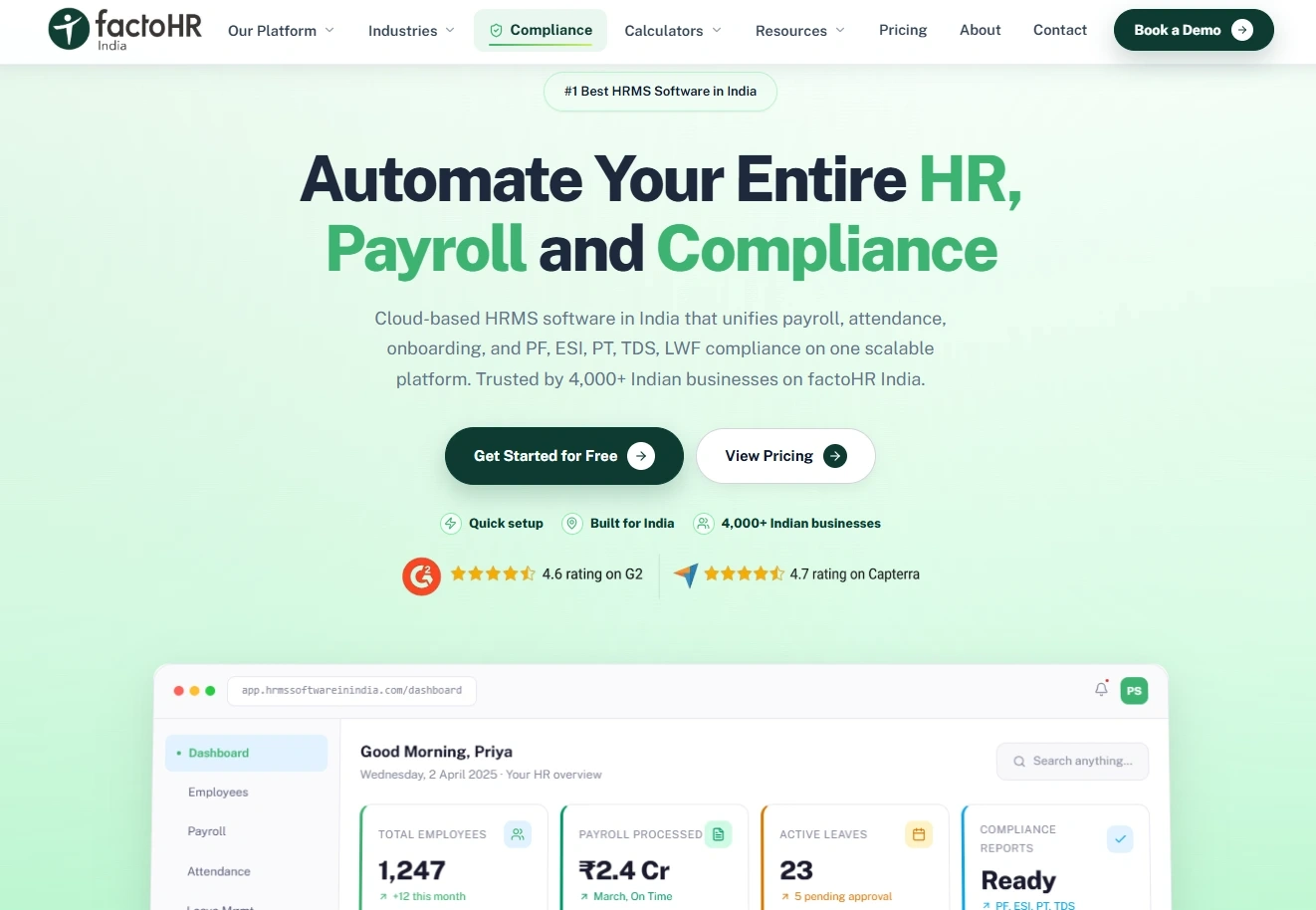
factoHR India is built for Indian SMBs and mid-market businesses. Its attendance module is built into a unified HRMS, so biometric, GPS, and mobile punches flow directly into payroll, leave, and compliance without any manual data transfer. Shift management, overtime rules, and multi-location handling are all handled on one dashboard that also runs your monthly payroll and statutory reports. Backed by factoHR.
Key Features
- Biometric, facial & GPS attendance
- Geo-fencing for field/remote staff
- Shift, roster & overtime management
- Leave & regularisation workflows
- Payroll integration with LOP & OT auto-calc
- Multi-location & multi-entity support
Pros:
- Unified HRMS and attendance
- Direct payroll integration
- Deep Indian compliance depth
- Dedicated account manager
- Scales across business sizes
Cons:
- Custom pricing only
- Requires onboarding time
- Not for micro-teams
Pricing: Custom pricing based on company size and modules. Book a free demo to get a tailored quote.
Best suited for: Indian SMBs and mid-market businesses that want attendance built into one unified HRMS.
2. Truein
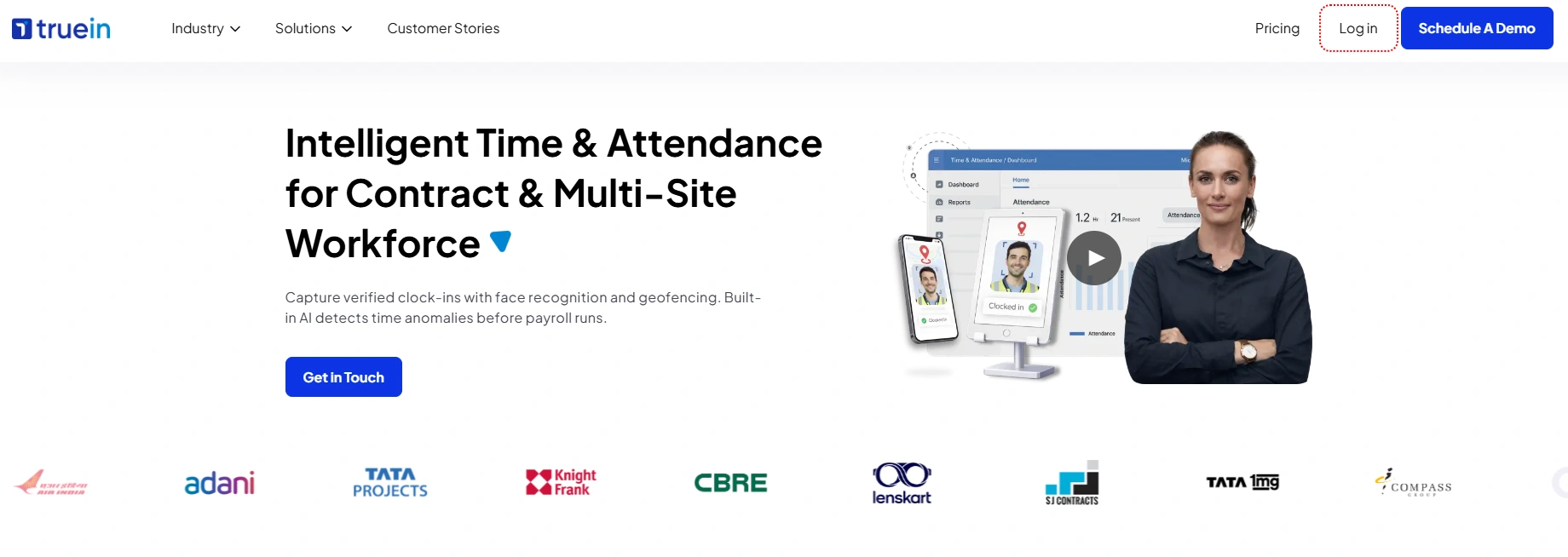
Truein is a face-recognition-first attendance platform built for Indian distributed and field teams. It runs on contactless face capture via mobile or kiosk, with GPS tagging and shift management. Useful for businesses that want a focused attendance vendor without full HRMS bundling.
Key Features
- Face-recognition attendance via mobile or tablet kiosk
- GPS-tagged punch with geo-fence rules
- Shift, roster & overtime management
- Mobile attendance for field staff
- Attendance reports and exports
- Integrations with payroll vendors
Pros:
- Strong face-recognition accuracy
- Fast deployment for field teams
- No biometric hardware needed
- Clean modern UI
- Attendance-focused pricing
Cons:
- Standalone attendance, not full HRMS
- Payroll integration depends on vendor
- Less suited for office biometric-device setups
- Reports lighter than enterprise HRMS
Pricing: Per-employee per-month pricing, quote-based for enterprise.
Best suited for: Indian businesses with field, retail, or distributed staff that want focused face-recognition attendance.
Free hands-on attendance walkthrough.
Biometric, GPS & payroll sync — live demo, 20 mins.
3. Keka
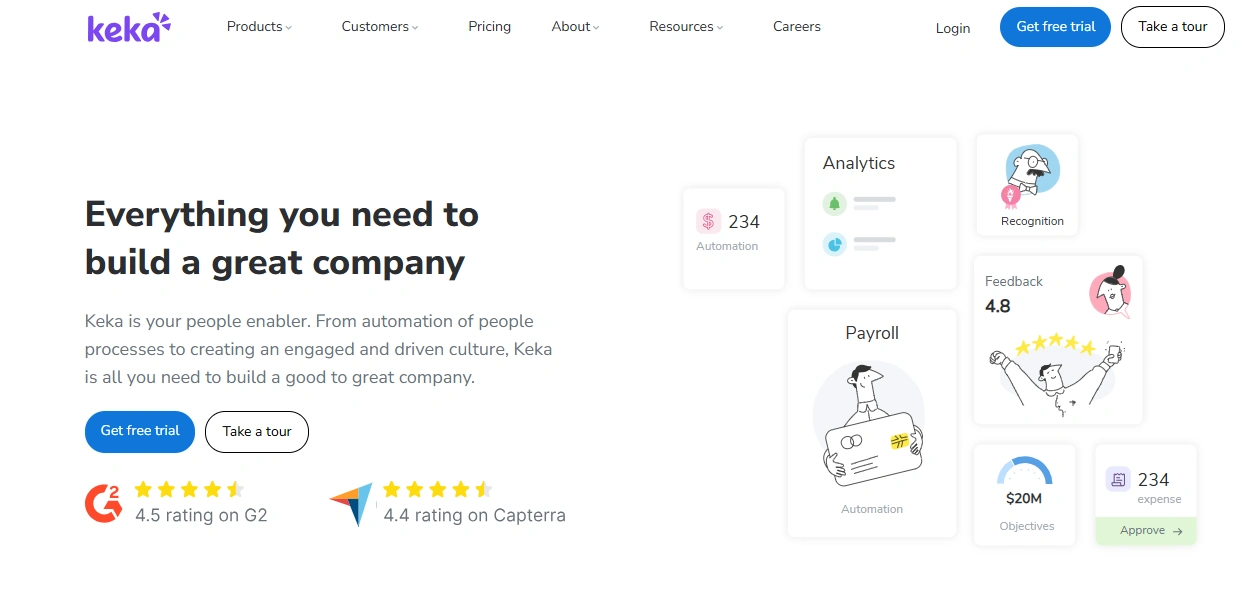
Keka is a modern HRMS and payroll platform popular with Indian mid-market and IT companies. Its attendance module includes GPS check-in, geo-fencing, biometric integration, QR code attendance, and gamification features that drive employee engagement on daily punches.
Key Features
- Biometric, GPS & QR attendance
- Geo-fencing & location tracking
- Shift management & regularisation workflows
- Gamification & pulse surveys
- One-click payroll sync (Tally)
- Half-day & comp-off rules
- Mobile self-service app
Pros:
- Clean modern interface
- Gamification boosts adoption
- Strong shift management
- Good mobile app
- Smooth payroll sync
Cons:
- High minimum spend
- Better for white-collar teams
- Limited for heavy shift factories
Pricing: Custom pricing based on company size.
Best suited for: IT, SaaS, professional services, and consulting companies that want a modern attendance experience integrated with a full HRMS.
4. greytHR
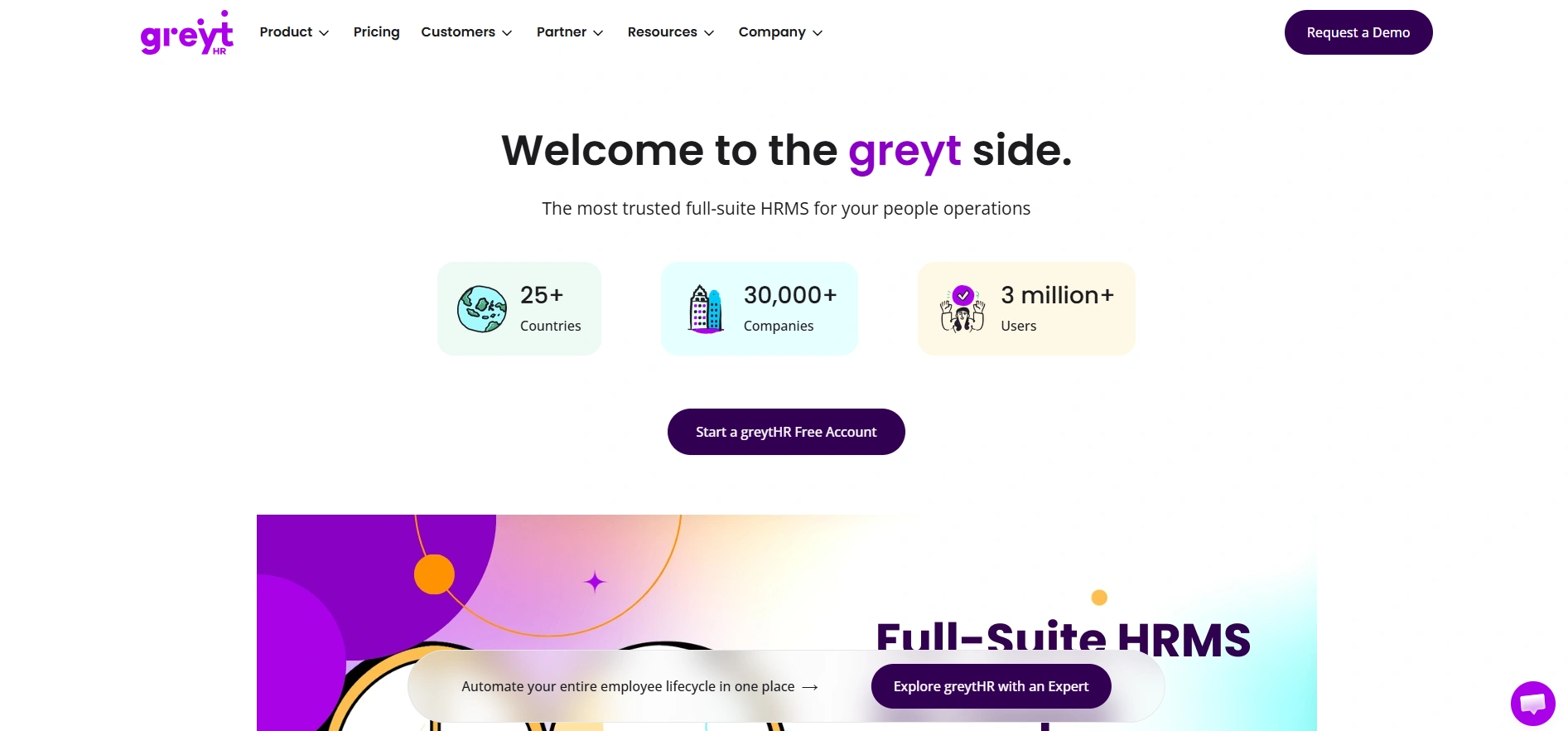
greytHR is one of India's oldest and most widely used HR platforms, with over 9,000 customers managing 10 lakh employee records daily. Its attendance module supports biometric integration, GPS-enabled mobile marking, and a Visage facial recognition kiosk, making it a strong SMB choice.
Key Features
- Biometric device integration
- GPS-enabled mobile attendance
- Visage kiosk for facial recognition
- Attendance tracking and regularization
- Shift and leave management
- Automated compliance reports
- Strong statutory document library
Pros:
- Affordable entry pricing
- Large Indian customer base
- Strong document library
- Reliable biometric integration
- Easy employee onboarding
Cons:
- Costs rise with headcount
- Generic customer support
- Limited advanced analytics
Pricing: Starts at ₹3,495 per month for up to 50 employees on the Starter plan.
Best suited for: Indian SMBs, small retail, NGOs, startups, and small manufacturing businesses that need attendance with compliance.
5. HROne
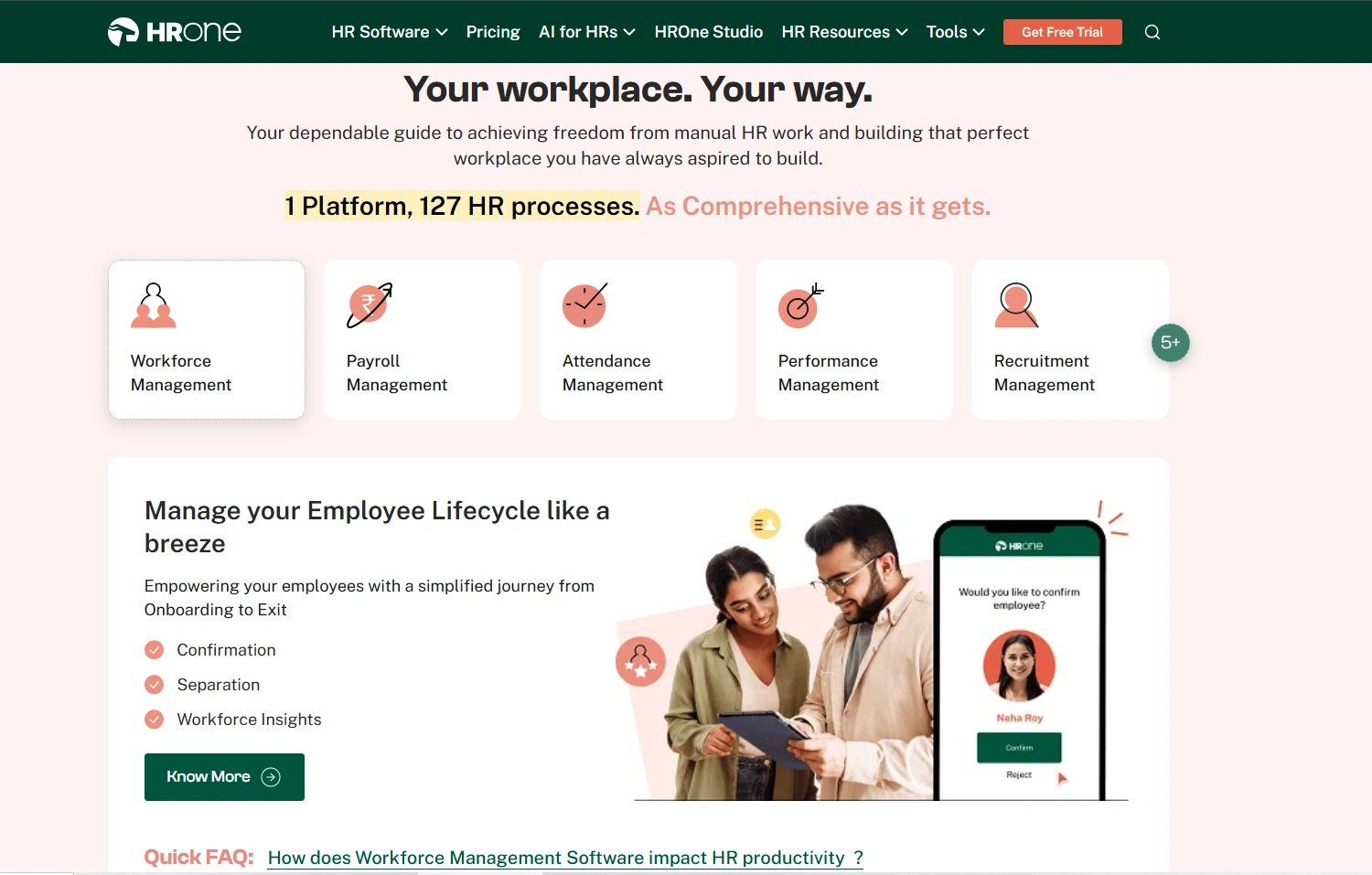
HROne is a cloud HR and attendance platform popular with Indian SMBs and mid-market companies. Its attendance module stands out for AI-powered tracking, strong GPS and Teams integration, and inbox-style workflow management, making it one of the most automation-forward tools on this list.
Key Features
- AI-powered attendance
- Biometric, mobile GPS, and facial recognition
- Roster management with flexible rules
- 127+ customizable workflows
- Smart regularization and approval flows
- ERP and SAP integrations
Pros:
- AI-powered automation
- Strong Teams integration
- Inbox-style task management
- Wide ERP integrations
- Good mobile experience
Cons:
- Steeper learning curve
- Dense feature set
- Higher implementation cost
Pricing: Basic plan starts at ₹4,950 per month for up to 50 users, with ₹99 per month for additional users.
Best suited for: Indian SMBs, large mid-market companies, and MNCs that want automation-first attendance with Microsoft Teams integration.
6. Zoho People
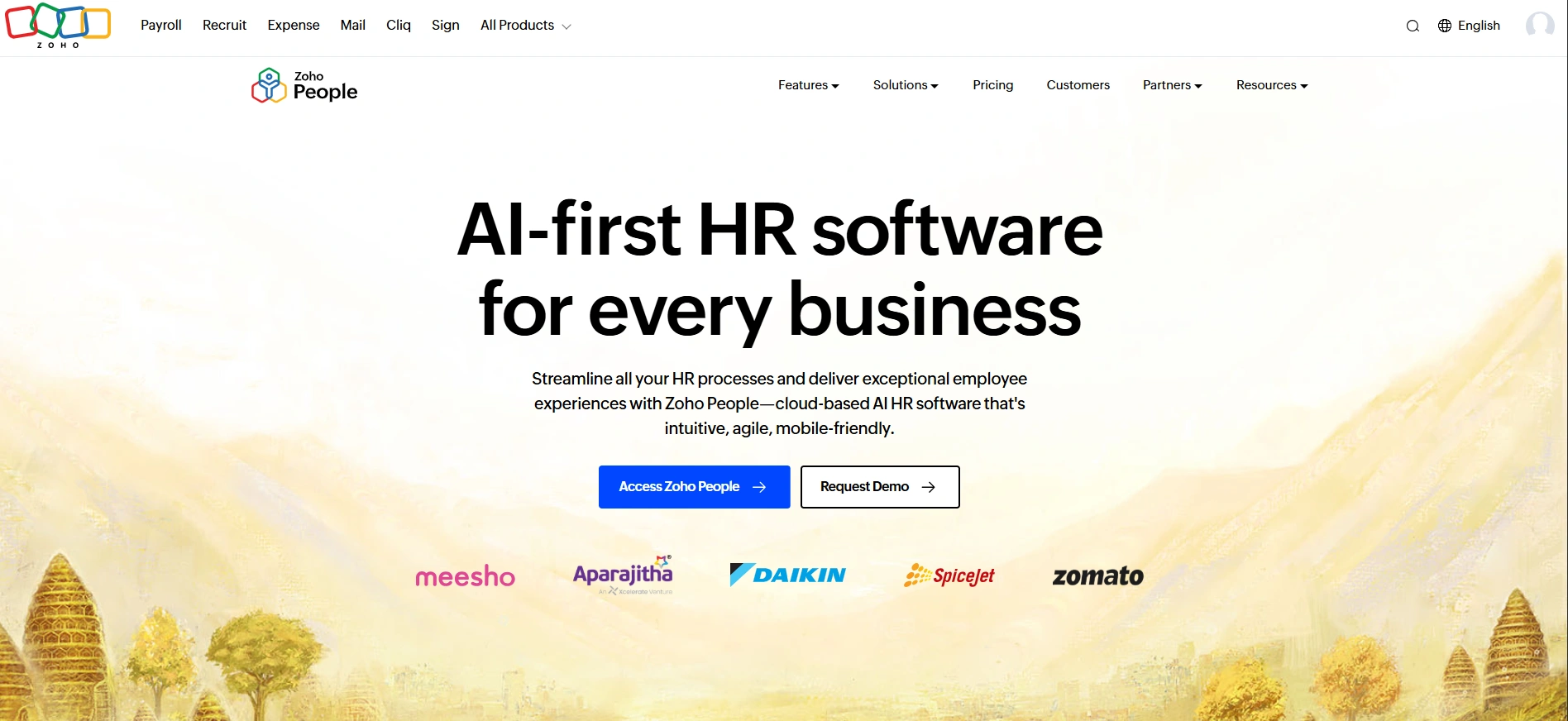
Zoho People is the HR module of the Zoho ecosystem, with a strong built-in attendance management system. It works best for businesses already on Zoho Books, Zoho Payroll, or Zoho CRM, offering tight integration and predictable per-user pricing.
Key Features
- Web, mobile & biometric attendance
- People Kiosk with facial recognition
- IP & geo-fencing controls
- Billable & non-billable time tracking
- Shift scheduling & rotations
- Leave & absence management
- Deep Zoho integrations
Pros:
- Predictable per-user pricing
- People Kiosk facial recognition
- Strong Zoho ecosystem fit
- Clean modern interface
- Quick setup
Cons:
- Needs Zoho Payroll separately
- Fragmented across Zoho apps
- Limited outside Zoho users
Pricing: Starts at ₹48 per user per month on the Essential HR plan.
Best suited for: Indian small and mid-size businesses and growing enterprises that are already running on the Zoho ecosystem.
7. Pocket HRMS
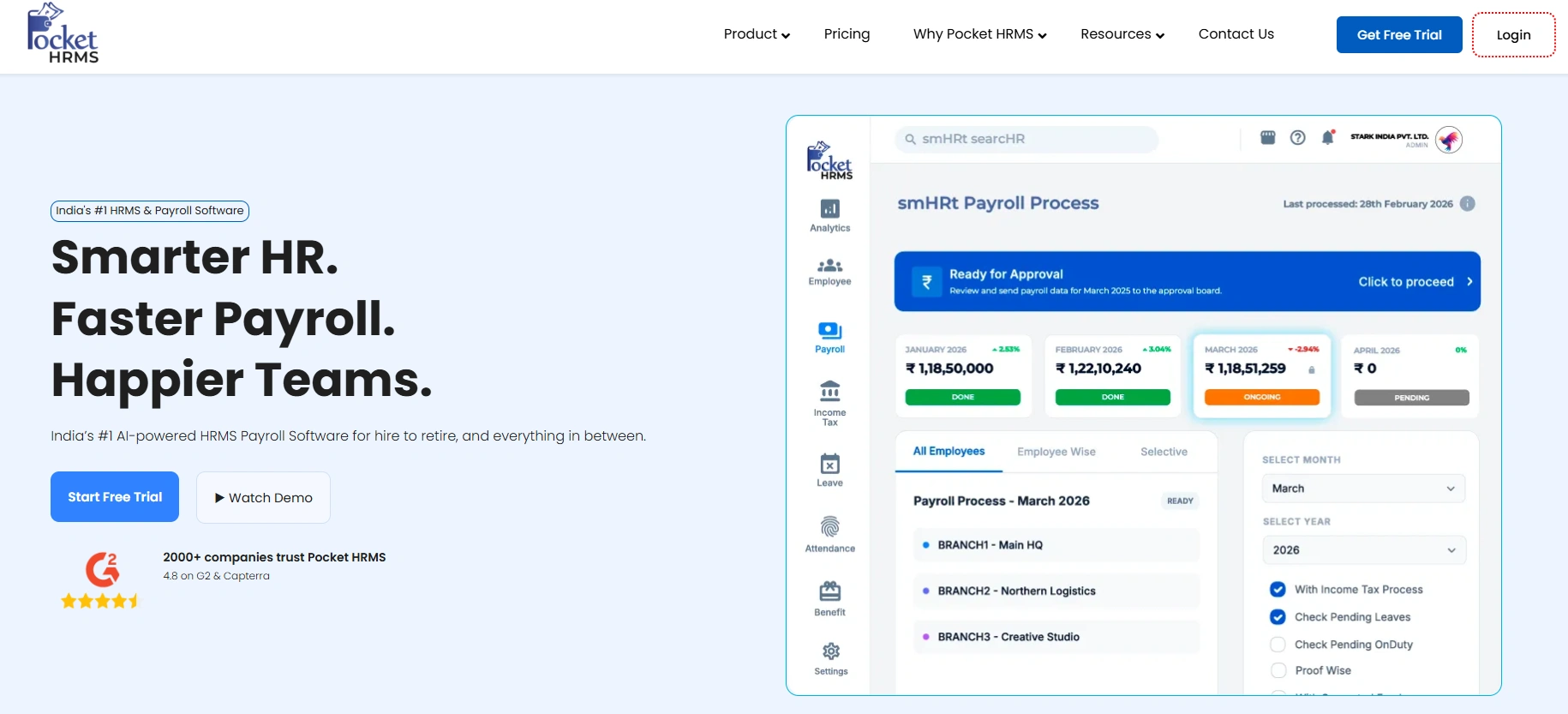
Pocket HRMS is an Indian AI-powered HR platform aimed at SMBs, with attendance as a core strength. Its smHRt engine handles automated attendance capture, anomaly detection, and payroll integration, and it offers hybrid attendance marking through manual, app-based, kiosk, facial recognition, and geo-location.
Key Features
- AI facial recognition (Pocket FaME)
- Biometric device integration
- GPS mobile attendance with selfie
- Hybrid attendance options
- Auto-generated muster rolls
- Robust ESS portal
- 256-bit encrypted security
Pros:
- AI-powered attendance
- Flexible hybrid marking
- Hardware-agnostic approach
- Auto-generated muster rolls
- Strong data security
Cons:
- Punch-in issues reported
- Location tracking inconsistent
- Some manual payroll work
Pricing: Pocket HRMS's Standard plan is priced at ₹2,995 per month (billed annually) for up to 50 employees, with each additional employee costing ₹60 per month.
Best suited for: Indian SMBs and small- to mid-size businesses that want AI-powered attendance with flexible marking options.
8. Spine HRMS
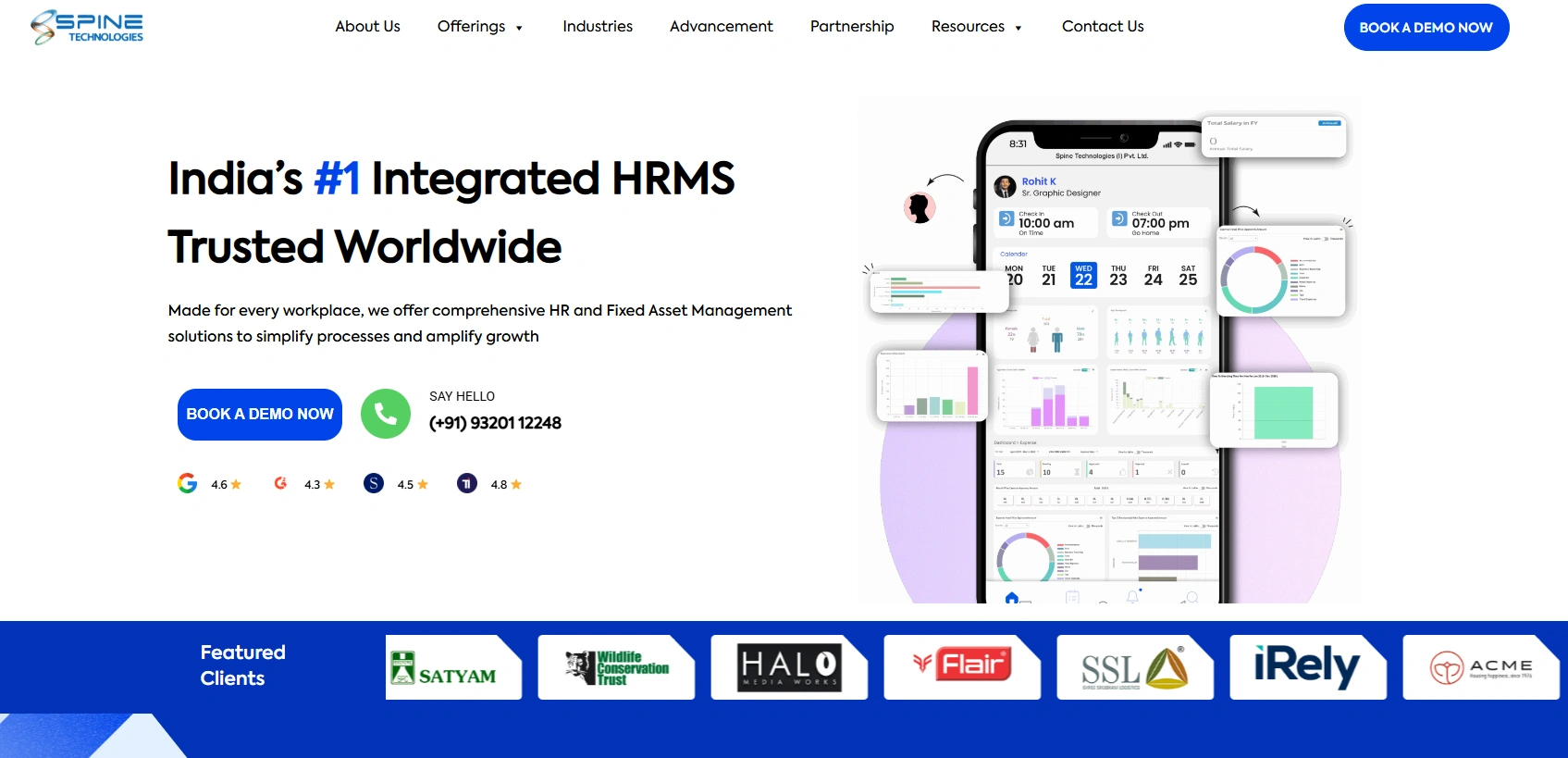
Spine HRMS is a long-standing Indian HR and payroll platform with a strong attendance module. It supports both on-premise and cloud deployment, making it a popular choice for manufacturing, BPO, and traditional Indian enterprises that prefer locally hosted systems with biometric integration.
Key Features
- Biometric device integration
- Shift, roster & overtime management
- On-premise & cloud deployment
- Multi-location attendance tracking
- Leave & regularisation workflows
- Direct payroll integration
- Compliance-ready muster rolls
Pros:
- On-premise option available
- Strong manufacturing fit
- Long India presence
- Robust shift management
- Payroll-integrated
Cons:
- UI feels dated
- Slower mobile experience
- Limited modern analytics
Pricing: Custom pricing based on company size.
Best suited for: Indian manufacturing, BPO, and traditional enterprises that prefer locally hosted attendance systems with biometric integration.
9. Beehive HRMS
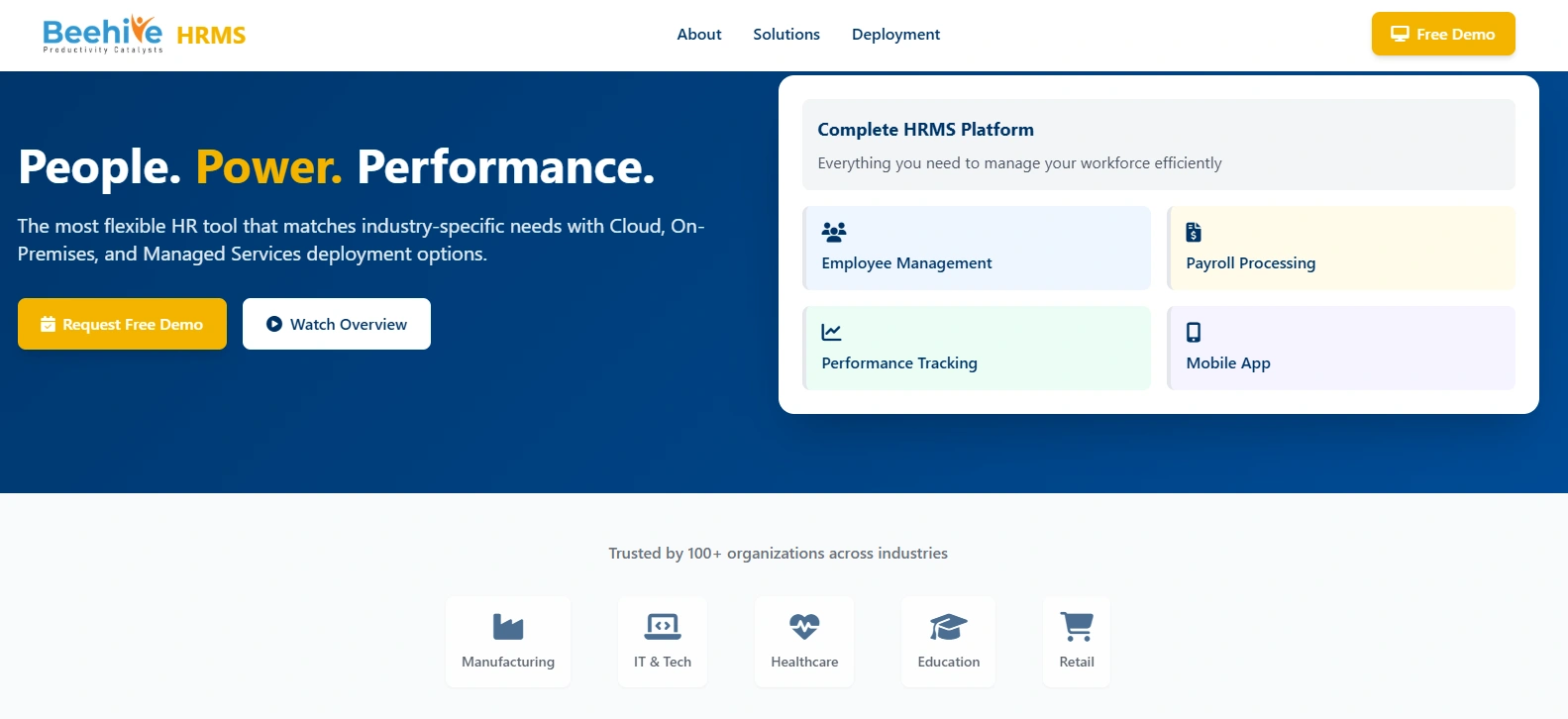
Beehive HRMS is an Indian mid-market HR platform with a strong attendance management module. It covers biometric, mobile, and geo-fenced attendance, with shift management, overtime, and payroll integration designed for Indian workforces.
Key Features
- Biometric device integration
- Mobile GPS attendance & geo-fencing
- Shift & roster management
- Overtime, LOP & comp-off rules
- Leave management with approvals
- Multi-location & multi-entity support
- Direct payroll integration
Pros:
- Strong mid-market fit
- Configurable attendance policies
- Good shift management
- Indian compliance-ready
- Reasonable pricing
Cons:
- Smaller customer base
- Mobile app needs work
- Limited global integrations
Pricing: Custom pricing based on company size.
Best suited for: Indian mid-market businesses that want a full-featured HRMS with a strong attendance module.
10. HRMantra
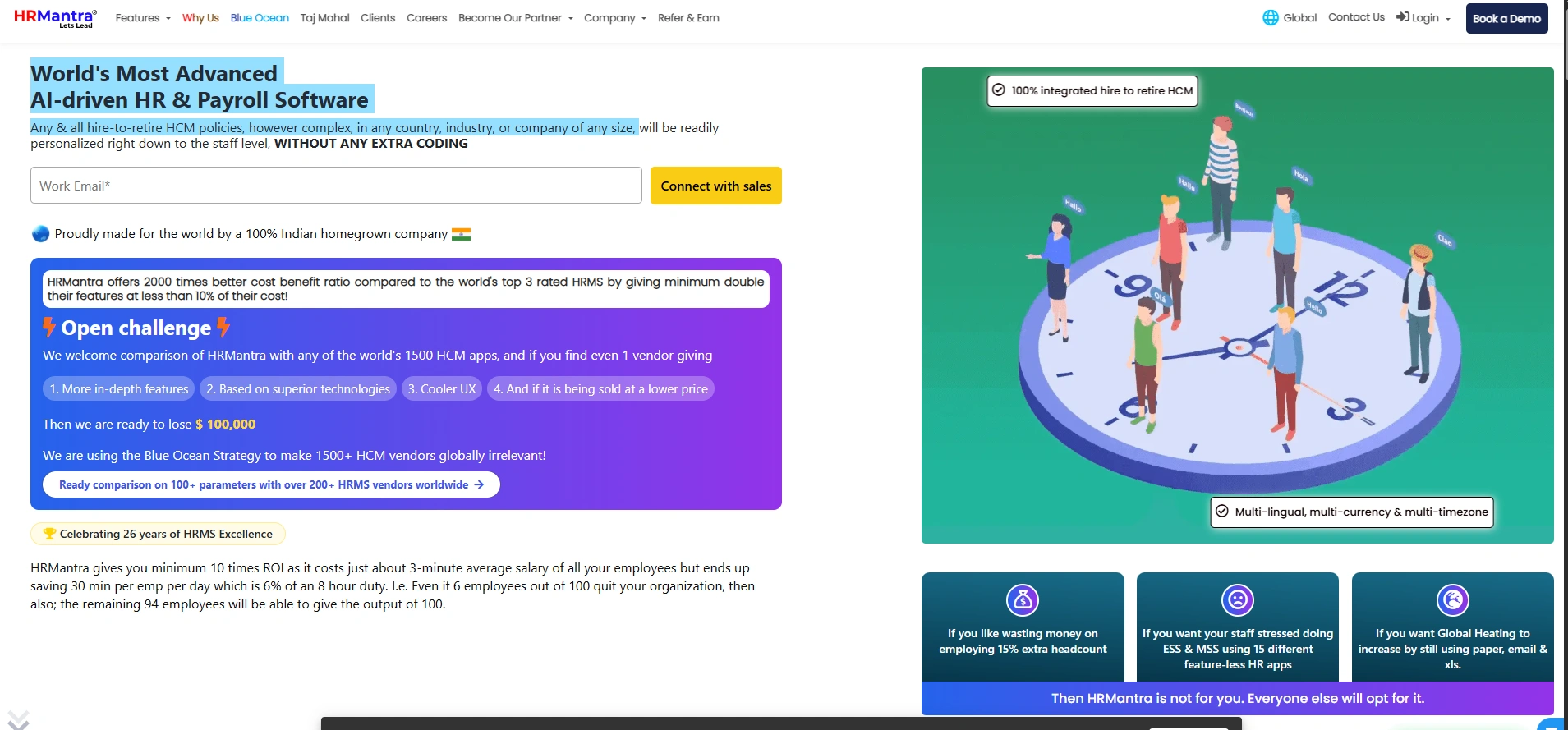
HRMantra is a 25-year-old Indian HR and payroll platform known for deep attendance automation and a claim of 10x ROI. Its attendance module covers biometric, GPS, mobile, and kiosk-based marking, with strong multi-shift and overtime handling for Indian workforces.
Key Features
- Biometric, GPS & mobile attendance
- Facial recognition & kiosk support
- Shift & roster management
- Overtime, spread-over & LOP handling
- 12,000+ built-in HRMS features
- Payroll & compliance integration
- Multi-company & multi-location support
Pros:
- 25+ years in the Indian market
- Deep attendance automation
- Wide feature coverage
- Strong enterprise fit
- Compliance-ready
Cons:
- Dense interface
- Long implementation time
- Overkill for small teams
Pricing: Custom pricing based on company size.
Best suited for: Indian mid-market and large enterprises that want deep attendance automation as part of a feature-rich HRMS.
11. Sumopayroll
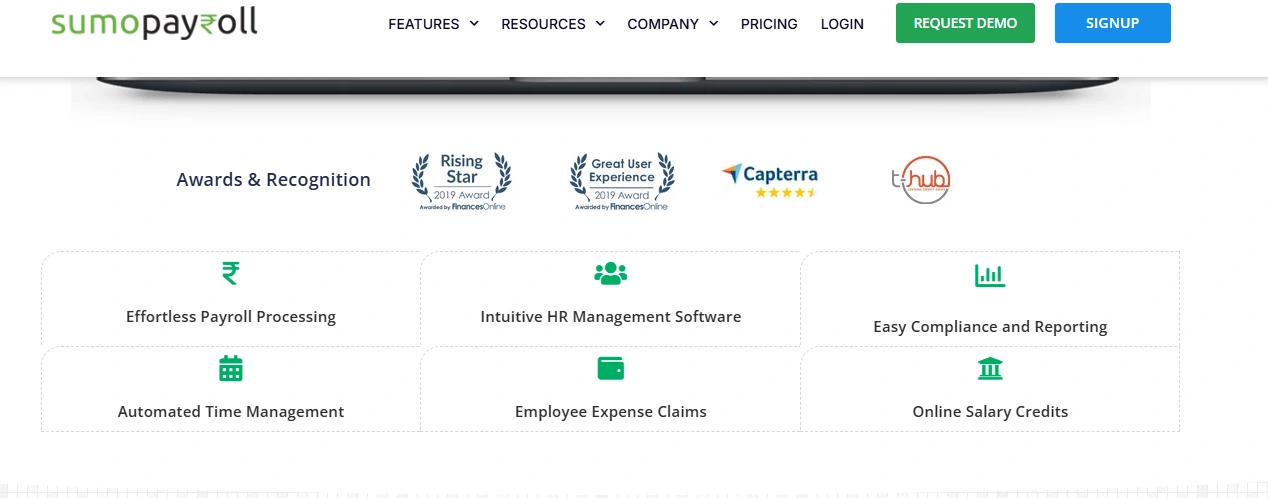
Sumopayroll is an India-focused HRMS and payroll platform aimed at SMBs and startups. Its attendance module supports biometric, mobile, and GPS marking, with a lightweight setup that makes it a good fit for small Indian businesses starting their first digital attendance process.
Key Features
- Biometric integration
- GPS-based mobile attendance
- Shift and leave management
- Regularisation workflows
- Overtime and LOP handling
- Payroll integration
- Employee self-service portal
Pros:
- Lightweight and affordable
- Quick setup
- Good SMB fit
- Payroll integrated
- Easy employee adoption
Cons:
- Limited enterprise depth
- Basic analytics
- Smaller integration ecosystem
Pricing: Sumopayroll has multiple pricing plans; you can request an exact quote in any module.
Best suited for: Indian startups, small businesses, and small retail or services companies that want an affordable, easy-to-deploy attendance and payroll system.
12. Minop (MinopCloud)
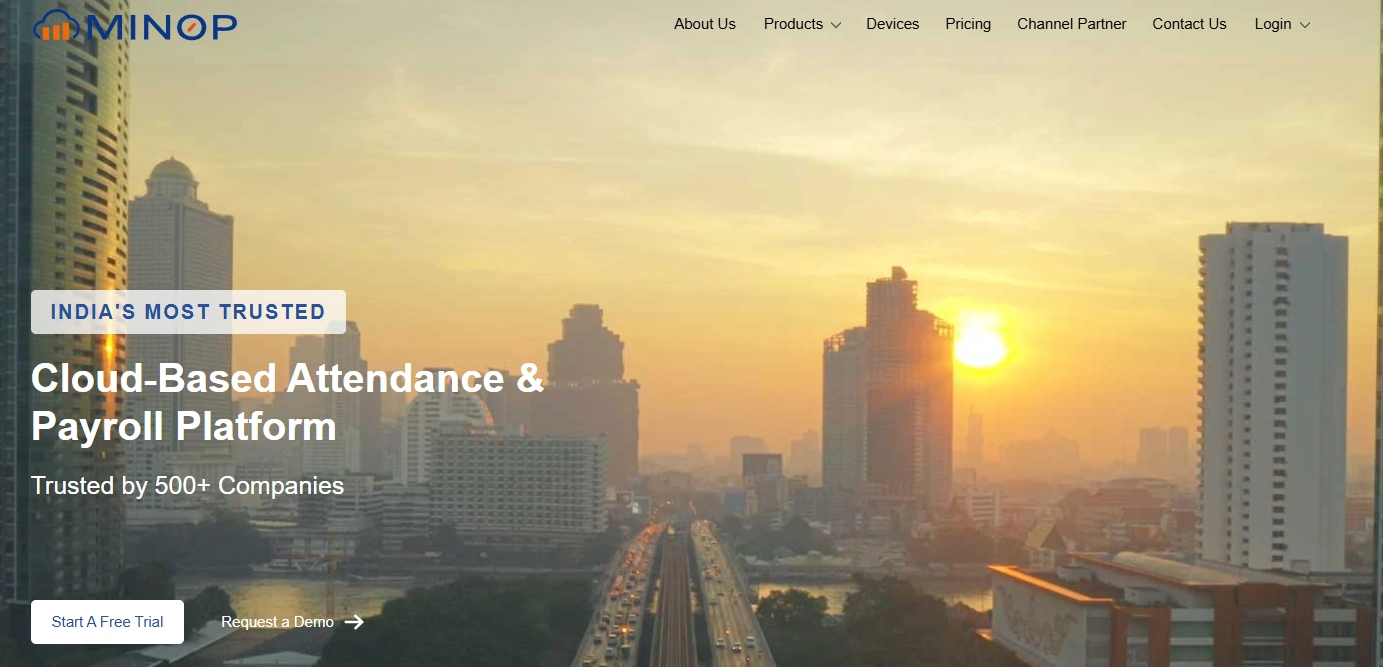
Minop is an Indian cloud HRMS and attendance platform with a hardware-agnostic approach. It works with existing biometric devices, adds a mobile app for touchless attendance, and centralizes data across multiple sites on one dashboard. It's widely used by warehouses, retail chains, and educational institutions.
Key Features
- Hardware-agnostic biometric integration
- Touchless mobile attendance
- GPS and geo-fenced check-in
- Multi-location and multi-site support
- Auto-sync with payroll
- Visitor and contractor management
- SOC Type 2 certified cloud hosting
Pros:
- Hardware-agnostic approach
- Strong multi-site support
- SOC Type 2 certified
- Works with existing devices
- Good for warehouses and retail
Cons:
- Less known brand
- UI feels functional
- Limited advanced analytics
Pricing: Custom pricing based on company size.
Best suited for: Indian logistics, educational institutions, and multi-site businesses that want cloud attendance that works with their existing biometric hardware.
Quick Comparison Table
The table below compares all 12 tools on the dimensions Indian buyers ask about most: biometric and GPS support, shift management, payroll integration, and industry fit.
| Software | GPS + Geo-fence | Shift Management | Payroll Integration | Mobile App | Best Suited For |
|---|---|---|---|---|---|
| factoHR India | ✔️ | Advanced | Native | ✔️ | SMBs & mid-market |
| Truein | ✔️ | Advanced | Native | ✔️ | SMEs & mid-market |
| Keka | ✔️ | Strong | Native (Tally sync) | ✔️ | IT & white-collar |
| greytHR | ✔️ | Strong | Native | ✔️ | SMBs & small business |
| HROne | ✔️ | Advanced | Native | ✔️ | SMBs & large MNCs |
| Zoho People | ✔️ | Strong | Zoho Payroll (separate) | ✔️ | Zoho ecosystem users |
| Pocket HRMS | ✔️ | Strong | Native | ✔️ | SMB & growing teams |
| Spine HRMS | Limited | Advanced | Native | Basic | Manufacturing & BPO |
| Beehive HRMS | ✔️ | Strong | Native | ✔️ | Mid-market businesses |
| HRMantra | ✔️ | Advanced | Native | ✔️ | Mid-market & enterprise |
| Sumopayroll | ✔️ | Core | Native | ✔️ | Startups & SMBs |
| Minop (MinopCloud) | ✔️ | Strong | Native | ✔️ | Multi-site & warehouses |
Why Manual Attendance is a Compliance Risk in 2026
Under India's new Labour Codes, employers must maintain time-dated, tamper-proof attendance records covering daily working hours, spread-over, weekly offs, overtime thresholds, and state-wise Shops and Establishments requirements. When an inspector shows up, the first document they ask for is the attendance log. A hand-written register or editable spreadsheet is exactly the kind of evidence that fails in an audit.
A cloud-based attendance system provides these features:
- Captures attendance through biometric, mobile app, and geo-fencing
- Stores data in a tamper-proof, secure system
- Automatically applies shift rules and overtime calculations
- Integrates directly with payroll to eliminate manual data entry
- Supports multi-location, multi-shift, and multi-state workforces
- Provides a centralized dashboard for real-time tracking
- Maintains audit-ready attendance records at all times
For hybrid and field-heavy Indian teams in 2026, this is no longer a nice-to-have. It is the foundation of accurate payroll, clean compliance, and fair labour practice.
What Features Must the Best Attendance Management System in India Have?
Use this checklist to evaluate every tool on the list. These seven features are non-negotiable for Indian businesses in 2026.
- Biometric and facial recognition support: The system should integrate with standard biometric hardware used in India and also support facial recognition on mobile for touchless attendance.
- GPS and geo-fencing for field and remote staff: The system should allow mobile check-in with GPS coordinates, geo-fencing to restrict clock-in to approved locations, and selfie verification.
- Shift, roster, and overtime management: The system must support custom shift patterns, rostering, and overtime thresholds as per the Factories Act and state rules, all without manual data entry.
- Leave and regularisation workflows: Employees should be able to raise regularization requests, managers should approve or reject them, and leave calculations should flow automatically into payroll.
- Payroll integration with LOP and overtime: The software should calculate LOP (Loss of Pay) days, overtime hours, and arrears automatically, then push the final numbers into the payroll engine.
- Multi-location and multi-shift handling: Multi-entity setup, location-specific policies, and state-specific compliance rules should all be managed from a single admin panel.
Conclusion
Attendance management in India has moved on from paper registers and buddy punching. The best systems in 2026 combine biometrics, GPS, geofencing, and facial recognition on a single dashboard, with direct integration with payroll and compliance. This matters because attendance is no longer a time-tracking chore.
Shortlist two or three tools from this list based on your workforce type and company size. Book demos, run a pilot at one location, and check how each tool handles your actual shift patterns, biometric devices, and payroll rules. The right choice will save your HR team dozens of hours every month and keep your compliance clean.
Frequently Asked Questions
Why do companies need attendance management software in India?
Companies need it to avoid manual errors, prevent buddy punching, improve payroll accuracy, and stay compliant with labour laws and state regulations. It also helps HR teams save time and manage large or distributed workforces more efficiently.
What is the difference between biometric and GPS attendance?
Biometric attendance is used for fixed locations like offices and factories, while GPS attendance is used for field staff and remote employees. Many modern systems support both methods together for better flexibility.
Can attendance software prevent buddy punching?
Yes. Biometric systems, facial recognition, GPS tracking, and selfie-based check-ins help prevent buddy punching. These methods ensure that only the actual employee can mark attendance.
Does attendance software integrate with payroll?
Yes. Most modern systems automatically send attendance data like overtime and leave to payroll for salary calculation. This reduces manual effort and improves payroll accuracy.
Is cloud-based attendance software safe?
Yes. Most cloud systems use encryption, secure servers, and access controls to protect employee data and prevent tampering. They are generally more secure than manual registers or spreadsheets.