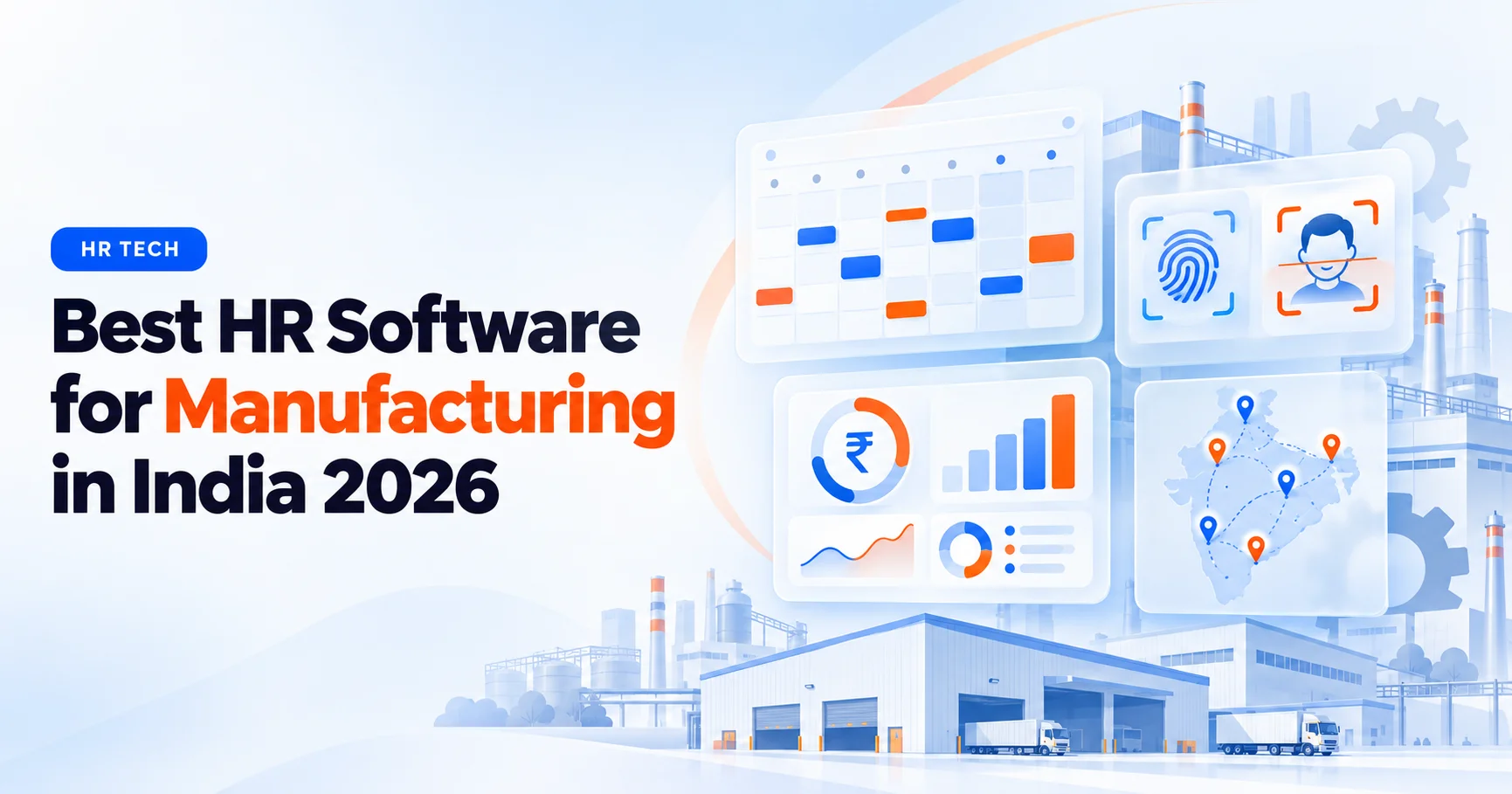
Manufacturing payroll is a different animal. A shop floor runs two or three rotating shifts, mixes permanent, fixed-term and contract workers, pays overtime under the Factories Act, and still has to file PF, ESI, PT and TDS across every plant and state on time. A generic HR tool buckles on all of this. This guide grades eight manufacturing-ready platforms on the things a factory actually needs, with real pricing, so you can shortlist fast and book a demo with the two or three that fit your plant.
Short answer: factoHR India and HROne are the strongest all-round picks for Indian plants. greytHR and Keka suit smaller units, while ZingHR or Darwinbox fit large, multi-plant enterprises.
Key Takeaways
- Manufacturing needs HR software built for shift rosters, overtime, piece-rate and contract labour, not a generic office HRMS.
- factoHR India and HROne lead for all-round plant fit; greytHR and Keka suit smaller units; ZingHR and Darwinbox fit large multi-plant groups.
- The non-negotiables are biometric or face attendance at the gate, Factories Act overtime, CLRA contract registers and multi-state PF, ESI and PT.
- Budget roughly Rs 40 to Rs 160 per employee per month, with transparent plans from factoHR India, greytHR, Keka and Pocket HRMS.
- Raised statutory costs matter now: the EPF wage ceiling is Rs 25,000 and the Labour Codes fix wages at 50 percent of pay.
- Match the tool to plant size: under 200 workers, 200 to 1,000, and 1,000-plus each have a different best fit.
- Shortlist two or three, run a live payroll and attendance pilot on one plant, then roll out.
Why generic HR software breaks on the factory floor
Most HR tools are built for salaried, single-shift office teams. A plant is the opposite. Before you compare products, know the seven places an office HRMS fails on the shop floor:
- Rotating shifts. Two and three shift patterns, night-shift crossover past midnight, weekly rotation and relievers. The system must auto-assign shifts and read punches against the right shift, not a fixed 9-to-6.
- Overtime under the Factories Act. Work beyond nine hours a day or 48 a week is overtime at twice the ordinary wage. The tool must calculate OT automatically from attendance, not by manual registers.
- Piece-rate and daily wage. Many plants pay by units produced or per day worked, not a fixed monthly salary. Payroll must handle piece-rate, daily-wage and incentive math in the same run as salaried staff.
- Contract labour and CLRA. Contractor workers sit outside your payroll but inside your compliance. You need separate contractor registers, principal-employer reporting and CLRA records, ring-fenced from permanent staff.
- Shop-floor deductions. Canteen, transport, uniform, safety-gear and tool deductions are routine in factories and rare in offices. Payroll must apply them per worker, per cycle.
- Multi-plant, multi-state statutory. Each plant may sit in a different state with its own PT slabs, LWF and minimum wages, but roll up to one group. PF, ESI, PT and TDS must file per establishment and consolidate for finance.
- Blue-collar mobile adoption. Line workers do not use laptops. Attendance, payslips and leave must work on a shared kiosk, a biometric device at the gate, or a vernacular mobile app that runs offline at remote sites.
Score every shortlisted tool against these seven. A platform that nails five or more is manufacturing-ready. One that handles only office basics will leak money on OT, compliance penalties and payroll errors every month.
How we graded these platforms
Each tool below is weighed on six manufacturing criteria, not generic feature counts:
- Compliance depth (most weight): Factories Act overtime, CLRA contract registers, multi-state PF, ESI, PT, LWF, and readiness for the Rs 25,000 EPF ceiling and the Labour Codes.
- Shift and biometric fit: rotating-shift engine, night-shift logic, and integration with gate hardware such as ZKTeco, eSSL, Matrix and Realtime.
- Blue-collar payroll: piece-rate, daily-wage, overtime and shop-floor deductions in one run.
- Mobile and adoption: kiosk, face punch, offline and vernacular support for line workers.
- Pricing and total cost: transparent per-head pricing and cost at 200 and 500 workers.
- Implementation and support: go-live time, data migration and India-based help.
Quick comparison: HR software for manufacturing
| Tool | Best for | Standout strength | Watch-out | Starting price |
|---|---|---|---|---|
| factoHR India | Plants wanting biometric-first payroll | Gate biometric plus shift payroll in one | Advanced modules are add-ons | Around Rs 4,999/mo (up to 50 staff) |
| HROne | Mid to large plants, blue-collar mobile | Contract labour and multi-entity depth | Enterprise tier is quote-based | Around Rs 85 to 130 per emp/mo |
| Keka | Modern SME factories | Facial-recognition kiosk and clean UX | Pricier at small headcount | Around Rs 6,999/mo (up to 100) |
| greytHR | Small units and statutory accuracy | State-wise compliance calendar | Shift depth is add-on | Free up to 25; paid from Rs 1,495/mo |
| ZingHR | Large, multi-plant enterprises | Blue-collar scale and local languages | Quote-based, enterprise-focused | Around Rs 165 per emp/mo |
| Pocket HRMS | SME plants wanting simple payroll | Shift scheduling and OT on approvals | Thin on contract labour | Around Rs 2,995/mo (up to 50) |
| Qandle | Growing mid-size plants | Configurable modules and workflows | Smaller brand footprint | Around Rs 2,450/mo base |
| Darwinbox | Large enterprises, multi-geo groups | Enterprise breadth and AI | Overkill and costly for SMEs | Custom quote |
Prices are indicative for 2026 and depend on headcount, modules and contract term. Treat them as a starting point and confirm a live quote. Reliable attendance is the foundation of all of this, so pair your shortlist with a capable attendance management system.
The 8 best HR software for manufacturing in India (2026)
1. factoHR India
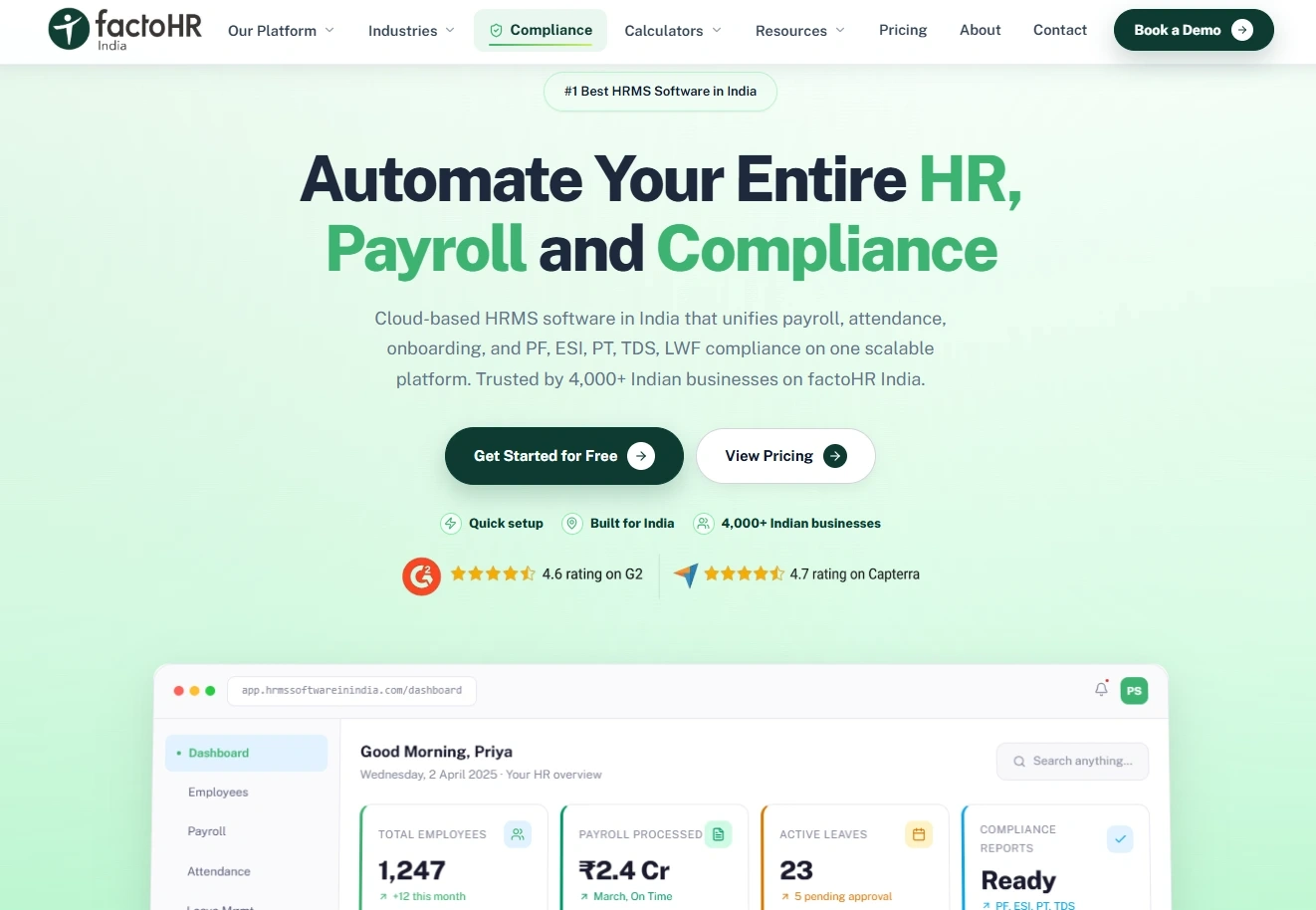
factoHR India is a biometric-first HR and payroll platform built with Indian factories in mind. A worker punching on a fingerprint or face device at the plant gate flows straight into the right shift, overtime bucket and payslip, with no manual entry. It is the strongest all-round fit for a plant that wants attendance, shifts and statutory payroll in one system, which is why it tops this list. See the full payroll software breakdown for module detail.
Key features:
- Gate biometric and face attendance, mapped to the correct shift automatically
- Rotating and night-shift rosters with drag-and-drop shift planning
- Overtime auto-computed to the Factories Act, twice the ordinary wage beyond nine hours a day or 48 a week
- Piece-rate, daily-wage and incentive payroll run alongside salaried staff
- Contract-labour handling with CLRA-ready contractor registers, ring-fenced from permanent workers
- Shop-floor deductions built in: canteen, transport, uniform, safety gear and tools
- Multi-plant PF, ESI and PT filed per establishment and rolled up for finance
- Already updated for the Rs 25,000 EPF ceiling and the 50 percent Labour Codes wage rule
- Integrates with ZKTeco, eSSL, Matrix and Realtime gate devices
- Worker mobile app with geofencing and offline punch for remote sites
- Self-serve payslips, leave and reimbursements on mobile for line workers
Best suited for: single and multi-plant manufacturers that want gate biometric, shift payroll and full statutory compliance on one platform.
Watch-out: some advanced analytics and recruitment modules are priced as add-ons.
Pricing: transparent plans starting around Rs 4,999 a month for up to 50 employees.
2. HROne
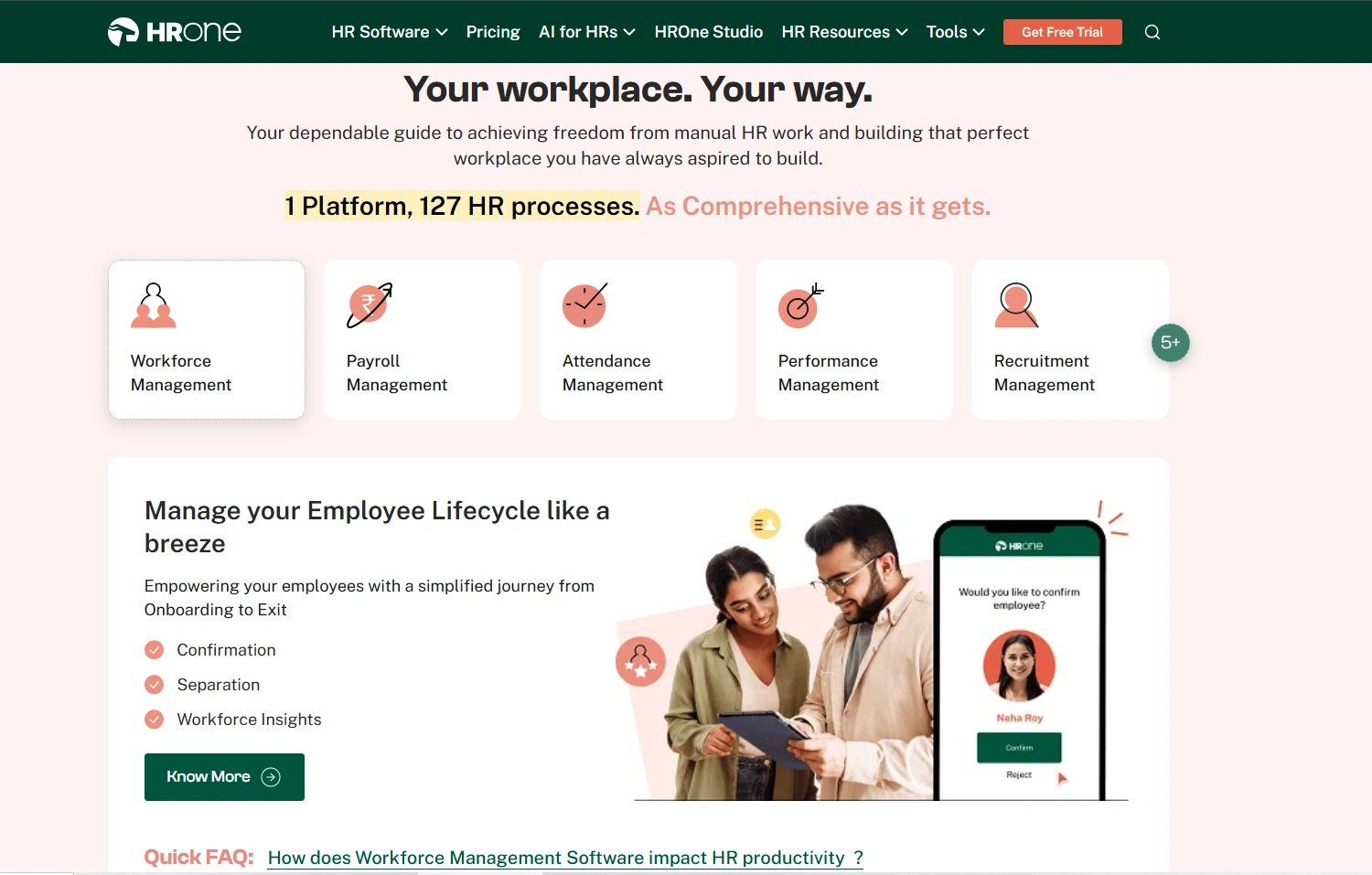
HROne is a hire-to-retire suite with genuine depth for blue-collar and contract-heavy manufacturing. Its Time Office module runs biometric attendance and shifts, and the payroll engine handles complex arrears, final settlements and multi-entity structures.
Key features:
- Strong contract-labour and CLRA handling with ring-fenced contractor registers
- Per-entity compliance isolation for multi-plant groups
- Biometric attendance with ZKTeco, eSSL and similar device support
- Rotating and night shifts with overtime flowing into payroll
- Well-adopted worker mobile app with offline and vernacular support
- Automated PF, ESI, PT and TDS across multiple states
- Complex payroll: arrears, revisions and final settlements
Best suited for: mid-size to large plants with a big contract workforce and several legal entities.
Watch-out: published per-head pricing covers core tiers; the top enterprise tier is quote-based.
Pricing: roughly Rs 85 to Rs 130 per employee per month by tier.
3. Keka
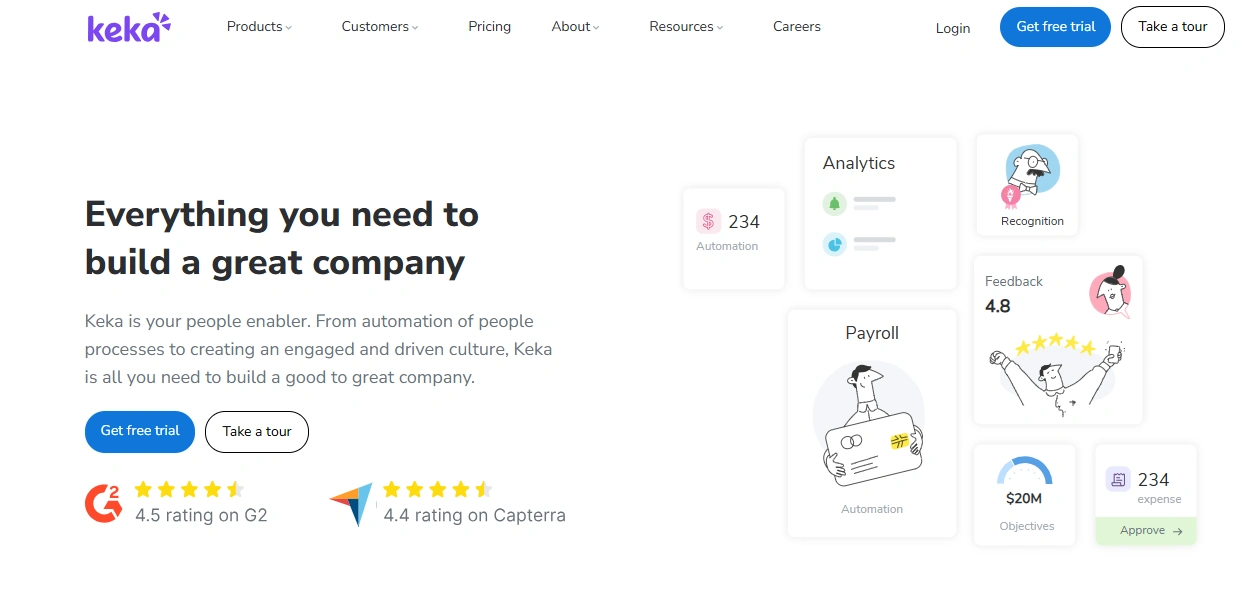
Keka is a modern, well-designed HRMS that suits SME factories moving off spreadsheets. Its facial-recognition kiosk and clean interface make attendance and payroll fast to roll out in a smaller plant.
Key features:
- Facial-recognition kiosk and shift scheduler
- eSSL and common biometric device support
- Overtime and leave flow cleanly into payroll
- Automated PF, ESI and PT filing
- Clean, modern interface with high employee adoption
- Good core HR, payroll and expense modules
Best suited for: modern SME plants that value usability and quick rollout over heavy multi-entity depth.
Watch-out: cost per head is higher at small employee counts, and contract-labour depth is lighter than HROne.
Pricing: plans start around Rs 6,999 a month for up to 100 employees.
4. greytHR
greytHR is a compliance-first payroll platform trusted by thousands of Indian SMEs. Its standout is statutory accuracy, with a state-wise compliance calendar that keeps small plants audit-ready.
Key features:
- State-wise statutory compliance calendar for PF, ESI, PT and TDS
- Reliable core payroll with high accuracy
- Free tier for very small units
- Attendance and leave management included
- Multi-state payroll support
- Large partner and support network in India
Best suited for: small units that prioritise clean, compliant payroll over heavy shop-floor scheduling.
Watch-out: advanced shift and geo-attendance features are paid add-ons on top of the base plan.
Pricing: free up to 25 employees; paid plans from about Rs 1,495 a month.
5. ZingHR
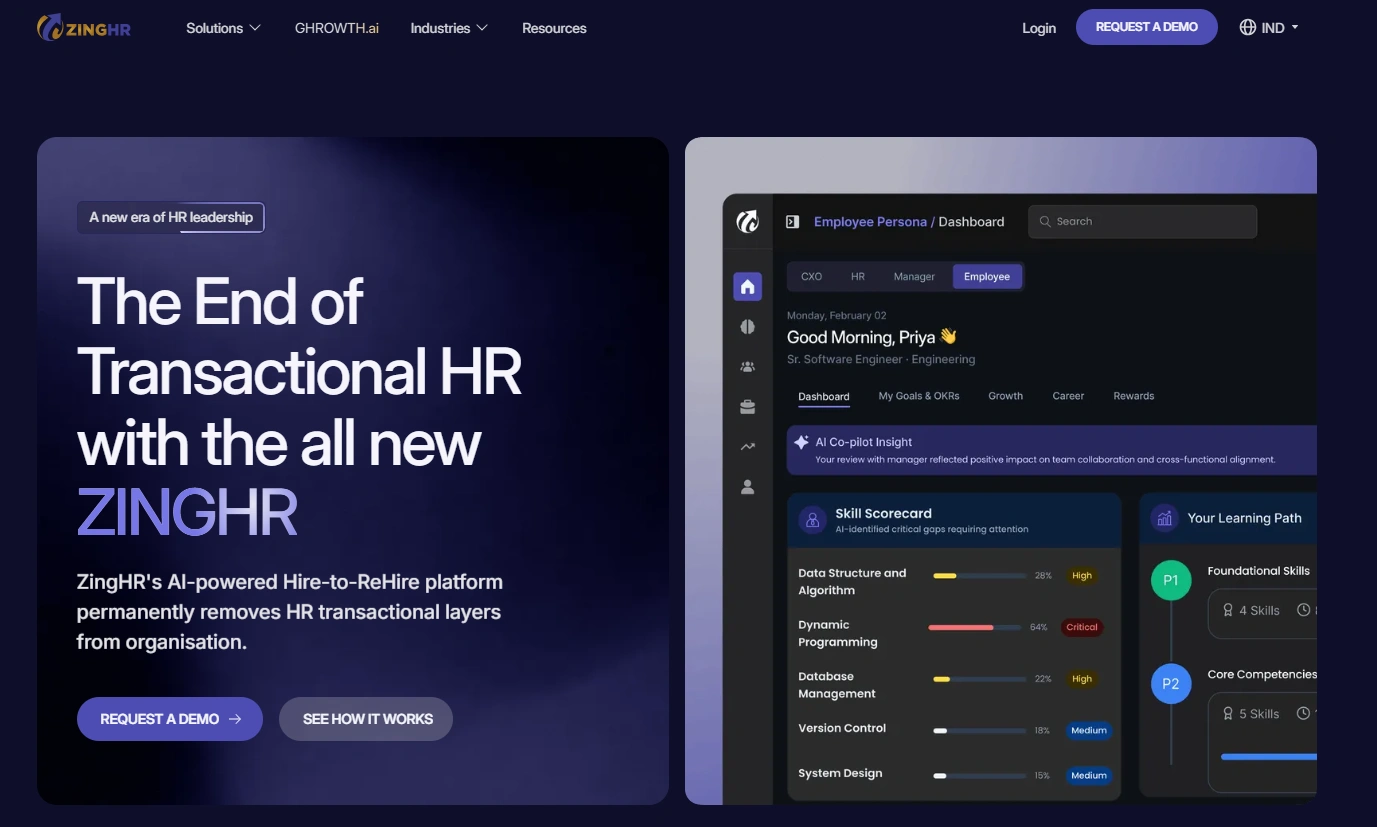
ZingHR is an enterprise platform built for workforce-heavy sectors, with real strength in large, distributed manufacturing across many plants and thousands of blue-collar workers.
Key features:
- Large-scale biometric and face attendance
- Rotating shifts and multi-plant statutory filing
- Worker app in multiple Indian languages to aid adoption on the line
- Contract workforce management at scale
- Deep configurability for enterprise processes
- Analytics and workforce dashboards for leadership
Best suited for: large enterprises running several plants with thousands of workers.
Watch-out: pricing is quote-based and the platform is heavier than an SME needs.
Pricing: around Rs 165 per employee per month, confirmed by quote.
6. Pocket HRMS
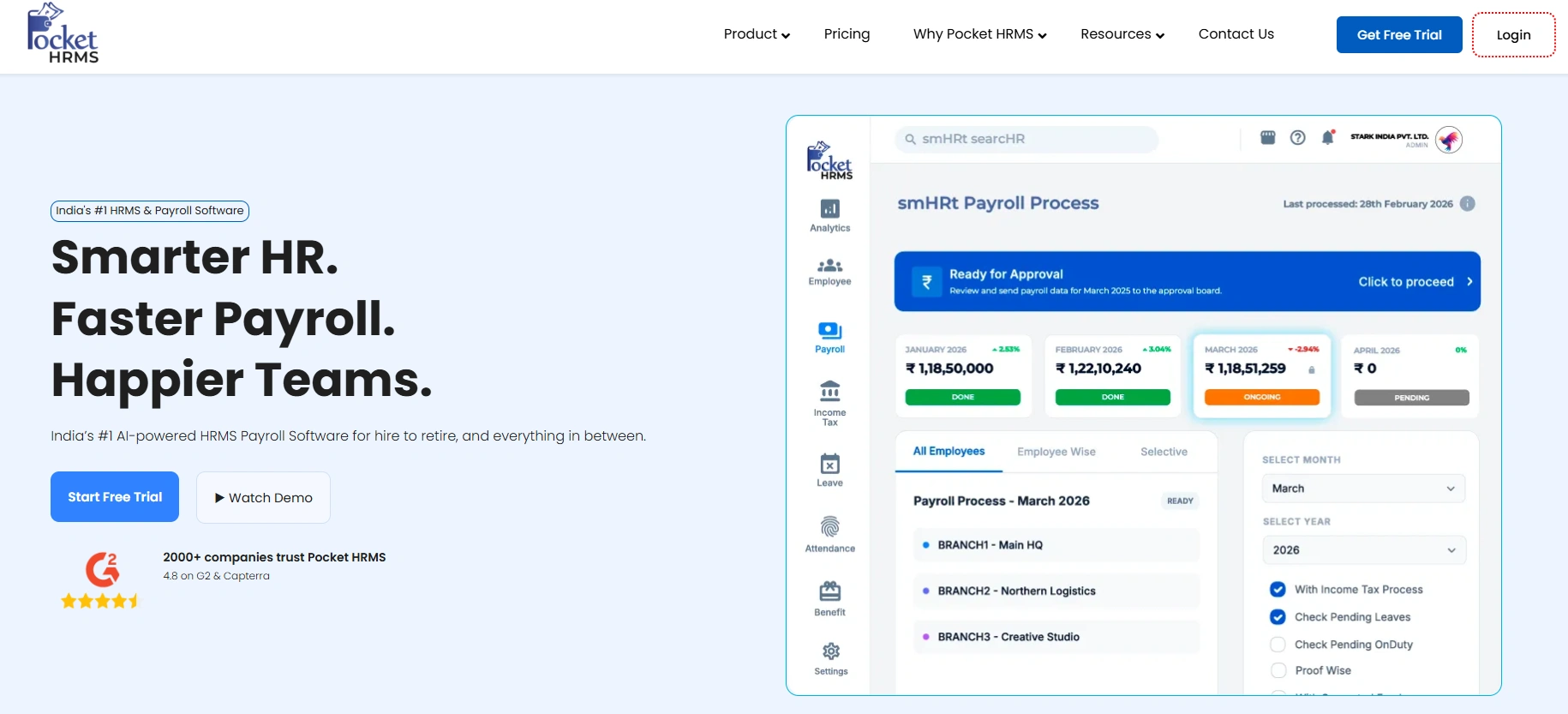
Pocket HRMS is a straightforward cloud HR and payroll tool for SMEs that want manufacturing payroll without complexity. Its shift scheduling and approval-based overtime suit smaller plants.
Key features:
- Multi-shift scheduling with smHRt shift planning
- Biometric attendance integration
- Overtime calculated on manager approvals
- Manufacturing allowances: uniform, safety, tools and transport
- Bulk background processing for large worker uploads
- Mobile ESS and statutory payroll basics
Best suited for: SME plants wanting simple, reliable payroll with shift support.
Watch-out: thin on deep contract-labour and multi-plant consolidation.
Pricing: plans start around Rs 2,995 a month for up to 50 employees.
7. Qandle
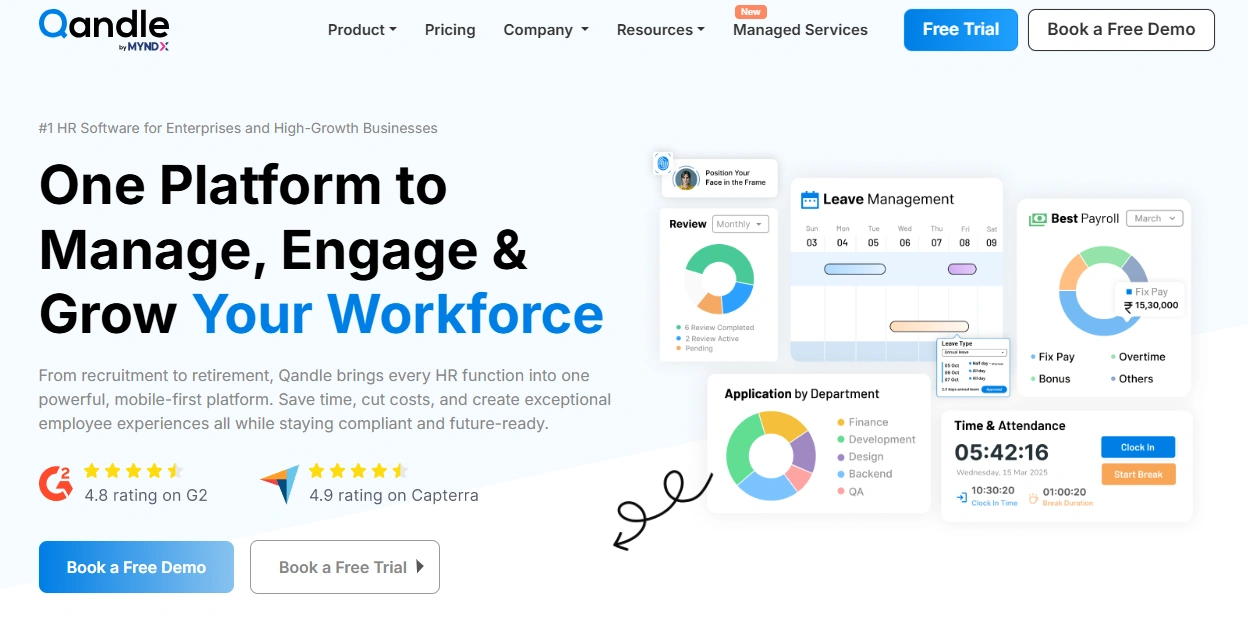
Qandle is a modular, configurable HRMS that fits growing mid-size plants. You switch on the modules you need and extend as the plant grows, without heavy customisation cost.
Key features:
- Configurable shift and attendance management
- Biometric device integration
- Statutory payroll for PF, ESI and PT
- Flexible approval workflows modelled to your shop floor
- Modular build: start lean, add performance and more later
- Employee self-service on web and mobile
Best suited for: growing mid-size plants that want to start lean and expand module by module.
Watch-out: smaller brand footprint, so check references in your sector.
Pricing: base plans start around Rs 2,450 a month.
8. Darwinbox
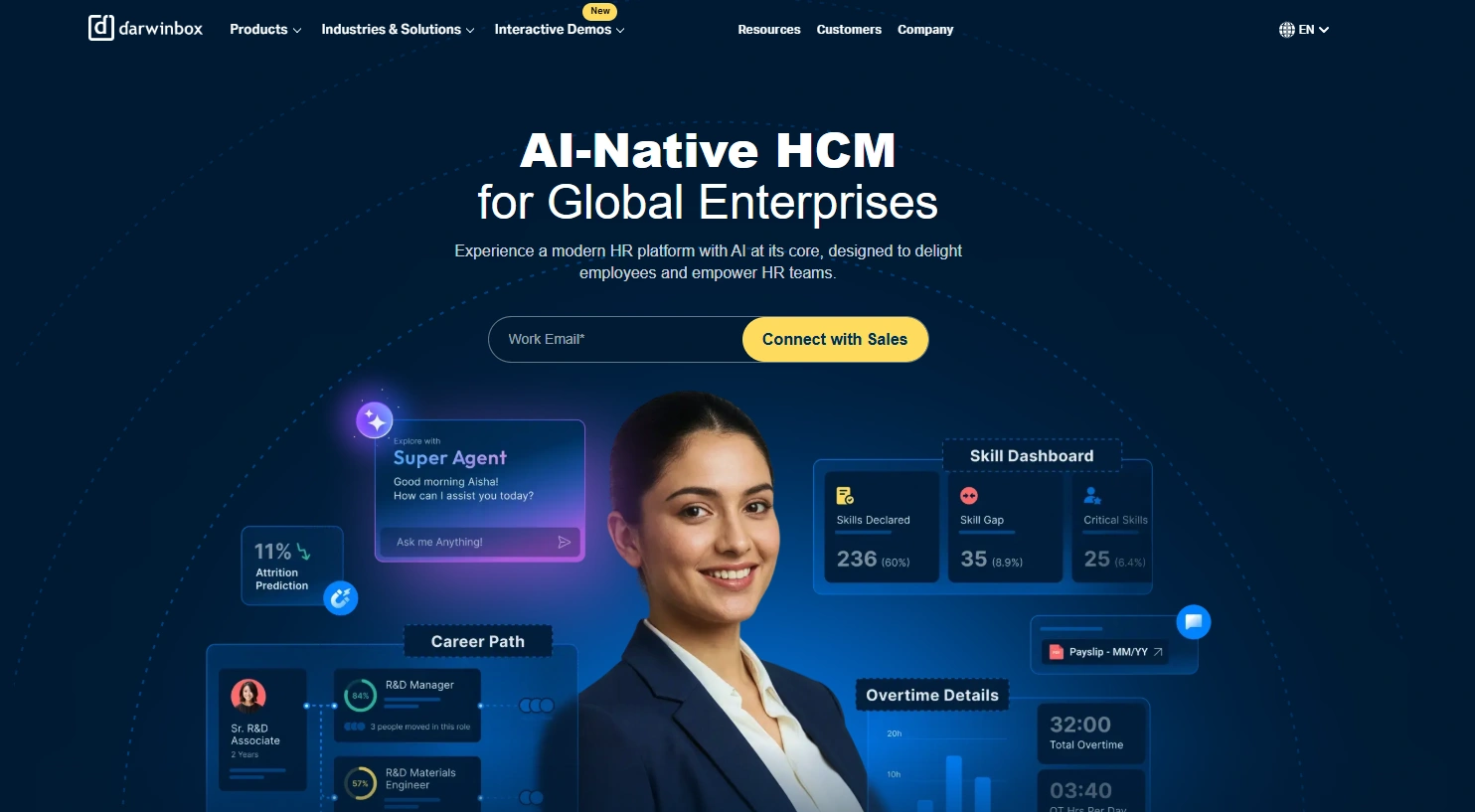
Darwinbox is a leading enterprise HCM used by large Indian and Asian groups, including manufacturing conglomerates. It offers the broadest module set and strong AI-driven workflows.
Key features:
- Enterprise-grade attendance, shifts and payroll at scale
- Multi-entity, multi-country structure support
- Deep configurability and workforce analytics
- AI-driven workflows and employee experience
- Broad hire-to-retire module coverage
- Suited to standardising HR across plants and offices
Best suited for: large enterprises and multi-geo groups standardising HR across plants and offices.
Watch-out: custom-quote pricing and a longer, heavier rollout; overkill for a single mid-size plant.
Pricing: custom quote based on headcount and modules.
What manufacturing payroll really costs in 2026
Software is the small number. The bigger shift in 2026 is statutory cost, driven by two changes every plant must budget for. First, the EPF wage ceiling rose to Rs 25,000 from 17 September 2026. Second, the new Labour Codes require defined wages to be at least 50 percent of total pay, which widens the base for PF and gratuity.
Here is a worked example for a plant with 300 workers earning at or above the ceiling, showing the monthly employer PF-side outgo before and after the ceiling change:
| Item (per worker, at ceiling) | At Rs 15,000 | At Rs 25,000 |
|---|---|---|
| Employer EPS plus EPF (12%) | Rs 1,800 | Rs 3,000 |
| EDLI plus admin charges | Rs 150 | Rs 250 |
| Employer outgo per worker | Rs 1,950 | Rs 3,250 |
| Monthly outgo, 300 workers | Rs 5,85,000 | Rs 9,75,000 |
| Extra cost per year, 300 workers | About Rs 46.8 lakh | |
That is a real, recurring increase of roughly Rs 1,300 per capped worker per month. Software does not change the rate, but a system that applies the ceiling, the split-month September filing and the 50 percent wage rule automatically removes the manual risk of getting a six-figure liability wrong. Track every such change on the India payroll compliance hub.
How to choose by plant size
The right tool depends heavily on headcount and the number of plants:
- Under 200 workers, single plant: prioritise fast rollout and clean statutory payroll. greytHR, Keka, Pocket HRMS or factoHR India fit well. Start with attendance plus payroll and add modules later.
- 200 to 1,000 workers, one to a few plants: you need real shift depth, contract-labour handling and multi-state filing. factoHR India, HROne or Qandle are the sweet spot here.
- 1,000-plus workers, multi-plant or multi-state: you need enterprise scale, per-entity compliance and strong blue-collar mobile adoption. ZingHR, HROne or Darwinbox are built for this.
Whatever the size, weight compliance and attendance accuracy above nice-to-have features. On a factory floor, a one percent error in OT or PF across hundreds of workers dwarfs any software saving. Read the deeper buyer checklist on our HR software for manufacturing page.
Implementation: what to expect
Rollout on a plant is mostly about attendance hardware and data, not the software UI. Plan for four things:
- Attendance devices: confirm the tool supports your existing ZKTeco, eSSL, Matrix or Realtime gate devices, or budget for new ones. This is the single biggest rollout dependency.
- Data migration: clean your employee master, contractor list, salary structures and opening PF, ESI and leave balances before import. Dirty data causes most go-live delays.
- Shift and policy setup: map your actual shift patterns, OT rules, allowances and deductions into the system. Get one plant exactly right before copying to others.
- Pilot then scale: run one full payroll and attendance cycle on a single plant in parallel with your old process, reconcile, then roll out. Expect roughly one to four weeks for an SME and longer for a multi-plant enterprise.
Frequently asked questions
Which HR software is best for manufacturing in India?
For most Indian plants, factoHR India and HROne are the strongest all-round choices because they combine gate biometric attendance, shift and overtime payroll, and contract-labour compliance. greytHR and Keka suit smaller units, while ZingHR and Darwinbox fit large, multi-plant enterprises. The best pick depends on your worker count and number of plants.
Does HR software handle shift and overtime for factories?
Yes. Manufacturing-ready tools auto-assign rotating and night shifts, read biometric punches against the correct shift, and compute overtime to the Factories Act rule of twice the ordinary wage beyond nine hours a day or 48 a week. factoHR India, HROne, ZingHR and Keka all handle this without manual registers.
Can it manage contract labour and multiple plants?
The stronger platforms do. HROne, ZingHR and factoHR India keep contractor registers ring-fenced from permanent staff for CLRA reporting, and file PF, ESI and PT per establishment while rolling up to one group view. Lighter SME tools handle single-plant payroll well but less contract-labour depth.
How much does manufacturing HR software cost in India?
Expect roughly Rs 40 to Rs 160 per employee per month. Transparent plans start around Rs 1,495 a month for greytHR, Rs 2,450 for Qandle, Rs 2,995 for Pocket HRMS, Rs 4,999 for factoHR India and Rs 6,999 for Keka. Enterprise tools like ZingHR and Darwinbox are quote-based. Factor in attendance hardware separately.
Is there free HR software for a small factory?
greytHR offers a free tier for up to 25 employees, which covers core HR and payroll for a very small unit. Most other tools offer a free trial rather than a permanently free plan. As a plant grows past 25 workers and adds shifts and contract labour, a paid manufacturing-ready plan becomes necessary.
Does it handle Factories Act compliance and biometric attendance?
Yes. Manufacturing HRMS platforms integrate with biometric and facial-recognition devices such as ZKTeco, eSSL, Matrix and Realtime at the gate, and build in Factories Act rules for working hours, overtime and leave. They also automate PF, ESI, PT and TDS, and the leading tools are already updated for the Rs 25,000 EPF ceiling and the Labour Codes.
What is the difference between office HR software and manufacturing HR software?
Office HR software assumes salaried, single-shift, laptop-using staff. Manufacturing HR software adds rotating-shift rosters, Factories Act overtime, piece-rate and daily-wage payroll, contract-labour and CLRA registers, shop-floor deductions, multi-plant statutory filing, and kiosk or offline mobile access for line workers. A plant needs the latter.
How long does it take to go live on a plant?
A single SME plant typically goes live in one to four weeks, mostly spent on attendance-device setup and cleaning employee and contractor data. A large multi-plant enterprise takes longer because each plant needs its own shift rules and statutory setup. Running one parallel payroll cycle before full cutover is the safest approach.
Final word
Manufacturing HR software earns its keep on the shop floor, not the brochure. Judge every option on shift and overtime accuracy, contract-labour and CLRA handling, multi-plant statutory filing and blue-collar mobile adoption, then confirm real pricing. factoHR India and HROne lead for all-round plant fit, with greytHR, Keka, Pocket HRMS and Qandle strong for smaller units and ZingHR or Darwinbox for large groups. Shortlist two or three, pilot on one plant, and roll out once a full cycle reconciles clean. Want to see shift payroll and gate biometric work on your plant? Book a free factoHR India demo.