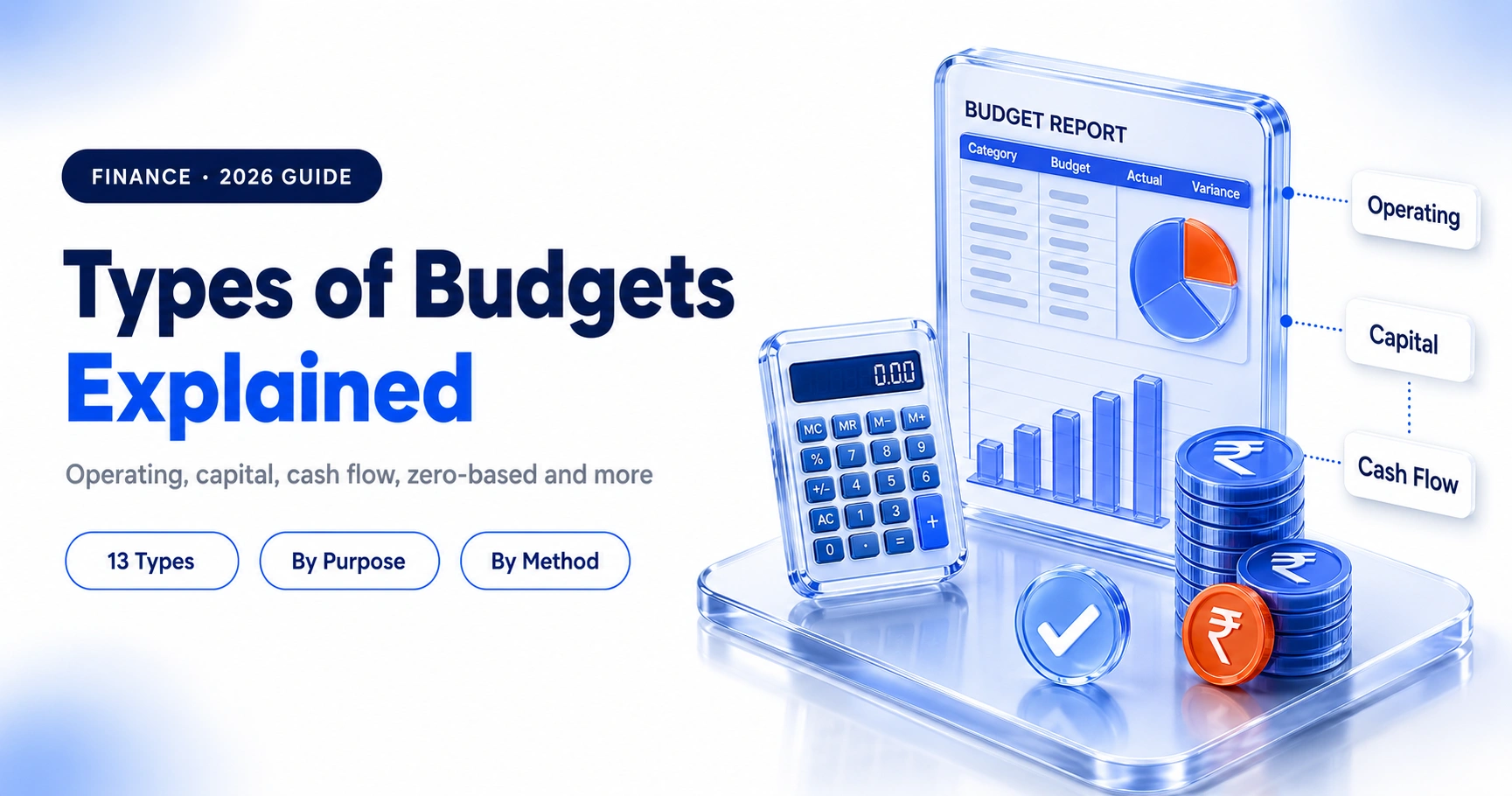
A budget is a financial plan that estimates income and expenses for a set period. The main types of budgets are the operating budget, capital budget, cash flow budget, and master budget, along with budgeting approaches such as zero-based, incremental, flexible, and rolling budgets. Each type answers a different planning question, from day-to-day costs to long-term investment.
- A budget is a financial plan that estimates income and expenses for a set period.
- Core budget types include operating, capital, cash flow, financial, and master budgets.
- Budgeting approaches include incremental, zero-based, activity-based, static, flexible, and rolling.
- For HR and finance teams, the personnel or payroll budget is one of the largest line items to plan.
- Pick the type that matches your goal: control costs, plan investment, or manage cash.
What Is a Budget?
A budget sets out expected revenue and spending so a business can plan, control costs, and measure performance against a target. Companies rarely use just one budget. They combine several types, each covering a part of the business, and roll them up into a master plan. Choosing the right mix depends on what you are trying to manage.
Why Budgeting Matters
A good budget does more than track spending. It gives a business financial control, keeps cash flow healthy, and holds teams accountable to a plan.
- Financial control: you see where money is going and can act before overspends grow.
- Cash flow management: planning inflows and outflows keeps you able to pay bills on time.
- Accountability: each team owns its numbers and is measured against them.
- Better decisions: a clear plan makes it easier to prioritise spending and investment.
- Emergency readiness: a buffer built into the budget cushions unexpected costs.
Types of Budgets by Purpose
1. Operating budget
Plans day-to-day revenue and running costs, such as salaries, rent, utilities, and supplies, usually for a year. It is the budget most teams work with month to month.
2. Capital budget
Plans large, long-term investments like machinery, buildings, or technology. These are big one-time spends that pay back over several years.
3. Cash flow budget
Forecasts the cash coming in and going out over time, so the business can make sure it can pay its bills when they fall due. Profit and cash are not the same thing, and this budget tracks the difference.
4. Financial budget
Plans the assets, liabilities, and cash position of the business, including how it will fund its operations and investments.
5. Master budget
The consolidated plan that pulls the operating, capital, cash flow, and financial budgets into one company-wide view. It is what leadership reviews.
6. Sales budget
Forecasts expected sales volume and revenue for the period. Most other budgets are built on top of this number.
7. Personnel or payroll budget
Plans the cost of people, salaries, employer contributions, bonuses, and hiring. For most companies it is one of the largest line items, which is why HR and finance plan it carefully and track it against actual payroll.
Other common budget types
- Departmental budget: a budget for a single department, such as HR, marketing, or IT.
- Project budget: plans the cost of a specific project from start to finish.
- Production budget: plans how much to produce and the cost of producing it, used by manufacturers.
- Expense budget: focuses only on the costs the business expects to incur.
Types of Budgets by Method
8. Incremental budget
Starts from last period's budget and adjusts it up or down. Simple and fast, but it can carry old inefficiencies forward.
9. Zero-based budget
Builds every line from zero each cycle, justifying every rupee. It is more work but tightly controls cost and cuts waste.
10. Activity-based budget
Sets the budget based on the activities that drive cost, useful when you want spending tied directly to outputs.
11. Static budget
A fixed budget that does not change with activity levels. Good for stable, predictable costs.
12. Flexible budget
Adjusts as activity or volume changes, so the plan stays realistic when sales or production move up or down.
13. Rolling or continuous budget
Adds a new period as each one ends, so you always have a budget looking a fixed distance ahead. It keeps planning current.
How to Create a Budget: Step by Step
- Set your financial goals for the period.
- Gather past financial data as a starting point.
- Estimate your income and revenue.
- Estimate expenses, both fixed and variable.
- Build the budget structure and assign owners.
- Review, revise, and get sign-off.
- Put it into action and monitor actuals against plan.
- Adjust as results and conditions change.
How to Choose the Right Budget Type
- Controlling everyday costs? Use an operating budget, tightened with zero-based methods if needed.
- Planning a big investment? Use a capital budget.
- Worried about paying bills on time? Use a cash flow budget.
- Volumes change a lot? Use a flexible budget.
- Want a rolling view? Use a continuous budget.
Most businesses combine several of these into a master budget, then review actual results against it each month.
Frequently Asked Questions
What are the main types of budgets?
The main types are the operating budget, capital budget, cash flow budget, financial budget, and master budget. On top of these, businesses use budgeting methods like incremental, zero-based, activity-based, static, flexible, and rolling budgets.
What is the difference between an operating and a capital budget?
An operating budget plans day-to-day running costs like salaries and rent, usually for a year. A capital budget plans large, long-term investments such as equipment or buildings that pay back over several years.
What is a zero-based budget?
A zero-based budget builds every line from zero each cycle, so every expense has to be justified again. It takes more effort than an incremental budget but controls costs tightly and removes waste.
What is a master budget?
A master budget is the consolidated plan that combines the operating, capital, cash flow, and financial budgets into one company-wide view. It is the top-level budget leadership uses to steer the business.
What are the three main types of budget?
The three main types are the operating budget, the capital budget, and the cash flow budget. Together they cover day-to-day costs, long-term investment, and the timing of cash in and out.
What are the stages of the budgeting process?
The budgeting process usually runs through setting goals, gathering data, estimating income and expenses, building and reviewing the budget, approving it, and then monitoring actual results against the plan and adjusting.
What are common budgeting challenges to avoid?
Common mistakes include reusing last year's numbers without question, being overly optimistic on revenue, ignoring cash flow timing, not involving the teams who own the spend, and failing to review the budget once it is set.
Which budget do HR and payroll teams use?
HR and finance plan a personnel or payroll budget, which covers salaries, employer contributions, bonuses, and hiring costs. It is one of the largest budget lines, so teams track it closely against actual payroll each month.
There is no single best budget type. Most Indian businesses combine several, then track them against actual spend. For a deeper reference on budgeting methods, see Investopedia, and to keep your largest budget line under control, connect budgeting to your payroll reports and expense management.
Keep your payroll budget under control
factoHR India tracks payroll cost by team, cost centre, and month, so your biggest budget line stays visible and on plan.