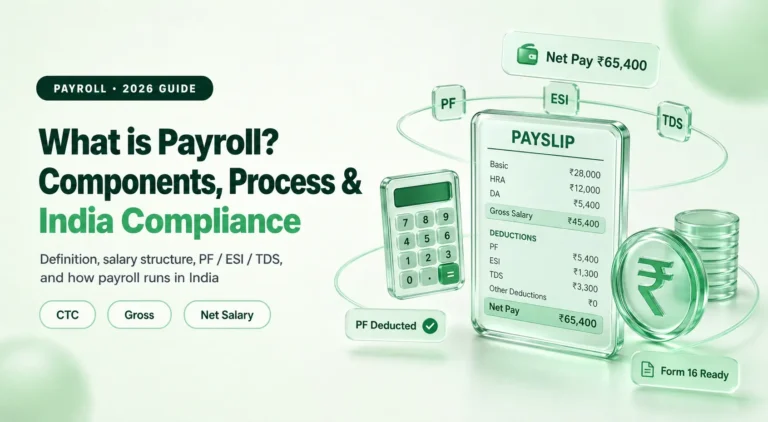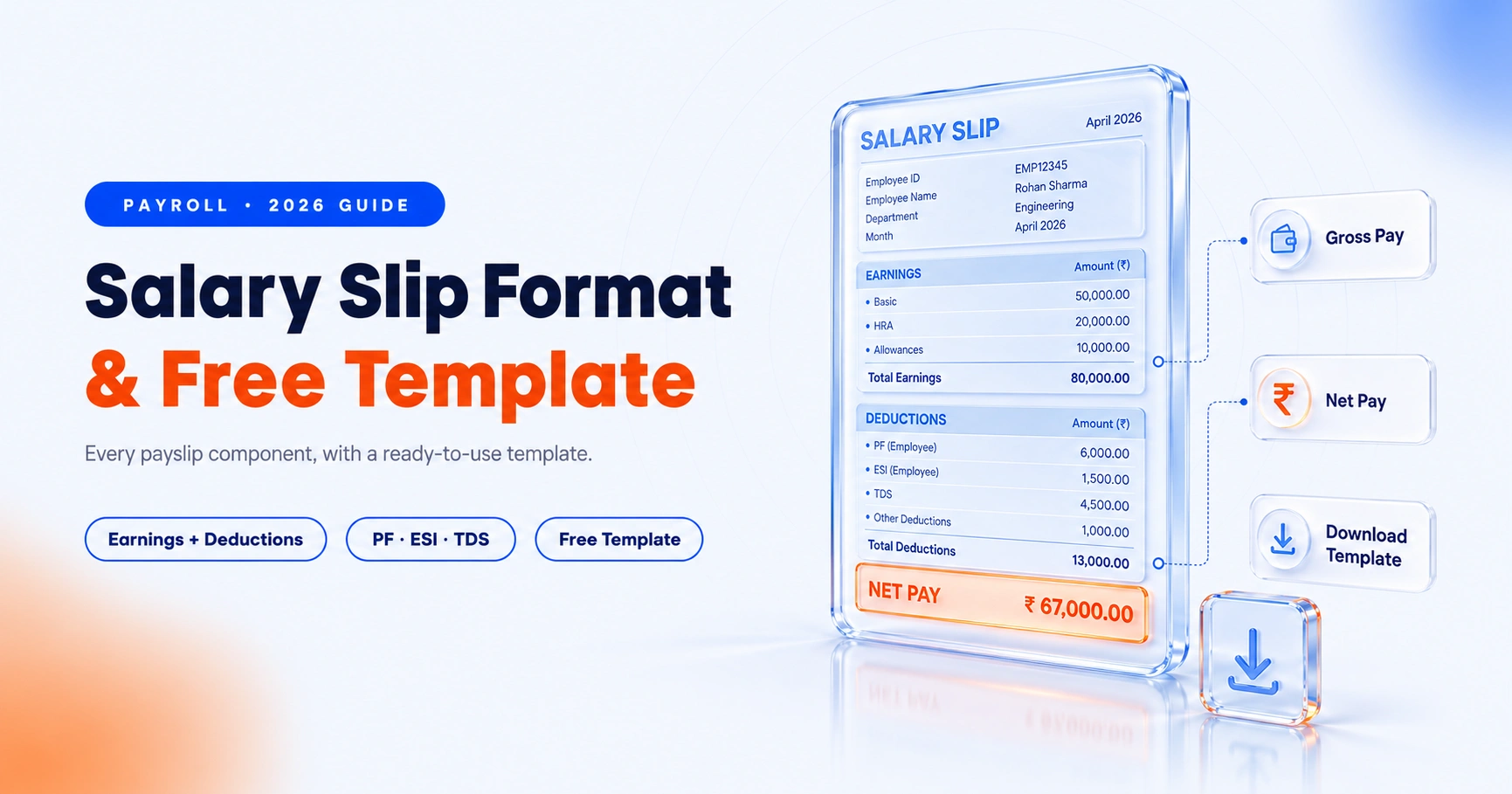
A salary slip, or payslip, is the monthly document an employer gives each employee that lists their earnings, deductions, and net take-home pay. It is proof of income for loans, visas, and new jobs, and proof of compliance for the employer. A clear salary slip format shows every component at a glance and leaves no room for payroll disputes.
Key Takeaways
- A salary slip lists earnings, deductions, and net pay for one month.
- It has two sides: earnings such as Basic and HRA, and deductions such as PF, PT, and TDS.
- Net pay is simply total earnings minus total deductions.
- Issuing wage slips is a compliance requirement under most state Shops and Establishment Acts.
- A good format shows employee details, a component breakdown, and both gross and net clearly.
What Is a Salary Slip?
A salary slip is a document issued every pay cycle that records how an employee's salary was calculated. It shows the gross earnings, every deduction made, and the net amount credited to the bank. Employees rely on it as proof of income, and employers rely on it as evidence that statutory deductions were made correctly.
The slip usually carries the company name, the employee's details, the pay period, and a clear split between earnings and deductions. Whether printed or digital, the information stays the same.
Components of a Salary Slip
Every salary slip has two clear halves. The gap between them is your take-home pay.
Earnings
- Basic Salary, usually 40 to 50 percent of the total.
- House Rent Allowance (HRA).
- Dearness Allowance (DA), where applicable.
- Conveyance, medical, and other allowances.
- Special Allowance, the balancing figure.
- Bonus or variable pay, if paid that month.
Deductions
- Employee Provident Fund (EPF), 12 percent of Basic plus DA.
- Professional Tax (PT), a small state deduction.
- TDS, income tax deducted at source.
- ESI, for eligible employees.
- Any loan or advance recovery.
The split of these components comes from your salary structure, which is fixed at the offer stage and then flows into every monthly slip.
Salary Slip Format: Sample
Here is a standard salary slip layout. Copy it, add your company header, and fill the figures each month.
| [Company Name] Payslip for [Month, Year] | |||
|---|---|---|---|
| Employee: __________ ID: __________ Designation: __________ Bank A/C: __________ | |||
| Earnings | Amount (Rs) | Deductions | Amount (Rs) |
| Basic Salary | 40,000 | Employee EPF | 4,800 |
| HRA | 20,000 | Professional Tax | 200 |
| Conveyance Allowance | 1,600 | TDS | 4,000 |
| Special Allowance | 27,400 | ||
| Gross Earnings | 89,000 | Total Deductions | 9,000 |
| Net Pay (Gross minus Deductions) | 80,000 | ||
Add a footer with the net pay in words, the number of paid days and LOP days, and the date of payment. Many employers also print the PF and UAN numbers for the employee's reference.
Types of Salary Slip Formats
The content is standard, but the format varies by how it is delivered.
- Printed slip. A signed hard copy, still used in some factories and small firms.
- PDF payslip. A password-protected PDF emailed each month, the most common format today.
- Self-service slip. Downloaded by the employee from an HR or payroll portal, on web or mobile.
Digital slips are faster, searchable, and easier to store, which is why most Indian employers have moved to automated payslip generation.
How to Read Your Salary Slip
Reading it is simple once you know the three lines that matter.
- Gross earnings. The total of everything on the earnings side.
- Total deductions. The total of PF, PT, TDS, and any recoveries.
- Net pay. Gross minus deductions, which is what reaches your bank.
Check that your Basic, PF, and deductions match your salary structure, and that paid days and LOP are correct. Most payroll errors show up as a mismatch on one of these lines.
Is a Salary Slip Legally Required?
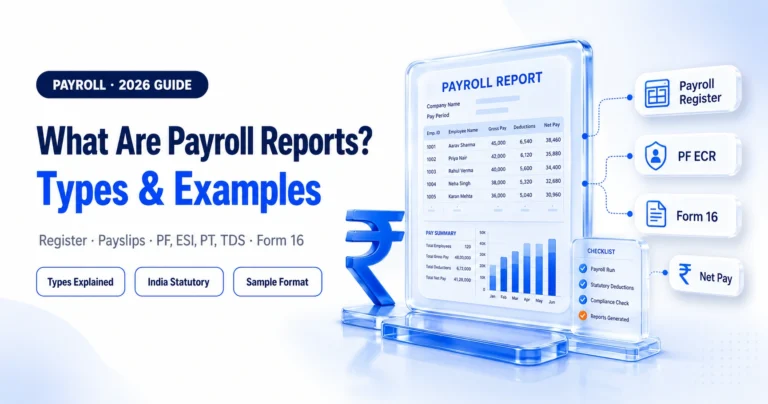
Yes, in effect. Most state Shops and Establishment Acts and wage laws require employers to issue wage slips and maintain a register of wages. Under the Code on Wages, wage records and slips can be kept electronically. Beyond compliance, a clear slip protects the employer during audits and the employee during any dispute over pay. Salary slips also feed directly into your payroll reports for the month.
Frequently Asked Questions
What is a salary slip?
A salary slip, or payslip, is a monthly document from an employer that lists an employee's earnings, deductions, and net take-home pay for that pay period. It serves as proof of income and of statutory compliance.
What are the main components of a salary slip?
Earnings such as Basic, HRA, and allowances on one side, and deductions such as EPF, Professional Tax, TDS, and ESI on the other. Net pay is total earnings minus total deductions.
How is net pay calculated on a salary slip?
Net pay equals gross earnings minus total deductions. Gross is the sum of all earnings, and deductions include employee PF, Professional Tax, TDS, and any loan recovery.
Is an employer required to give a salary slip?
In practice yes. Most state Shops and Establishment Acts and wage laws require employers to issue wage slips and maintain a wage register, which can now be kept electronically.
Can I get a salary slip if I am paid in cash?
Yes. The mode of payment does not change the requirement. Even for cash wages, the employer should issue a wage slip and maintain the wage register.
Generate Accurate Payslips Every Month
Auto-generate compliant salary slips with PF, PT, and TDS calculated correctly, delivered to every employee on web and mobile, with zero manual effort.