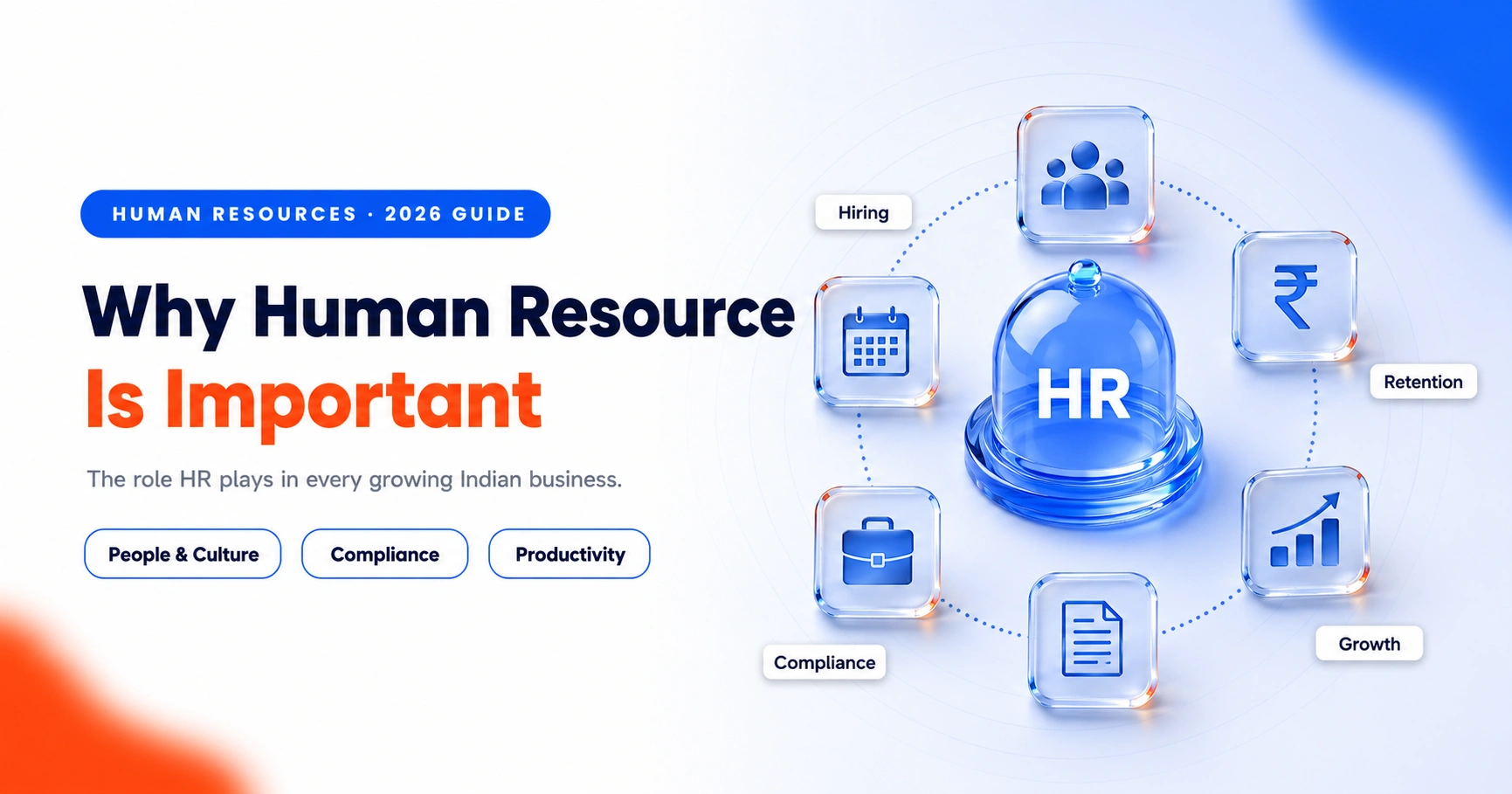
Human resource is important because people run every business, and HR is the function that hires them, pays them on time, keeps them compliant with the law, and helps them perform. Without a strong HR function, an Indian company struggles to attract talent, retain staff, and stay on the right side of labour regulations.
Most founders start by treating HR as paperwork. Salary slips, leave registers, a few offer letters. The moment the team crosses 20 or 30 people, that view breaks. This guide explains what human resource really means, why it matters more than most owners think, and where it directly moves business results.
Key Takeaways
- People run the business, and HR is the function that hires, pays, and retains them while keeping them compliant.
- Strong HR lifts hiring, retention, productivity, culture, and compliance at the same time.
- In India, HR carries a heavy statutory load (PF, ESI, professional tax, gratuity, labour codes) with real penalties.
- Good onboarding and fair appraisals cut attrition, which is far cheaper than constant rehiring.
- HR gives leaders data on headcount, cost per hire, and attrition to decide on facts, not guesses.
- HR software removes the manual work, so HR can focus on people, not paperwork.
What "human resource" actually means
Human resource refers to the people who work for your organisation, and to the department that manages everything about their working life. That covers the full employee journey: sourcing, hiring, onboarding, payroll, attendance, leave, performance, training, and exit.
Think of it in two layers. The people are the asset. The HR function is the system that protects and grows that asset. When people call HR "important", they usually mean the second layer, the work that turns a group of individuals into a productive, compliant, and stable workforce.
Why is human resource important? Seven concrete reasons
- It brings in the right people. Hiring the wrong person is expensive. HR runs structured recruitment so roles get filled with people who can actually do the job.
- It keeps salaries accurate and on time. A single payroll error damages trust fast. Reliable payroll processing is one of the clearest signs of a healthy HR function.
- It protects you from legal risk. PF, ESI, professional tax, gratuity, and the new labour codes all carry penalties. HR keeps your statutory filings clean.
- It retains your best staff. Good onboarding, fair appraisals, and clear policies reduce attrition, which is far cheaper than constant rehiring.
- It drives productivity. Clear roles, goals, and feedback loops help people do more meaningful work.
- It builds culture. HR sets the tone for how people treat each other, from a POSH-safe workplace to how grievances get handled.
- It gives leaders data. Headcount, cost per hire, attrition, and attendance trends let founders make decisions on facts, not guesses.
What HR does day to day
The importance of HR is easier to see when you list the core HR functions it owns. Most of these run every single month.
| HR area | What it covers | Why it matters |
|---|---|---|
| Recruitment | Job posts, screening, interviews, offers | Fills roles with the right talent |
| Onboarding | Documentation, setup, first-week plan | New hires become productive faster |
| Payroll | Salary, deductions, payslips, filings | Accurate, on-time pay builds trust |
| Attendance and leave | Shifts, leave balances, regularisation | Fair, transparent time tracking |
| Performance | Goals, reviews, feedback | People grow and stay engaged |
| Compliance | PF, ESI, PT, gratuity, labour codes | Avoids penalties and legal trouble |
How strong HR shows up in business results
HR is not a cost centre when it is done well. It is a lever. A company that onboards well sees new hires reach full output in weeks instead of months. Reliable attendance tracking stops payroll leakage from buddy punching and untracked overtime. A fair performance management process keeps your strongest people from leaving for a competitor.
Attrition is the clearest example. Replacing an employee can cost half to twice their annual salary once you count hiring, training, and lost output. Every point of attrition that HR prevents drops straight to your bottom line.
Why HR matters more in the Indian context
India adds a compliance layer that many small businesses underestimate. Provident fund, employee state insurance, professional tax, gratuity, and the four new labour codes each carry their own rules, due dates, and penalties. A missed PF challan or a wrong gratuity calculation is not a small mistake, it invites interest and notices.
This is why statutory compliance sits at the core of the HR job in India. HR is the function that keeps your filings correct across every state you hire in, so growth never quietly creates legal exposure.
A quick example
Take a 40-person IT services firm in Pune. In year one they run HR on spreadsheets. Payroll takes three days, two people quit over delayed reimbursements, and a PF filing slips past its due date. In year two they put a proper HR process in place. Payroll closes in half a day, leave management is self-service, appraisals happen on schedule, and filings never miss a deadline. Same headcount, very different company. That gap is the value of HR.
How HR software strengthens the function
As teams grow, manual HR stops scaling. This is where an HRMS platform earns its place. It puts hiring, payroll, attendance, leave, performance, and compliance in one system, removes duplicate data entry, and gives leaders live reports. HR then spends less time on paperwork and more time on people, which is where it adds the most value.
Frequently asked questions
What is the main role of human resource in a company?
The main role of HR is to manage the full employee lifecycle, from hiring and onboarding to payroll, performance, and exit, while keeping the company compliant with labour law. In short, HR makes sure the right people are hired, paid correctly, supported, and retained.
Why is HR important for a small business?
Small businesses feel HR mistakes hardest because every person matters. Good HR helps a small firm hire well, avoid payroll and compliance errors, and hold on to its best staff. It turns a fragile team into a stable one that can grow.
Is human resource only about hiring and firing?
No. Hiring and exit are only two parts of the job. HR also owns payroll, attendance, leave, performance, training, culture, and statutory compliance. These day-to-day functions are where most of the value is created.
How does HR add value to business growth?
HR adds value by reducing attrition, speeding up hiring, keeping people productive, and preventing compliance penalties. Each of these has a direct effect on cost and revenue, which is why growing companies invest in a proper HR function early.