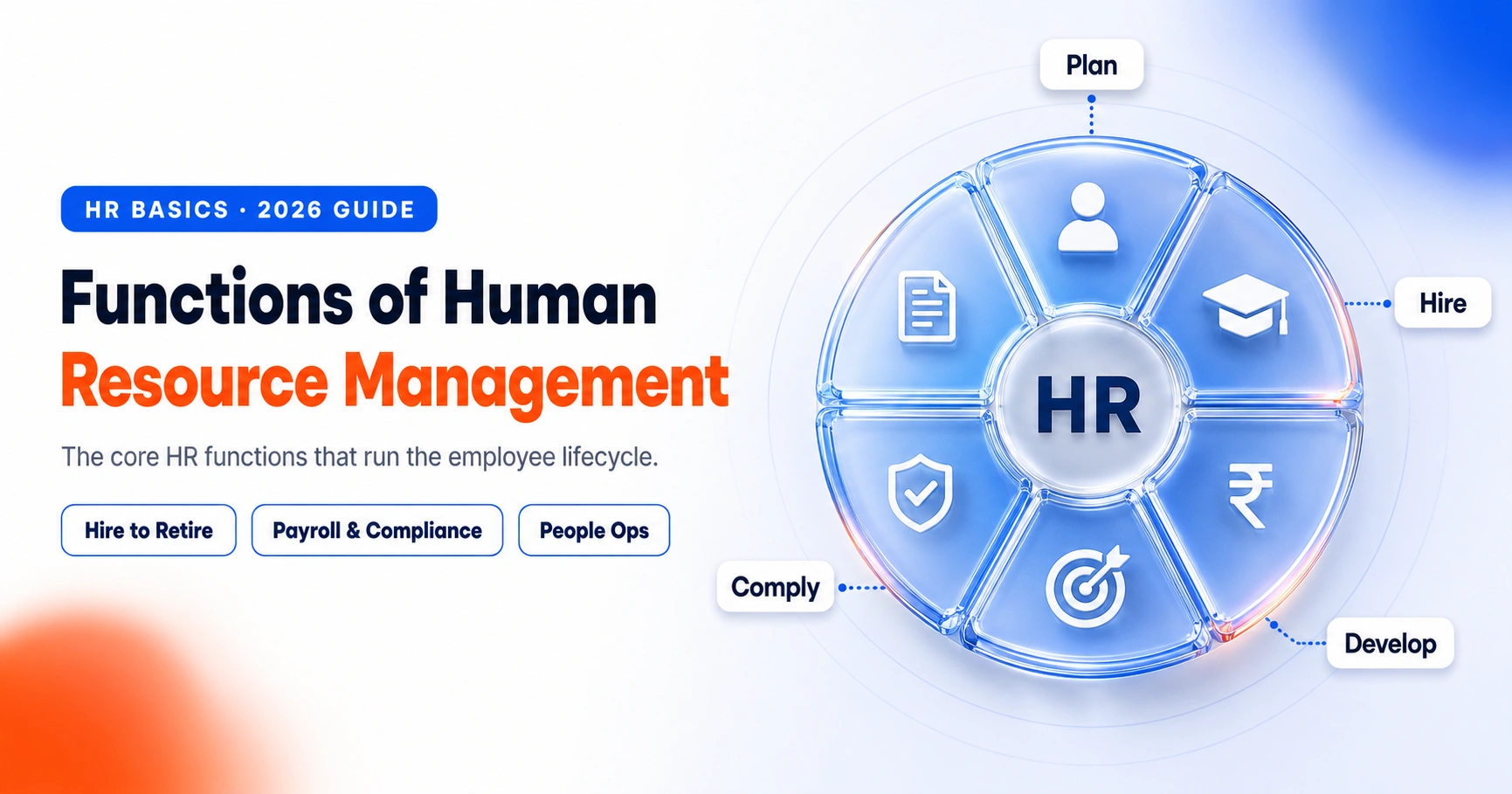
The functions of human resource management are the core activities an HR team runs to manage people from hire to exit: human resource planning, recruitment and selection, onboarding, training and development, performance management, compensation and payroll, employee relations, statutory compliance, and HR analytics. Together these functions cover the full employee lifecycle and keep the workforce productive and compliant.
Every company does HR, whether or not it has an HR department. When you hire someone, pay them, train them, or handle a complaint, you are running an HR function. This guide breaks down the nine core functions of human resource management, what each one does, and how they fit together for an Indian business.
What is human resource management?
Human resource management (HRM) is the practice of managing people at work so the organisation and its employees both succeed. It turns a group of individuals into a productive, motivated, and legally compliant workforce. HRM is usually split into two layers: managerial functions that plan and control the work, and operative functions that actually deliver it.
Managerial vs operative functions
The managerial functions are planning, organising, directing, and controlling. They set HR strategy, structure the team, guide people, and measure results. The operative functions are the day-to-day HR work most people recognise: hiring, training, payroll, and compliance. The nine functions below are the operative ones that run the employee lifecycle.
The 9 core functions of human resource management
1. Human resource planning
HR planning forecasts how many people the business needs, with which skills, and by when. It matches manpower to business goals so you are never over-staffed or short-handed. Good planning feeds every other function, starting with hiring.
2. Recruitment and selection
This function attracts, screens, and hires the right candidates. It covers job descriptions, sourcing, interviews, and offers. Strong recruitment and applicant tracking shortens time-to-hire and improves the quality of every new joiner.
3. Onboarding and induction
Onboarding turns a signed offer into a productive employee. It handles documentation, setup, policy sign-off, and the first-week plan. Structured employee onboarding helps new hires reach full output faster and reduces early attrition.
4. Training and development
This function builds employee skills through induction training, on-the-job learning, and upskilling. It closes skill gaps identified during planning and appraisals, and it keeps people ready for larger roles. Development is also a key retention driver.
5. Performance management
Performance management sets goals, reviews progress, and gives feedback. It links individual work to business targets and identifies both top performers and those who need support. A fair performance management process keeps people engaged and growing.
6. Compensation and payroll
This function decides what people are paid and makes sure they get it accurately and on time. It covers salary structure, benefits, statutory deductions, and payslips. Reliable payroll processing is one of the clearest signs of a well-run HR team.
7. Attendance, leave, and time
HR tracks working hours, shifts, leave balances, and overtime. Accurate attendance and time tracking feeds directly into payroll and stops leakage from untracked hours. It also keeps leave fair and transparent for every employee.
8. Employee relations and engagement
This function manages the relationship between the employer and its people. It handles grievances, discipline, communication, and workplace culture, including a POSH-safe environment. Healthy employee relations reduce conflict and build a workplace people want to stay in.
9. Statutory compliance and records
HR keeps the company on the right side of labour law. It manages PF, ESI, professional tax, gratuity, the labour codes, and the registers each one requires. Strong statutory compliance protects the business from penalties, notices, and legal exposure.
The functions at a glance
| HR function | What it delivers |
|---|---|
| Human resource planning | Right people, right skills, right time |
| Recruitment and selection | Quality hires, faster |
| Onboarding and induction | New hires productive sooner |
| Training and development | Closed skill gaps, ready talent |
| Performance management | Goals met, people engaged |
| Compensation and payroll | Accurate, on-time pay |
| Attendance, leave, and time | Fair, transparent time tracking |
| Employee relations | Low conflict, strong culture |
| Compliance and records | No penalties, clean filings |
How the functions work together
The functions are not silos, they form a chain. Planning decides who to hire. Recruitment brings them in. Onboarding settles them. Training grows them. Performance management guides them. Payroll pays them. Compliance protects the whole system. A weak link anywhere shows up somewhere else, for example poor onboarding raises early attrition, which forces more recruitment. This chain is a big part of why human resource is so important to a growing business.
How HR software supports every function
As a team grows, running these functions on spreadsheets breaks down. An HRMS platform connects them in one system, so a new hire flows from recruitment to onboarding to payroll without re-entering data. It automates attendance, applies statutory rules, and gives leaders live reports. The result is fewer errors and more time for the people side of HR.
The software that runs these functions comes in three overlapping tiers, with HRMS, HRIS and HCM explained here.
Key takeaways
- The functions of human resource management cover the full employee lifecycle, from planning and hiring to payroll and compliance.
- HR functions split into managerial (plan, organise, direct, control) and operative (the nine day-to-day functions).
- The functions work as a chain, so a weak link in one shows up as a problem in another.
- HR software connects the functions and removes manual work, letting HR focus on people.
Frequently asked questions
What are the main functions of human resource management?
The main functions are human resource planning, recruitment and selection, onboarding, training and development, performance management, compensation and payroll, attendance and leave, employee relations, and statutory compliance. Together they manage the employee from hire to exit while keeping the company compliant.
What is the difference between managerial and operative HR functions?
Managerial functions are planning, organising, directing, and controlling the HR work. Operative functions are the hands-on activities like recruitment, training, payroll, and compliance. Managerial functions set the direction, operative functions deliver the results.
Which HR function is the most important?
No single function is most important because they depend on each other. That said, compensation and compliance are non-negotiable in India, since payroll errors and missed statutory filings carry direct financial and legal consequences.
How does HR software help with these functions?
HR software puts every function in one connected system. It moves employee data from hiring to onboarding to payroll without re-entry, automates attendance and compliance, and gives managers live reports. This reduces errors and frees HR to focus on people rather than paperwork.