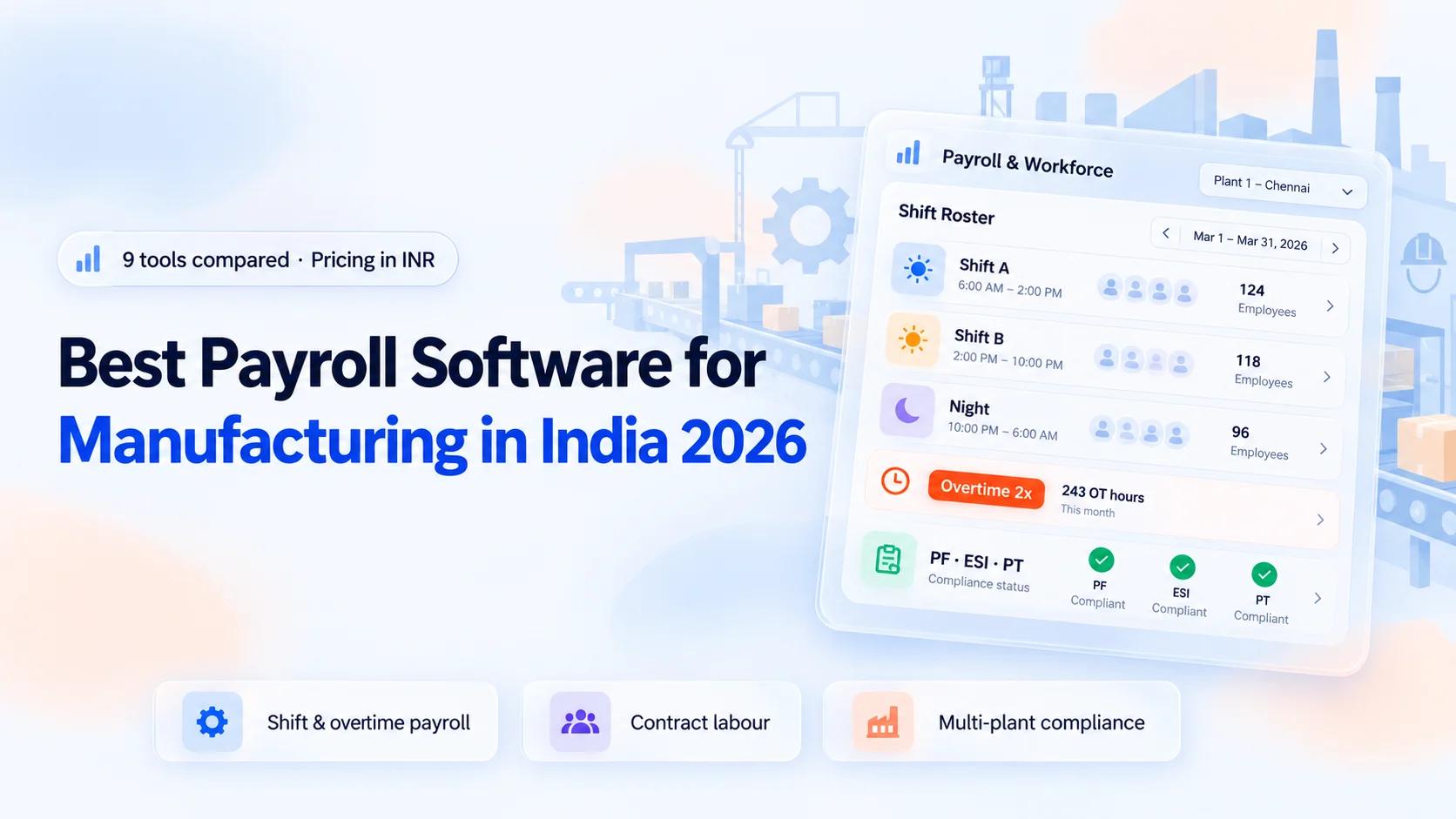
Factory payroll is not office payroll with more people. It runs on shifts, overtime at double rate, contract labour under a separate Act, minimum wages that move twice a year, and a workforce where most operators sit under the ESI ceiling. Add a second plant in another state and professional tax, Shops and Establishments registrations and labour welfare fund all double. This guide ranks the best payroll software for manufacturing in India, nine platforms graded on what a plant actually needs, with real pricing, so you can shortlist in an afternoon.
Short Answer
factoHR India and HROne are the strongest all-round picks for Indian manufacturers because they tie shift attendance, overtime and contract-labour tracking directly into statutory payroll. greytHR and Saral PayPack suit plants that want statutory accuracy first, Keka and Zimyo fit modern mid-size manufacturers, ZingHR fits large multi-plant groups, and Pocket HRMS and Kredily fit small units on a budget.
Key Takeaways
- Manufacturing payroll needs shift and overtime rules, contract-labour tracking, piece-rate and minimum-wage logic built in, not bolted on.
- factoHR India and HROne lead for attendance-to-payroll depth; greytHR and Saral PayPack for statutory accuracy; ZingHR for large multi-plant groups; Keka, Zimyo, Pocket HRMS and Kredily for mid-size and small units.
- Most operators earn under the Rs 21,000 ESI ceiling, so ESI accuracy matters as much as PF; the EPF wage ceiling is now Rs 25,000.
- Overtime under the Factories Act is paid at twice the ordinary rate and must be computed from actual punch data, not a manual register.
- Contract workers through a CLRA contractor still need principal-employer visibility of PF, ESI and wage payment.
- Budget roughly Rs 40 to Rs 170 per employee per month for the software; the real saving is in overtime leakage and penalty avoidance.
- Pilot one plant for a full month with real shift rosters before switching the whole group.
Why Office Payroll Software Breaks on the Factory Floor
A corporate payroll tool assumes one shift, salaried staff and a monthly attendance summary. A plant breaks every one of those assumptions.
- Shifts and rotation: three shifts, weekly rotation, night allowance and shift swaps all change what a day of attendance is worth.
- Overtime at double rate: Section 59 of the Factories Act requires twice the ordinary rate of wages for hours beyond nine a day or 48 a week. The software has to compute this from actual punches, with the daily and weekly caps applied.
- Minimum wages that move: state minimum wages revise the variable dearness allowance around 1 April and 1 October. Every skill category and zone has a different floor, and a wrong rate on 300 operators is a Labour Department finding.
- Contract labour: workers supplied under the Contract Labour (Regulation and Abolition) Act are paid by the contractor, but the principal employer is liable if PF, ESI or wages are not paid. Payroll has to carry contractor-wise headcount and compliance proof.
- Piece-rate and incentive pay: production-linked wages need output data from the shop floor, not a flat monthly figure.
- Statutory bonus and gratuity: the Payment of Bonus Act covers employees earning up to Rs 21,000 a month, with the calculation ceiling at Rs 7,000 or the minimum wage, whichever is higher. Gratuity accrues at 15 days of wages for every completed year.
- Multi-plant, multi-state: professional tax slabs, labour welfare fund, Shops and Establishments and Factories Act registrations differ by state and by plant.
The Labour Codes in force since November 2025 add one more layer: the single definition of wages requires that wages be at least 50 percent of total pay, which widens the PF and gratuity base for plants that historically kept basic low. Our guide to the new Labour Codes covers what to change in the salary structure.
How We Graded These Platforms
We scored each tool on the things a plant HR or payroll manager has to get right every month, not on brochure features:
- Attendance-to-payroll depth: shift rosters, overtime at the statutory rate, late and early marks, and biometric or face capture at the gate.
- Statutory engine: PF at the Rs 25,000 ceiling, ESI, professional tax by state, labour welfare fund, bonus, gratuity, TDS and Form 138.
- Contract-labour handling: contractor-wise registers, principal-employer compliance view, and separate costing.
- Wage structures: minimum-wage categories, piece-rate, incentive and allowance logic.
- Multi-plant control: entity-wise and state-wise filing, consolidated reporting and finance integration with Tally, SAP or an ERP.
- Price and support: transparent India pricing and support that understands the Factories Act.
Quick Comparison: Payroll Software for Manufacturing
| Tool | Best for | Standout strength | Watch-out | Starting price |
|---|---|---|---|---|
| factoHR India | Plants wanting attendance and payroll in one system | Shift, overtime and contractor payroll from live punches | Advanced analytics are add-ons | Around Rs 4,999/mo (up to 50 staff) |
| HROne | Mid to large multi-plant groups | Multi-entity statutory and audit trails | Enterprise tier is quote-based | Around Rs 85 to 130 per emp/mo |
| greytHR | Small and mid plants, statutory first | State-wise PF, ESI, PT and LWF accuracy | Lighter shift and shop-floor features | Free up to 25; paid from Rs 1,495/mo |
| Keka | Modern mid-size manufacturers | Clean UX with shift and overtime rules | Priced per 100 employees | Around Rs 6,999/mo (up to 100) |
| Pocket HRMS | Small units on a budget | Low entry price, Indian statutory coverage | Thinner contractor and piece-rate logic | Around Rs 2,495/mo (up to 50) |
| Saral PayPack | Plants wanting a desktop statutory engine | Deep PF, ESI, bonus and gratuity forms | Dated interface, licence-based | Custom licence |
| ZingHR | Large groups with many plants | Scale, local languages and field attendance | Quote-based, enterprise-focused | Around Rs 165 per emp/mo |
| Zimyo | Mid-size plants wanting one suite | Payroll plus HR at per-employee pricing | Shop-floor hardware integration varies | Rs 60 to Rs 160 per emp/mo |
| Kredily | Micro and small units | Free core payroll and attendance | Limited depth for complex shifts | Free core plan |
Prices are indicative for 2026 and depend on headcount, modules and contract term. Confirm a live quote. Because every rupee of factory payroll starts at the gate, read our guide to choosing an attendance management system alongside this list.
The 9 Best Payroll Software for Manufacturing in India (2026)
1. factoHR India
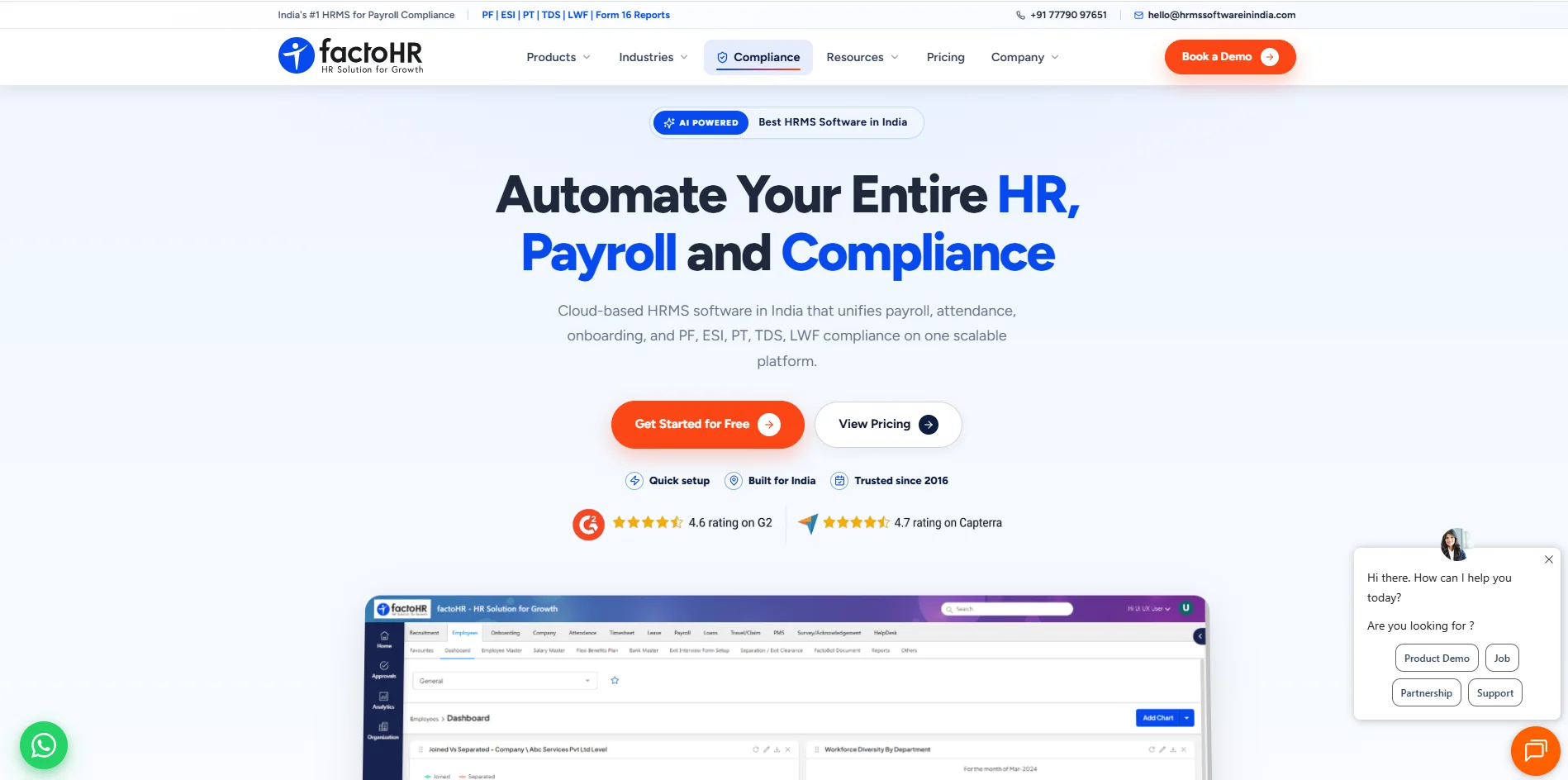
factoHR India is a biometric-first payroll and HR platform built for multi-location, shift-based workforces, which is exactly what a plant is. Gate punches from biometric, face or mobile devices flow into shift rosters, overtime is computed at the statutory double rate, and the result lands in payroll without a re-keyed attendance sheet. Contract workers can be tracked contractor-wise with their own PF and ESI view, so the principal-employer liability is visible before the inspector asks. It is the strongest fit for a manufacturer that wants attendance, overtime, contractor payroll and compliance in one system, which is why it tops this list. Module detail is on the payroll software page.
Key features:
- Shift rosters with rotation, night allowance and swap approvals
- Overtime at the Factories Act rate from live punches, with daily and weekly caps
- Contractor-wise registers and principal-employer compliance view
- Minimum-wage categories by state, zone and skill, with VDA updates
- PF at the Rs 25,000 ceiling, ESI, PT, LWF, bonus and gratuity automated
- Form 138 and Form 16 generation, challan-ready reports
- Tally and ERP export for plant-wise cost booking
- Employee mobile app with payslips, leave and attendance regularisation
Best suited for: single-plant and multi-plant manufacturers from 50 to several thousand employees who want shop-floor attendance and statutory payroll on one platform.
Watch-out: some advanced analytics and recruitment modules are priced as add-ons.
Pricing: free for up to 20 employees; transparent plans from around Rs 4,999 a month for up to 50 employees.
2. HROne
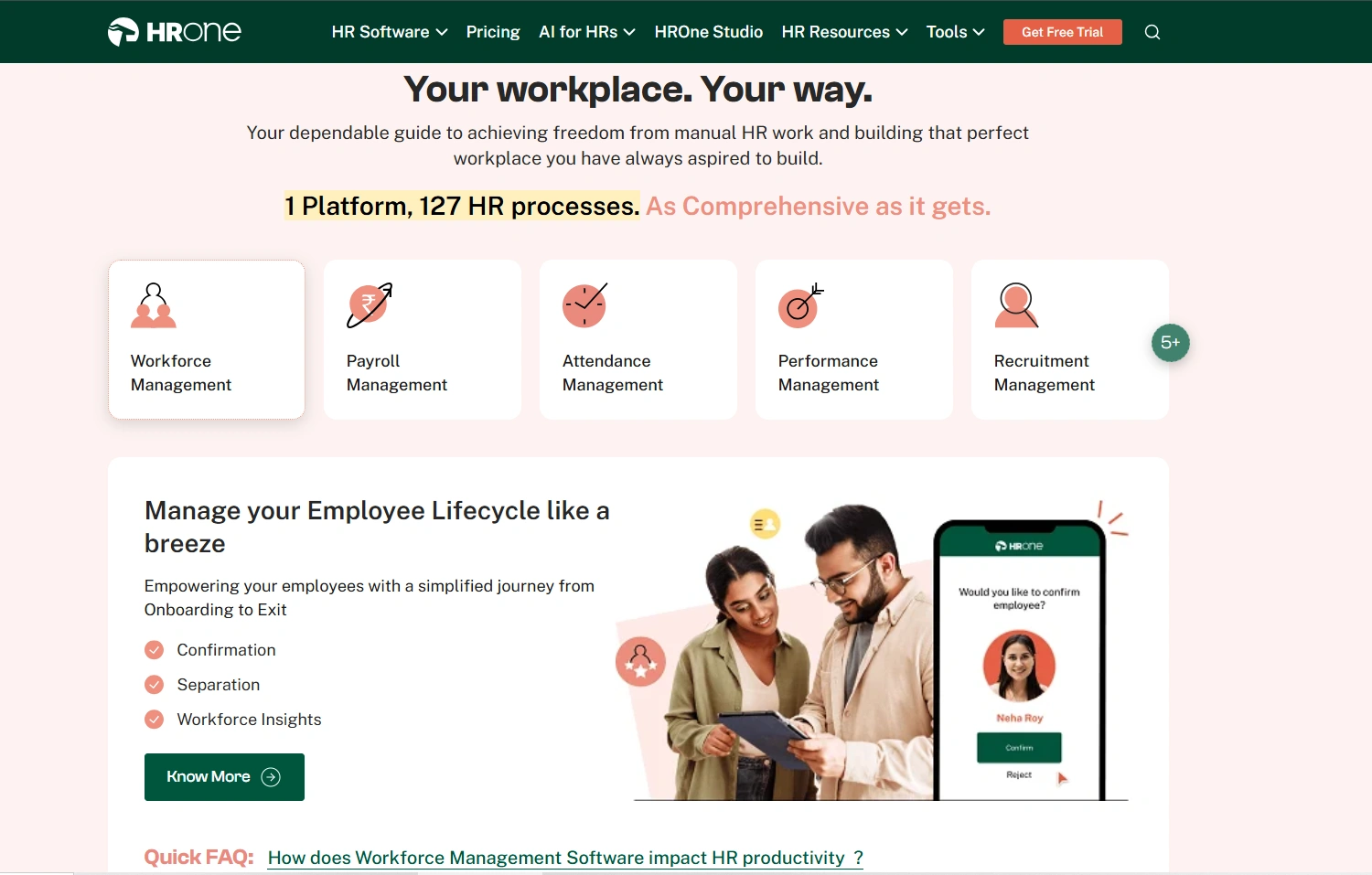
HROne is a hire-to-retire suite with strong multi-entity payroll, which suits a group that runs several plants under different legal entities. Statutory filing is state-wise, audit trails are detailed, and the workflow engine handles plant-level approvals for overtime and advances. It is a solid choice when the group already has a corporate HR team and wants one system across plants and the head office.
Key features:
- Multi-entity, multi-state payroll with consolidated reporting
- Shift management with overtime and attendance regularisation
- Contractor and vendor workforce tracking
- PF, ESI, PT, LWF, TDS and Form 138 automation
- Advance, loan and arrears handling in the same run
- Approval workflows for plant HR and finance
- Audit logs on every payroll change
Best suited for: mid to large manufacturing groups with 500-plus employees across multiple plants and entities.
Watch-out: the enterprise tier is quote-based and the breadth can be more than a single plant needs.
Pricing: roughly Rs 85 to Rs 130 per employee per month by tier.
3. greytHR
greytHR has been running Indian statutory payroll for two decades, and that heritage shows in the accuracy of its PF, ESI, professional tax and labour welfare fund handling across states. For a plant whose main worry is a clean inspection, it delivers the registers, challans and returns with minimal setup. Shift and shop-floor features are lighter than the attendance-first tools, so it pairs best with an existing biometric system.
Key features:
- State-wise PF, ESI, PT and LWF with automatic rate updates
- Statutory registers under the Factories Act and state rules
- Overtime and shift allowance through attendance import
- Bonus, gratuity and full-and-final computation
- Form 138, Form 16 and investment declaration workflow
- Employee portal and mobile app
Best suited for: small and mid-size plants that want statutory accuracy first and already have attendance hardware.
Watch-out: contractor payroll and complex shift rules need workarounds.
Pricing: free for up to 25 employees; paid plans from about Rs 1,495 a month.
4. Keka
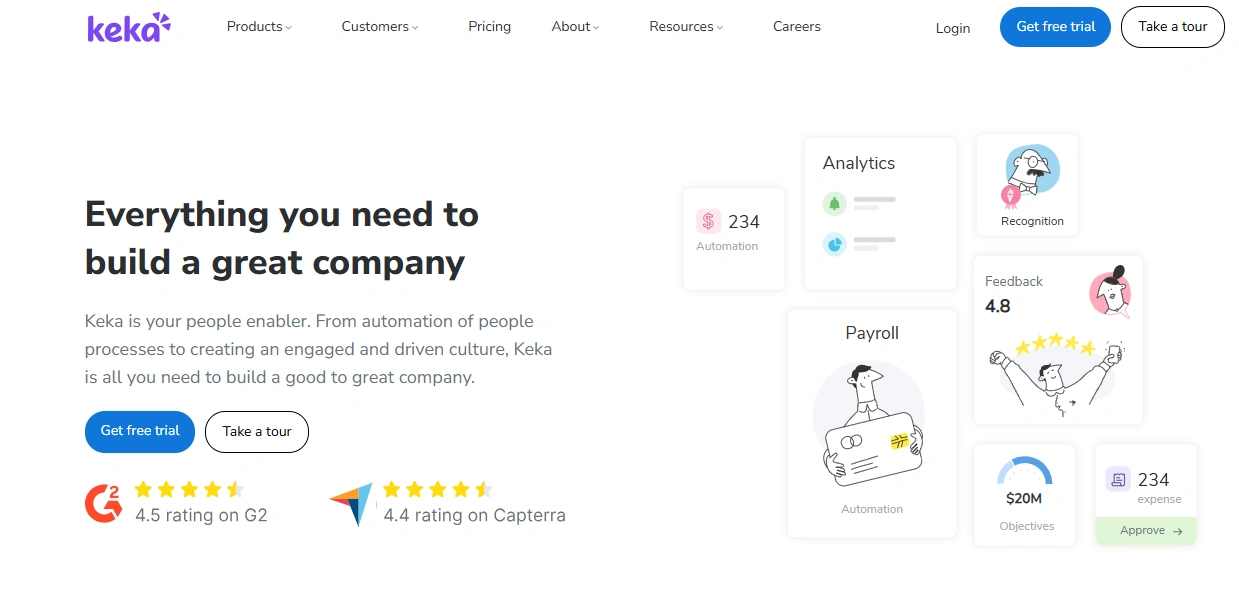
Keka brings a modern interface to payroll and HR, and its attendance module handles shift schedules, overtime policies and geo-fenced punches well enough for a mid-size plant. Payroll runs are transparent, with a review screen that shows every change before the bank file is generated. It is a good fit for a manufacturer that wants employees and supervisors to actually use the app.
Key features:
- Shift scheduling with overtime and comp-off policies
- Biometric, mobile and geo-fenced attendance
- Payroll review with variance highlights before finalisation
- PF, ESI, PT, TDS and Form 138 handled in-app
- Expense, loan and arrears processing
- Performance and engagement modules on the same platform
Best suited for: mid-size manufacturers with 100 to 1,000 employees that value usability.
Watch-out: pricing steps in blocks of 100 employees, which can overshoot for a small unit.
Pricing: plans start around Rs 6,999 a month for up to 100 employees.
5. Pocket HRMS
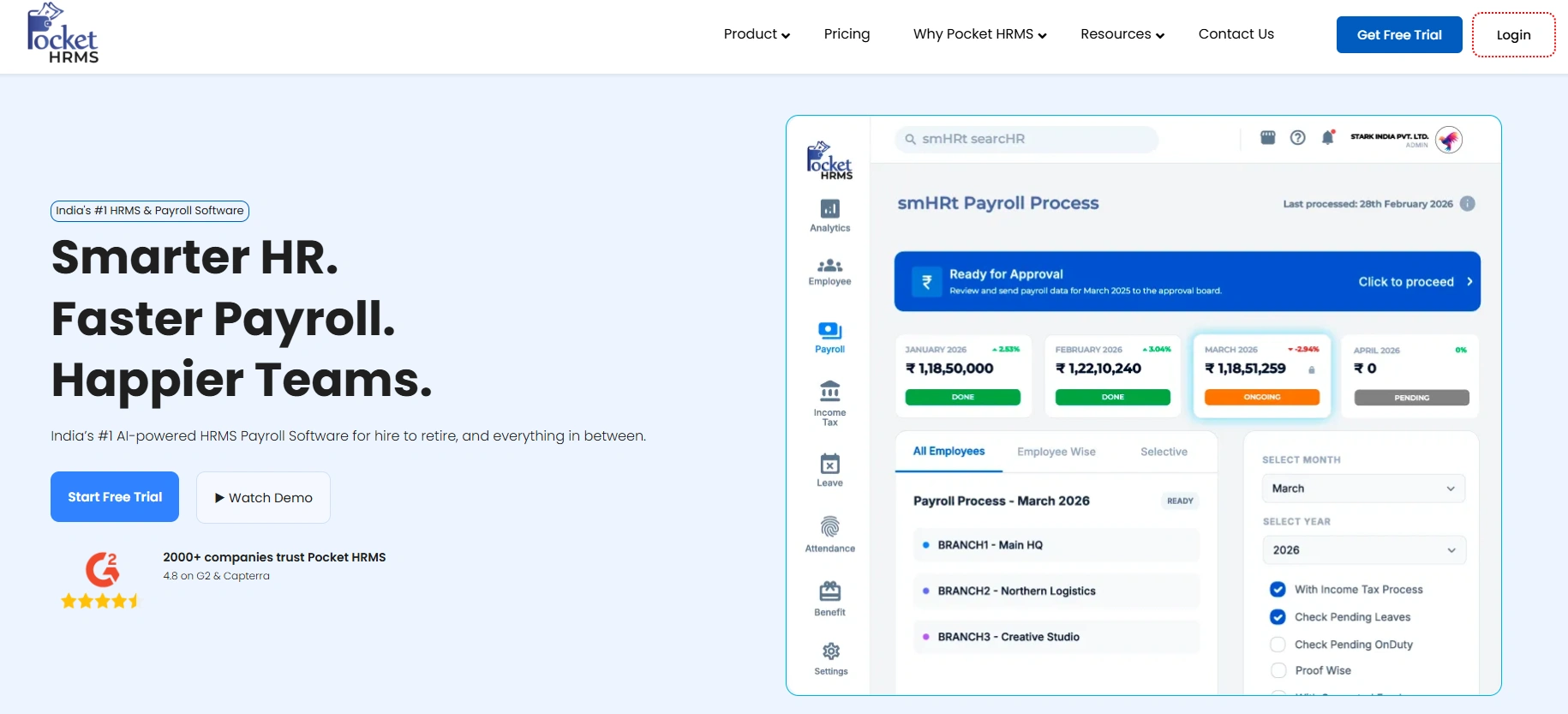
Pocket HRMS is a low-cost Indian payroll suite that covers the statutory basics well and adds attendance and leave at a price a small unit can justify. It is a sensible step up from spreadsheets for a plant with under 200 employees that wants compliant payslips and challans without a long implementation.
Key features:
- PF, ESI, PT and TDS with statutory reports
- Attendance and leave with biometric integration
- Payslip, Form 16 and bank transfer files
- Employee self-service on mobile
- Basic shift and overtime handling
Best suited for: small units moving off spreadsheets with a tight budget.
Watch-out: contractor tracking and piece-rate logic are thin.
Pricing: plans start around Rs 2,495 a month for up to 50 employees.
6. Saral PayPack
Saral PayPack is a long-standing Indian payroll engine with unusually deep statutory form coverage, including the Factories Act registers, bonus and gratuity computations that many cloud tools handle only through reports. It is licence-based and the interface is dated, but for a payroll team that lives in statutory forms it remains dependable.
Key features:
- Full PF, ESI, PT, LWF and bonus form sets
- Factories Act and Shops and Establishments registers
- Arrears, revisions and retrospective recalculation
- Attendance import from biometric devices
- Tally integration for cost booking
Best suited for: plants with an in-house payroll team that prioritises statutory forms over employee self-service.
Watch-out: dated interface and limited mobile experience.
Pricing: custom, licence-based; confirm with the vendor.
7. ZingHR
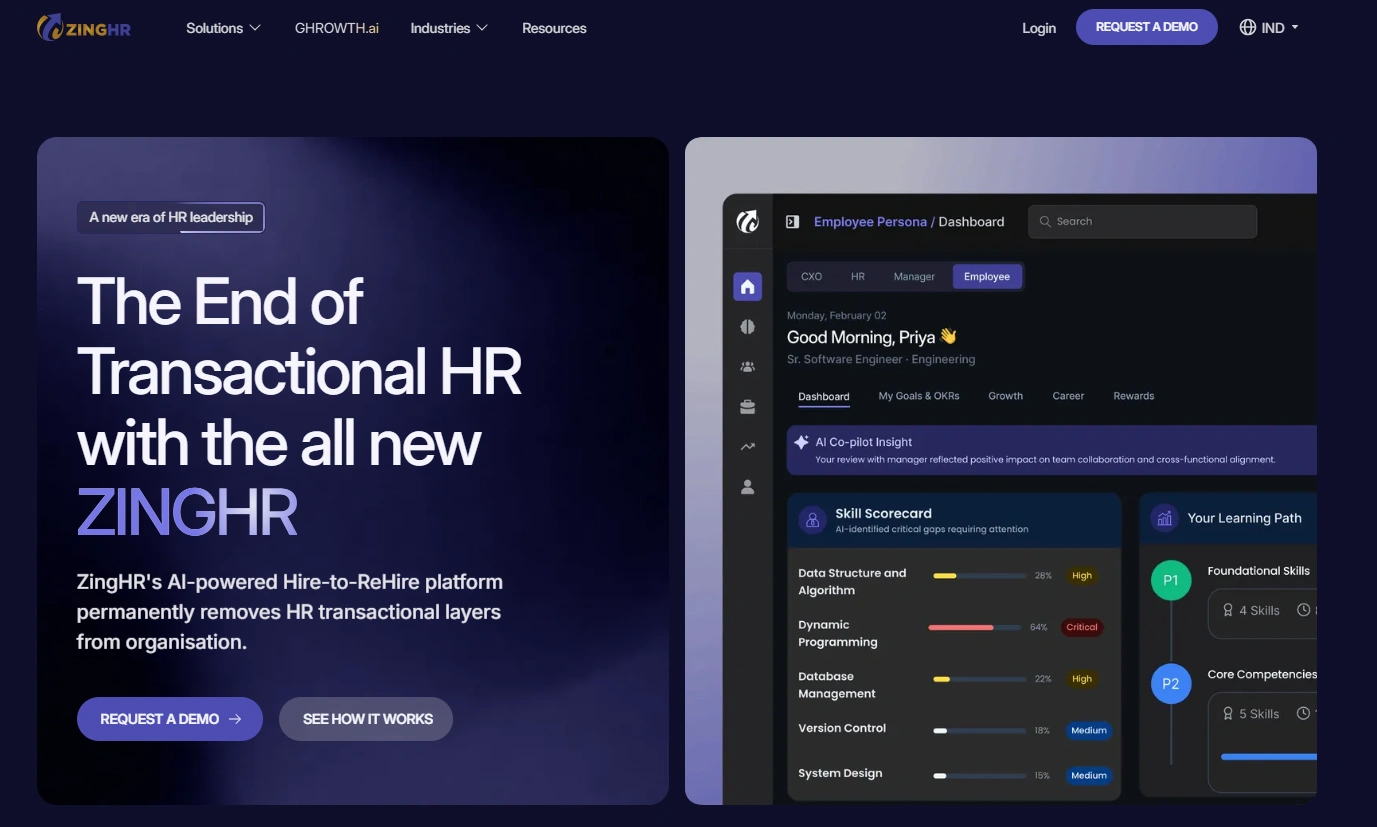
ZingHR is built for scale and for workforces spread across plants, warehouses and field locations. Its mobile attendance works in local languages and low connectivity, and payroll handles multi-entity statutory across states. It is the natural fit for a large group with many plants and a workforce that does not sit at a desk.
Key features:
- Enterprise multi-plant, multi-entity payroll
- Mobile attendance with face capture and local languages
- Shift and overtime rules by plant
- Statutory compliance across states with audit trails
- Workforce analytics for plant HR
Best suited for: large manufacturing groups with 2,000-plus employees.
Watch-out: quote-based and heavier than a single plant needs.
Pricing: around Rs 165 per employee per month, confirmed by quote.
8. Zimyo

Zimyo packages payroll, attendance, leave and performance into one suite at per-employee pricing, which makes it predictable for a growing plant. Payroll covers Indian statutory needs and the attendance module supports shifts and geo-fencing. It fits a mid-size manufacturer that wants a single vendor without enterprise pricing.
Key features:
- Per-employee pricing across payroll and HR modules
- Shift attendance with geo-fence and biometric options
- PF, ESI, PT, TDS and Form 138
- Expense and reimbursement handling
- Employee app and manager approvals
Best suited for: mid-size plants of 100 to 800 employees wanting one suite.
Watch-out: shop-floor hardware integration depends on the device.
Pricing: around Rs 60 to Rs 160 per employee per month by plan.
9. Kredily
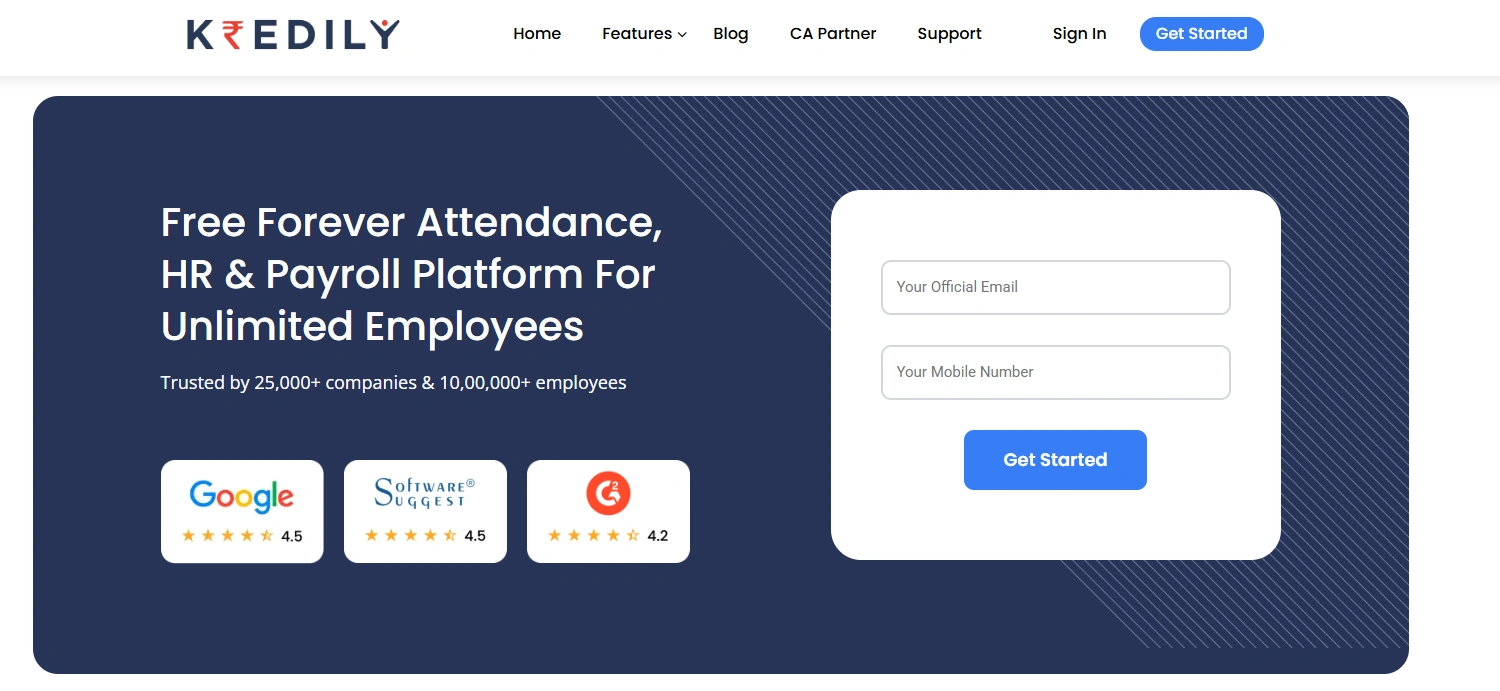
Kredily offers a free core plan for payroll and attendance, which makes it the realistic first step for a micro or small unit that cannot yet justify a paid platform. Statutory basics are covered and payslips are compliant. The limits show up with complex shifts, contractor tracking and multi-plant reporting.
Key features:
- Free core payroll with PF, ESI, PT and TDS
- Attendance and leave with mobile punch
- Payslips, bank files and basic reports
- Paid add-ons for advanced features
Best suited for: micro and small units under 50 employees.
Watch-out: limited depth for shifts, overtime and contractors.
Pricing: free core plan; paid add-ons for advanced features.
What Factory Payroll Really Costs in 2026
Most shop-floor employees earn under the Rs 21,000 ESI ceiling, so both PF and ESI apply on top of wages. The EPF wage ceiling moved to Rs 25,000 from 17 September 2026, which pulls more supervisors and skilled operators into mandatory PF. Here is a worked example for a machine operator earning Rs 16,000 gross a month with a basic of Rs 8,000, showing the employer statutory cost:
| Item (per operator) | Rate | Monthly |
|---|---|---|
| Employer EPF plus EPS | 12% of basic | Rs 960 |
| Employer ESI | 3.25% of gross | Rs 520 |
| EDLI plus admin | ~1% of basic | Rs 80 |
| Professional Tax | State slab | Rs 200 |
| Employer statutory outgo | Total of the above | Rs 1,760 |
| For 300 such operators | Total x 300 | Rs 5,28,000 a month |
On top of this sit statutory bonus, which accrues at a minimum of 8.33 percent of the bonus wage ceiling, gratuity at roughly 4.81 percent of basic, and overtime at double rate. Overtime is where plants leak money: a 10 percent error in recorded hours on 300 operators is worth lakhs a year. Track rate changes and due dates on the payroll compliance calendar.
How to Choose by Plant Size
The right tool depends on headcount and how many plants you run:
- Single unit, under 100 employees: prioritise statutory accuracy and a low entry price. greytHR, Pocket HRMS, Kredily or factoHR India on the free or starter tier fit well.
- One or two plants, 100 to 1,000 employees: you need shift rosters, overtime from punches and contractor tracking. factoHR India, Keka, Zimyo or Saral PayPack are the sweet spot.
- Group with many plants, 1,000-plus employees: you need multi-entity filing, audit trails and ERP integration. HROne, ZingHR or factoHR India at enterprise scale are built for this.
Whatever the size, the right payroll software for manufacturing is decided by overtime accuracy, contractor compliance and state-wise statutory, not app polish. The deeper buyer checklist is on our HR software for manufacturing page, and the broader HR shortlist is in our guide to the best HR software for manufacturing.
Implementation: What to Expect
Rollout in a plant is mostly about rosters, devices and wage masters, not the software screen. Plan for four things:
- Wage master clean-up: map every employee to a minimum-wage category, zone and skill level, and fix basic-to-gross ratios before import so the Labour Codes wage definition is met.
- Device and shift setup: connect gate biometrics or face devices, define shifts, grace periods and overtime rules per plant, and test a week of punches.
- Contractor onboarding: load contractor-wise headcount and collect PF and ESI proof so the principal-employer view works from month one.
- Parallel run: run one full month in parallel with the old process, reconcile overtime, ESI and PF to the rupee, then cut over. Expect three to six weeks for a single plant and longer for a group.
Frequently Asked Questions
Which Payroll Software Is Best for Manufacturing in India?
For most Indian manufacturers, factoHR India and HROne are the strongest all-round choices because they compute overtime and shift pay from live attendance and carry contractor compliance alongside on-roll payroll. greytHR and Saral PayPack suit plants that want statutory accuracy first, ZingHR fits large multi-plant groups, and Keka, Zimyo, Pocket HRMS and Kredily fit mid-size and small units.
Does Payroll Software Calculate Overtime at Double Rate?
The attendance-first tools do. factoHR India, Keka, HROne and ZingHR compute overtime from punch data at twice the ordinary rate as the Factories Act requires, with daily and weekly limits. Tools that import a monthly attendance summary rely on the figure you give them, so the computation happens outside the system.
How Is Contract Labour Handled in Payroll Software?
Contract workers are paid by the contractor, but the principal employer must ensure PF, ESI and wages are paid. The better platforms keep a contractor-wise register with headcount, wage proof and challan copies, so the plant can show compliance during a CLRA inspection without chasing each contractor.
Does ESI Apply to Factory Workers?
Yes, for any employee earning gross wages up to Rs 21,000 a month, at 3.25 percent from the employer and 0.75 percent from the employee. Most operators and helpers fall under this ceiling, so ESI is a larger line than PF for many plants. Supervisors and engineers above the ceiling carry PF, professional tax and TDS instead.
How Much Does Manufacturing Payroll Software Cost?
Budget roughly Rs 40 to Rs 170 per employee per month depending on modules and headcount. Entry plans start around Rs 1,495 to Rs 4,999 a month for small units, while enterprise tiers for multi-plant groups are quote-based. The software usually pays for itself in overtime accuracy and avoided penalties.
Can It Handle Piece-Rate and Production Incentives?
The stronger platforms accept output data per employee or per batch and compute piece-rate or incentive pay in the same run as fixed wages. Confirm during the demo that minimum-wage floors still apply when piece-rate output is low, which the law requires.
How Do the Labour Codes Change Factory Payroll?
The single definition of wages requires wages to be at least 50 percent of total pay, so plants that kept basic low to reduce PF will see the PF and gratuity base rise. Overtime rules and working-hour limits continue under the Occupational Safety, Health and Working Conditions Code. A salary-structure review before migration avoids a surprise in the first run.
How Long Does Implementation Take?
Three to six weeks for a single plant with clean data and existing biometric devices; two to four months for a group with many plants, contractors and ERP integration. Running one parallel month before cutover is the safest approach.
Final Word
Factory payroll is won or lost at the gate: shift rosters, overtime at the statutory rate and contractor compliance decide whether the month closes clean. factoHR India and HROne lead for attendance-to-payroll depth, greytHR and Saral PayPack for statutory accuracy, ZingHR for large groups, and Keka, Zimyo, Pocket HRMS and Kredily for mid-size and small units. Shortlist two or three, run one plant in parallel for a month, and roll out once overtime and ESI reconcile to the rupee. Want to see shift payroll and contractor compliance work on your own rosters? Book a free factoHR India demo.