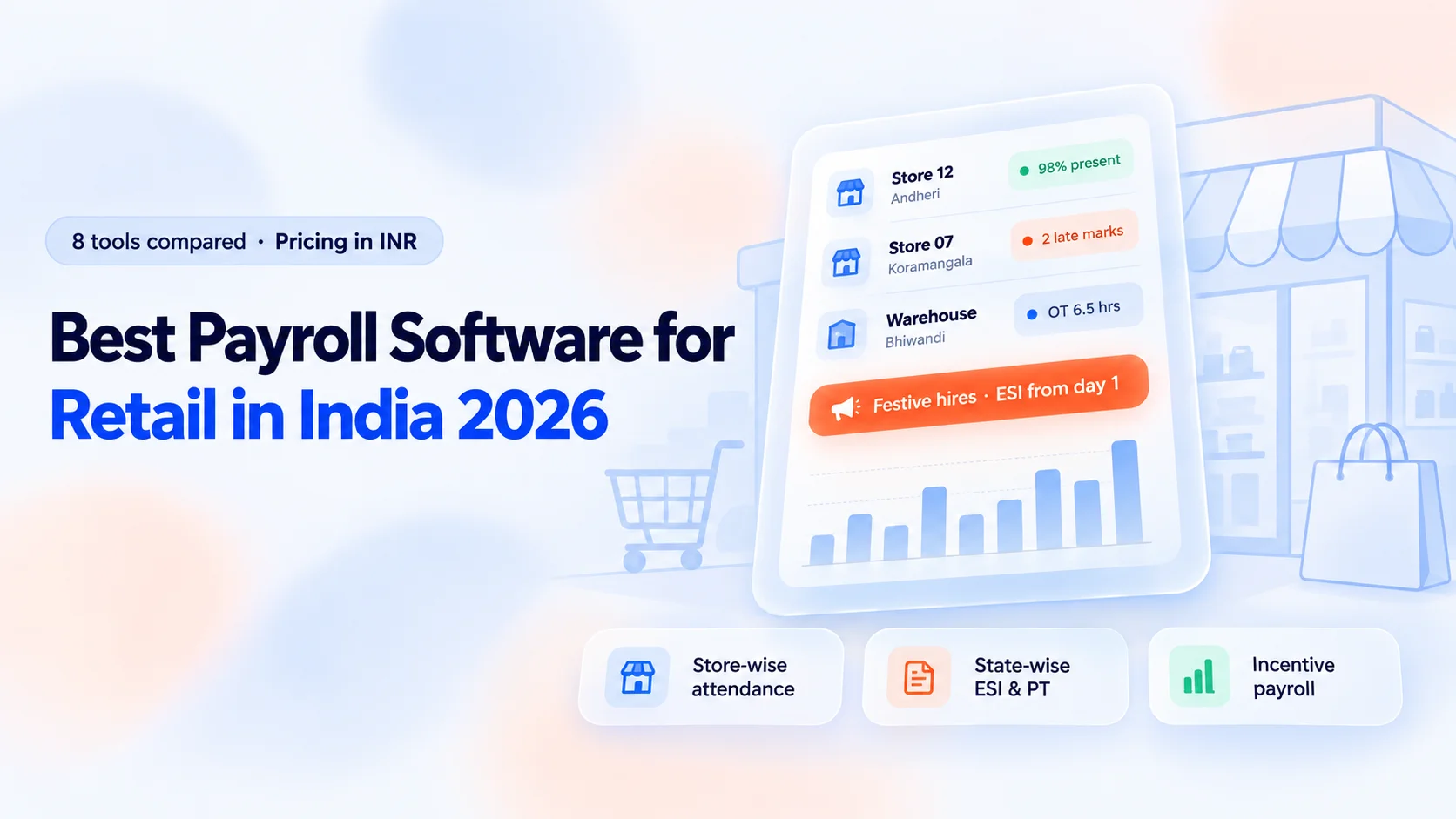
Retail payroll is a chain of small payrolls that all have to close on the same day. Every store sits under its own state Shops and Establishments Act, its own professional tax slab and its own minimum wage. Associates earn under the ESI ceiling, incentives change with store sales, festive hiring doubles headcount for eight weeks, and attrition means the joiner list and the exit list are both long every month. This guide ranks the best payroll software for retail in India, eight platforms graded on what a chain actually needs, with real pricing.
Short Answer
factoHR India and greytHR are the strongest all-round picks for Indian retail because they combine store-wise attendance, state-wise statutory and incentive payroll with a price a chain can scale. HROne fits large multi-brand retailers, Keka and Zimyo fit modern mid-size chains, Qandle fits growing chains that want modular HR, and Pocket HRMS and Kredily fit small retailers moving off spreadsheets.
Key Takeaways
- Retail payroll needs store-wise attendance, state-wise Shops and Establishments and professional tax rules, incentive payroll and fast joiner and exit processing.
- factoHR India and greytHR lead for all-round fit; HROne for large multi-brand retailers; Keka and Zimyo for mid-size chains; Qandle for modular growth; Pocket HRMS and Kredily for small retailers.
- Most store staff earn under the Rs 21,000 ESI ceiling, so ESI is the biggest statutory line after PF; the EPF ceiling is now Rs 25,000.
- Festive temporary hires are employees from day one for PF and ESI, and agency staff still carry principal-employer liability.
- Weekly off, daily hours and women on late shifts are governed by each state's Shops and Establishments Act, so attendance rules must be store-specific.
- Budget roughly Rs 40 to Rs 150 per employee per month; the saving is in incentive accuracy and penalty avoidance.
- Pilot a cluster of stores through one full month, including a festive week, before switching the chain.
Why Generic Payroll Software Breaks in Retail
- Every store is a separate compliance unit: Shops and Establishments registration, weekly-off rules, daily and weekly hour limits and women's late-shift conditions differ by state. A chain across six states runs six rulebooks.
- Professional tax by store state: a store associate in Karnataka and one in Maharashtra attract different slabs and filing calendars, and transfers between stores change the slab.
- Minimum wages by state and zone: shop and commercial establishment minimum wages revise twice a year, and a city zone pays more than a rural one.
- Incentives linked to store sales: target-based incentives, spiffs and attendance bonuses change every month and need data from the POS or sales report, not a flat figure.
- Festive hiring bursts: temporary staff for eight weeks still need UAN, ESI registration and payslips from day one, and agency staff carry principal-employer liability.
- High attrition: joiner and exit volumes are high every month, and the Code on Wages requires wages due at exit within two working days of resignation.
- Store-level attendance: a biometric device per store or a mobile punch with geo-fence has to feed payroll without a regional manager re-typing a register.
The 50 percent wage rule in the new Labour Codes also raises the PF and gratuity base for allowance-heavy store salaries, because wages must now be at least half of total pay.
How We Graded These Platforms
- Store attendance to payroll: geo-fenced mobile punch or biometric per store, weekly-off rules, late marks and overtime.
- State-wise statutory: PF at the Rs 25,000 ceiling, ESI, professional tax and labour welfare fund per store state, Shops and Establishments registers.
- Incentive payroll: target-based incentives, attendance bonus and clawbacks in the same run.
- Joiner and exit speed: bulk onboarding with UAN and ESI, two-day final settlement.
- Multi-store control: store, cluster and region reporting, cost per store, finance integration.
- Price and support: transparent per-employee pricing that scales with store count.
Quick Comparison: Payroll Software for Retail
| Tool | Best for | Standout strength | Watch-out | Starting price |
|---|---|---|---|---|
| factoHR India | Chains wanting store attendance and payroll in one | Geo-fenced store punch into incentive payroll | Advanced analytics are add-ons | Around Rs 4,999/mo (up to 50 staff) |
| greytHR | Chains wanting statutory accuracy first | State-wise PT, ESI and S&E registers | Lighter store-attendance features | Free up to 25; paid from Rs 1,495/mo |
| HROne | Large multi-brand retailers | Multi-entity payroll and audit trails | Enterprise tier is quote-based | Around Rs 85 to 130 per emp/mo |
| Keka | Modern mid-size chains | Clean payroll review and employee app | Priced per 100 employees | Around Rs 6,999/mo (up to 100) |
| Zimyo | Mid-size chains wanting one suite | Payroll plus HR at per-employee pricing | Device integration varies by store | Rs 60 to Rs 160 per emp/mo |
| Qandle | Growing chains adding modules | Modular pricing, good employee app | Advanced modules add up | Rs 49 to Rs 100 per emp/mo |
| Pocket HRMS | Small retailers on a budget | Low entry price, statutory basics | Thinner incentive logic | Around Rs 2,495/mo (up to 50) |
| Kredily | Single-store and micro retailers | Free core payroll and attendance | Limited multi-store depth | Free core plan |
Prices are indicative for 2026 and depend on headcount, modules and contract term. Confirm a live quote. Store punches are the raw material of retail payroll: a biometric or geo-fenced punch that lands in an attendance management system built for multi-location teams becomes the incentive and overtime line without a regional manager retyping a register.
The 8 Best Payroll Software for Retail in India (2026)
1. factoHR India
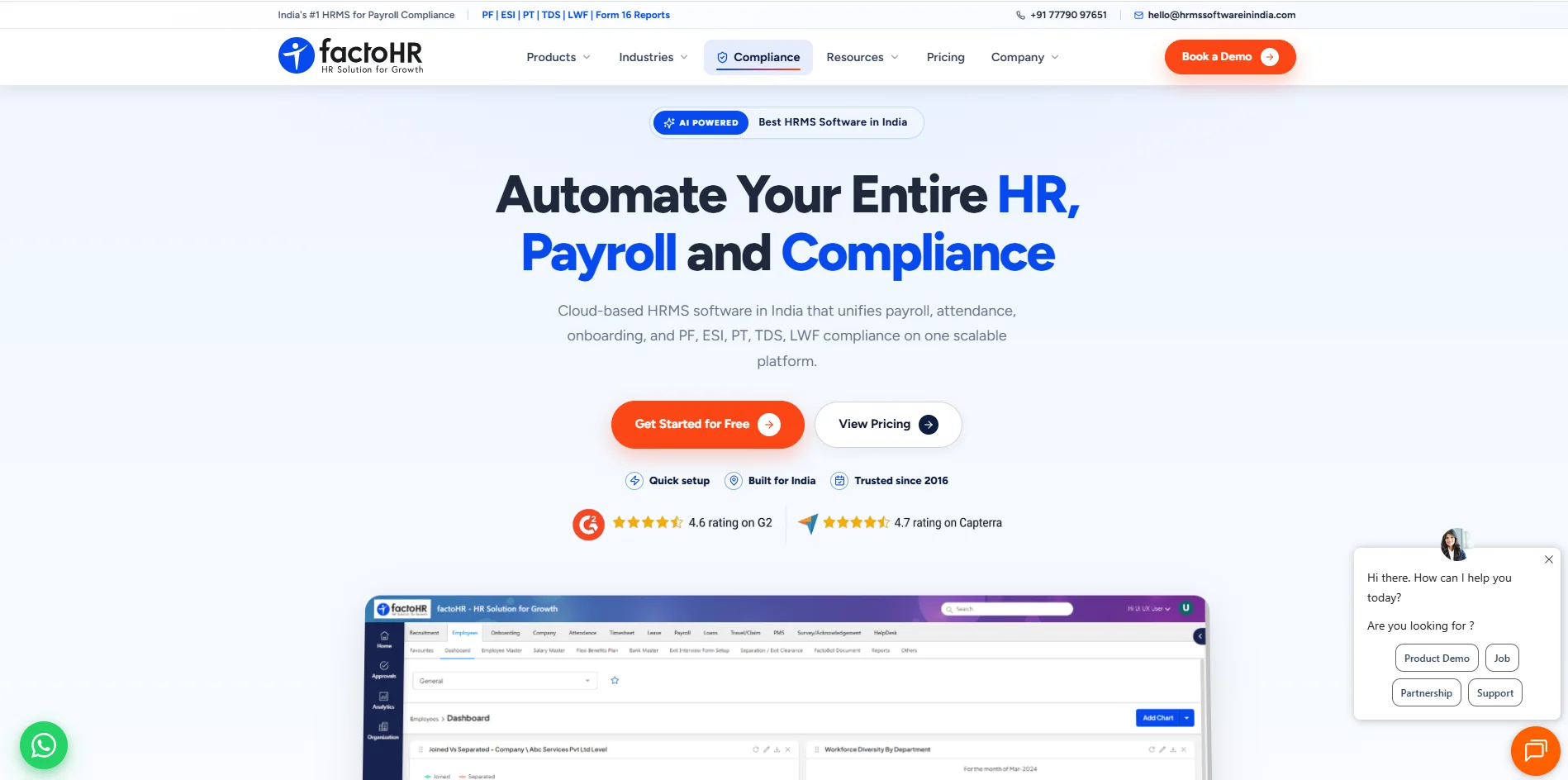
factoHR India is a payroll and HR platform built for multi-location, high-attrition workforces, which is retail in one sentence. Store staff punch in on a geo-fenced mobile app or a store biometric, weekly-off and late-mark rules are set per state, and the attendance flows into incentive payroll with the right professional tax and ESI for that store's state. Bulk onboarding with UAN and ESI registration handles the festive hiring burst, and the two-day final settlement is routine because leave and attendance already sit with payroll. It is the strongest fit for a chain that wants store attendance, incentives and compliance in one system, which is why it tops this list. What a chain is really buying is payroll software that files PF, ESI and state professional tax from one register, so a store in Pune and a store in Bengaluru close on the same day with their own slabs.
Key features:
- Geo-fenced mobile punch and store biometric with offline sync
- Store-specific weekly-off, hours and late-mark rules by state
- Incentive, attendance bonus and clawback payroll in one run
- Professional tax and ESI by store state, PF at the Rs 25,000 ceiling, LWF
- Bulk joiner onboarding with UAN and ESI for festive hiring
- Final settlement with leave encashment and recoveries within two working days
- Store, cluster and region cost reports with Tally export
- Employee mobile app with payslips, leave and shift view
Best suited for: retail chains from 10 to 500-plus stores that want attendance, incentives and compliance on one platform.
Watch-out: some advanced analytics and recruitment modules are priced as add-ons.
Pricing: free for up to 20 employees; transparent plans from around Rs 4,999 a month for up to 50 employees.
2. greytHR
greytHR handles state-wise professional tax, ESI, PF and Shops and Establishments registers with the accuracy of two decades in Indian payroll, which is why many retail finance teams start here. Attendance can be imported from store devices, and the employee portal covers payslips and declarations. Store-level attendance features are lighter than the attendance-first tools, so it pairs best with an existing device setup.
Key features:
- State-wise PT, ESI, PF and LWF with automatic rate updates
- Shops and Establishments registers by state
- Attendance import from store biometrics
- Incentive and arrears components in payroll
- Form 138, Form 16 and full-and-final computation
- Employee portal and mobile app
Best suited for: chains that want statutory accuracy first and already have store devices.
Watch-out: geo-fenced mobile attendance and incentive logic are lighter.
Pricing: free for up to 25 employees; paid plans from about Rs 1,495 a month.
3. HROne
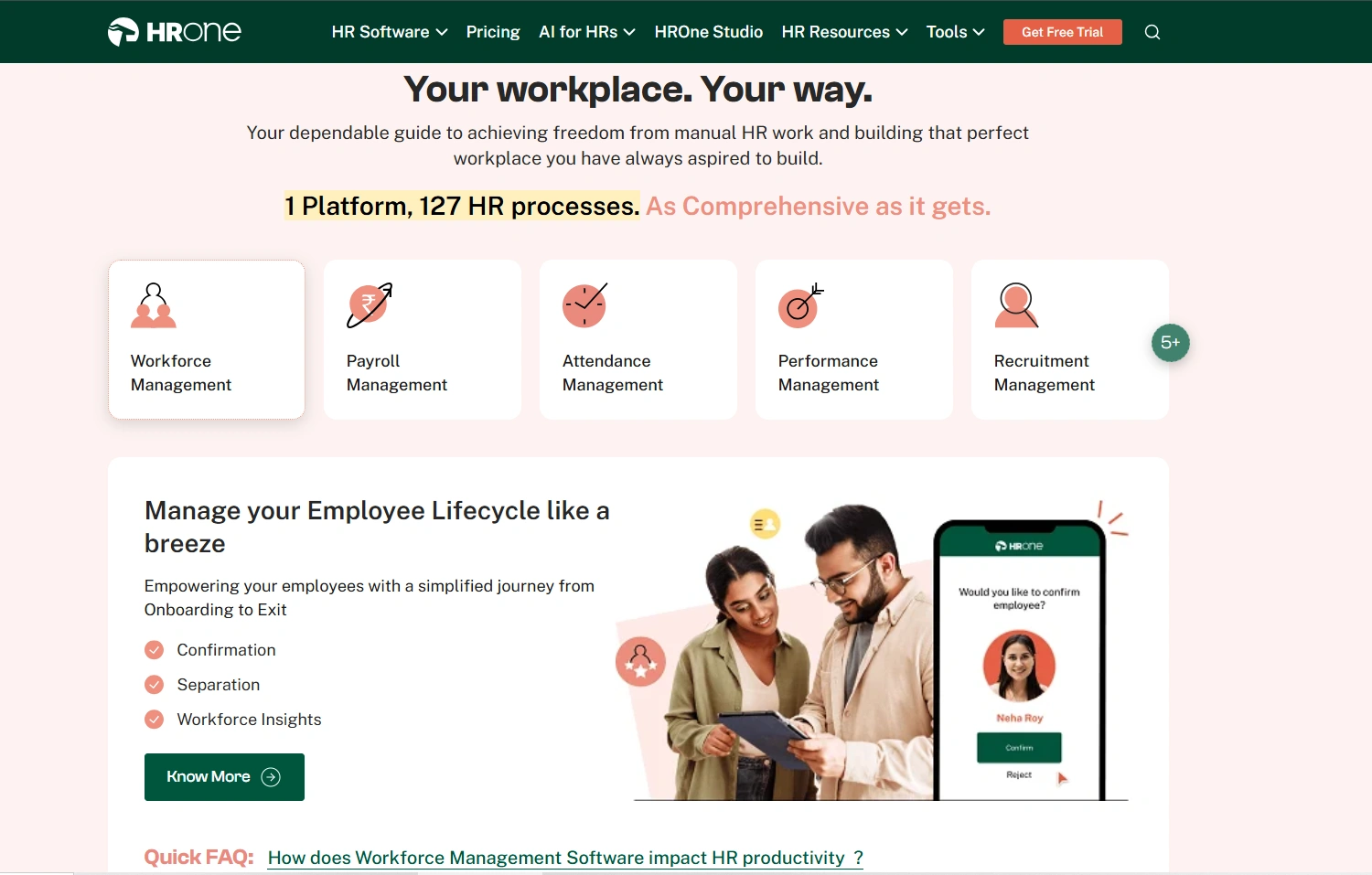
HROne is a hire-to-retire suite with multi-entity payroll, which suits a retailer running several brands or formats under different legal entities. State-wise statutory, audit trails and approval workflows for store managers and regional HR are strong. It fits a large chain with a corporate HR team that wants one platform across brands.
Key features:
- Multi-entity, multi-state payroll with consolidated reports
- Store and region approval workflows
- Mobile attendance for store and field staff
- Incentive, arrears and exit processing
- PF, ESI, PT, LWF, TDS and Form 138 automation
- Audit logs on every payroll change
Best suited for: large multi-brand retailers with 1,000-plus employees.
Watch-out: the enterprise tier is quote-based.
Pricing: roughly Rs 85 to Rs 130 per employee per month by tier.
4. Keka
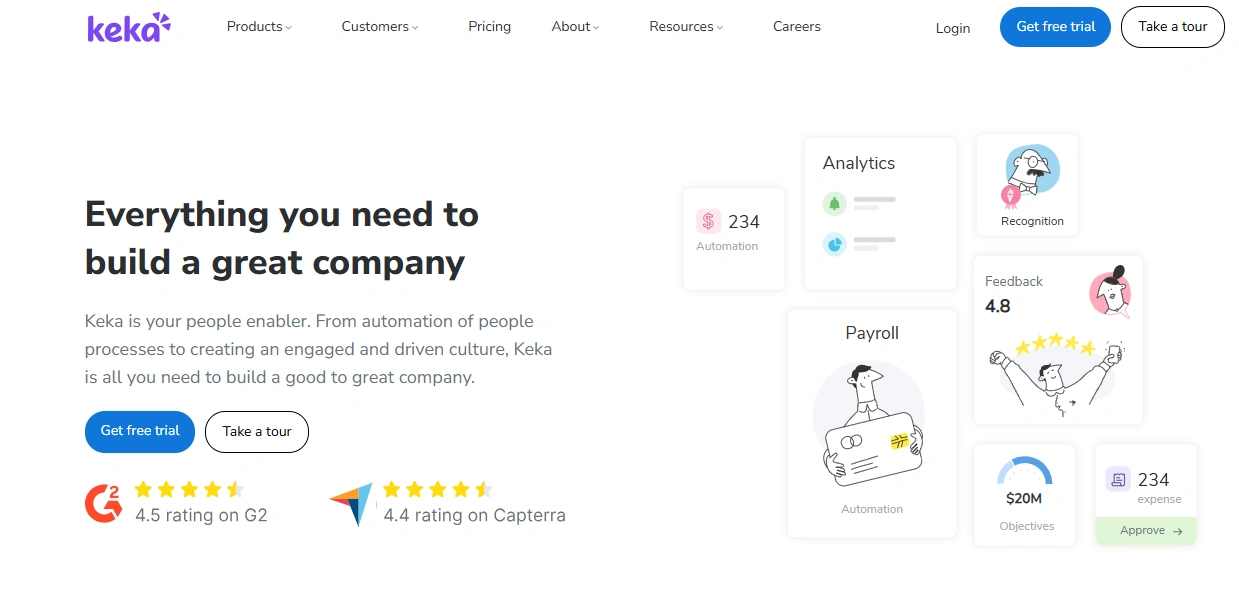
Keka gives a mid-size chain a modern employee app, geo-fenced attendance and a payroll review screen that highlights variances before the bank file is cut. Incentive components and arrears are handled in the run, and the HR modules cover performance and engagement for store teams. It suits a chain that wants store managers and associates to use the app daily.
Key features:
- Geo-fenced mobile attendance and shift schedules
- Payroll review with variance highlights
- Incentive, arrears and reimbursement components
- PF, ESI, PT, TDS and Form 138
- Performance and engagement for store teams
Best suited for: mid-size chains with 100 to 1,000 employees.
Watch-out: pricing steps in blocks of 100 employees.
Pricing: plans start around Rs 6,999 a month for up to 100 employees.
5. Zimyo

Zimyo packages payroll, attendance, leave and performance at per-employee pricing, which makes the cost predictable as stores are added. Geo-fenced attendance and incentive components are supported, and the statutory engine covers Indian needs. It fits a mid-size chain that wants one vendor without enterprise pricing.
Key features:
- Per-employee pricing across payroll and HR modules
- Geo-fenced and biometric attendance
- PF, ESI, PT, TDS and Form 138
- Incentive and expense handling
- Employee app and manager approvals
Best suited for: mid-size chains of 100 to 800 employees wanting one suite.
Watch-out: store device integration varies.
Pricing: around Rs 60 to Rs 160 per employee per month by plan.
6. Qandle
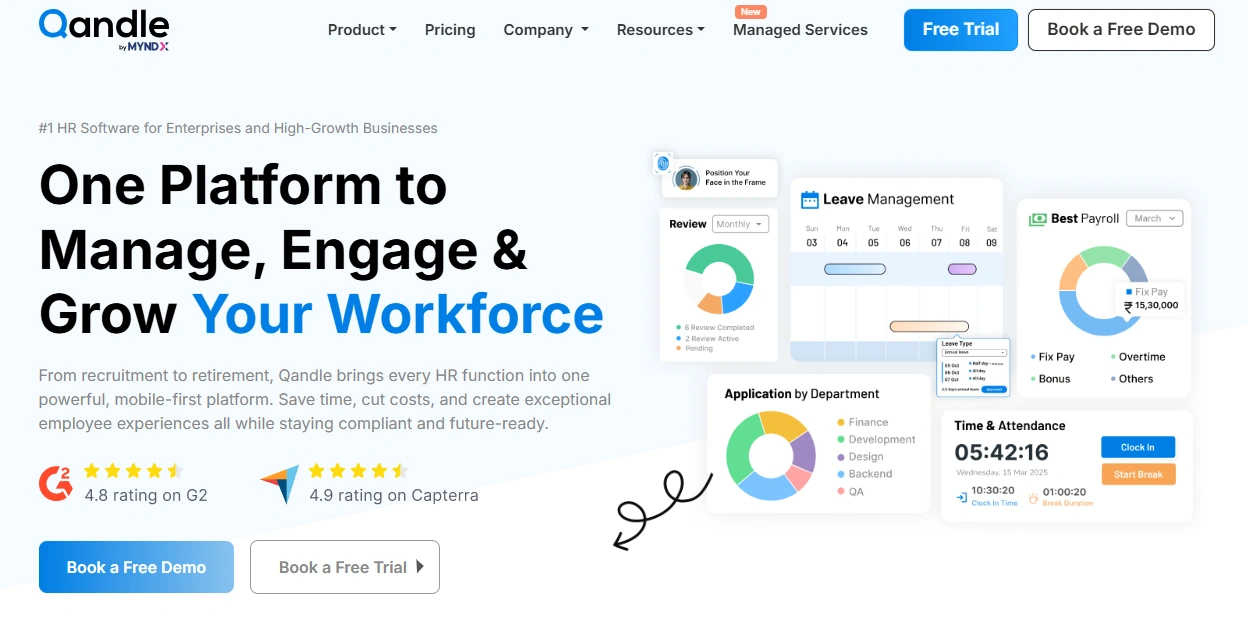
Qandle lets a growing chain start with payroll and attendance and add performance, recruitment and engagement as the business scales. The employee app is polished and the statutory engine covers PF, ESI, PT and TDS. Modular pricing keeps the entry cost low for a chain that is still adding stores.
Key features:
- Modular payroll, attendance, leave and performance
- Geo-fenced mobile attendance
- PF, ESI, PT, TDS, Form 138 and Form 16
- Polished employee app
Best suited for: growing chains that want to add modules over time.
Watch-out: advanced modules add up.
Pricing: around Rs 49 to Rs 100 per employee per month by plan.
7. Pocket HRMS
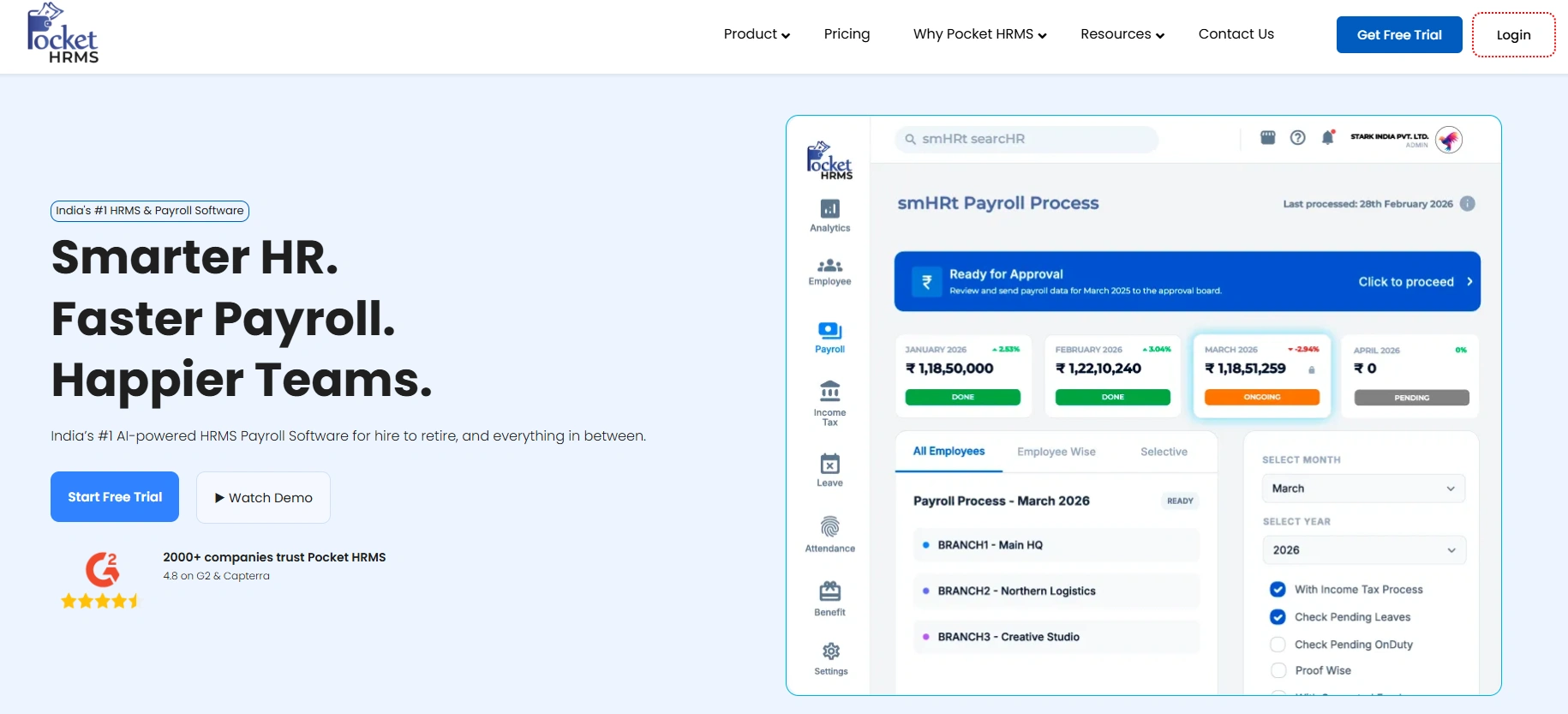
Pocket HRMS is a low-cost Indian payroll suite that gets a small retailer off spreadsheets with compliant payslips, ESI and PF challans and basic attendance. It is a sensible first platform for a retailer with a handful of stores and under 200 employees.
Key features:
- PF, ESI, PT and TDS with statutory reports
- Attendance and leave with biometric integration
- Payslips, Form 16 and bank files
- Employee self-service on mobile
Best suited for: small retailers with a few stores and a tight budget.
Watch-out: incentive logic and multi-store reporting are thinner.
Pricing: plans start around Rs 2,495 a month for up to 50 employees.
8. Kredily
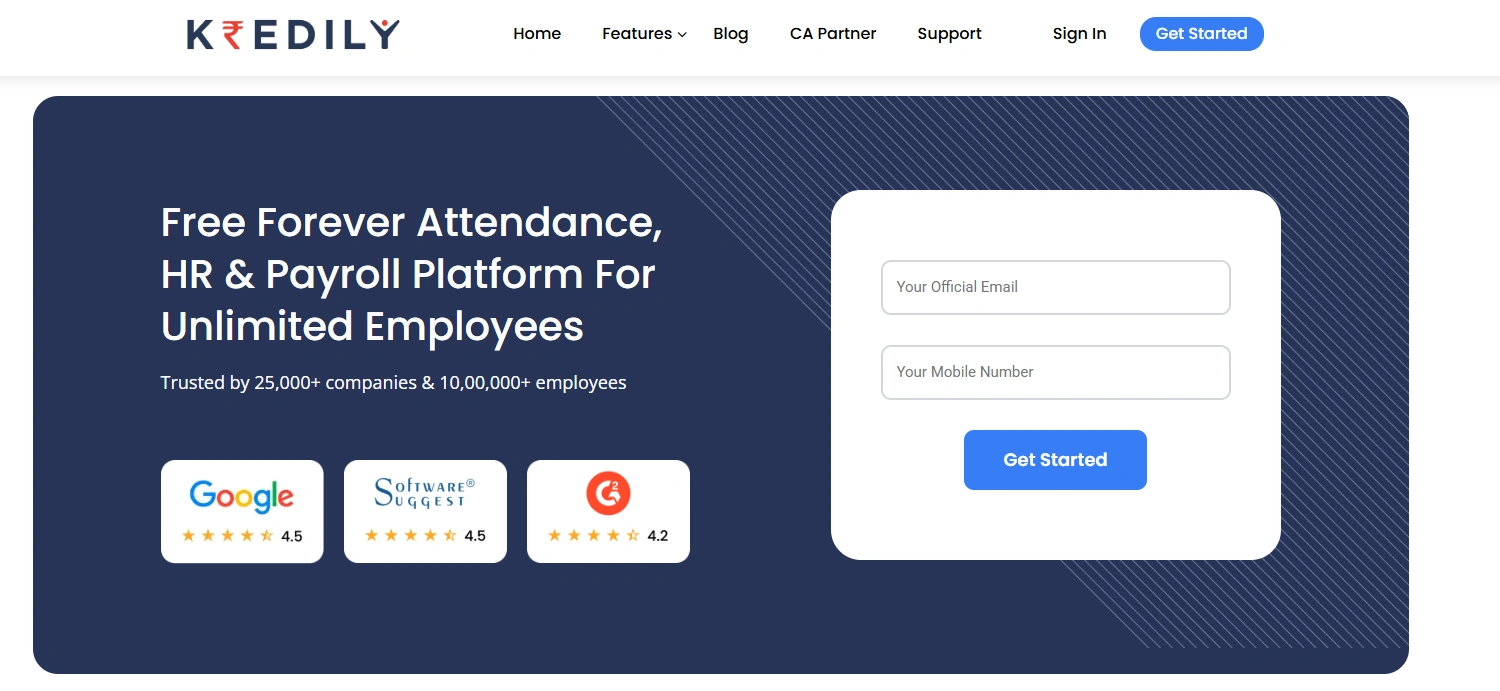
Kredily offers free core payroll and attendance, which makes it the realistic first step for a single-store or micro retailer. Statutory basics and payslips are covered, and paid add-ons unlock more. Multi-store depth and incentive logic are limited.
Key features:
- Free core payroll with PF, ESI, PT and TDS
- Mobile attendance and leave
- Payslips and bank files
- Paid add-ons for advanced features
Best suited for: single-store and micro retailers under 50 employees.
Watch-out: limited multi-store and incentive depth.
Pricing: free core plan; paid add-ons for advanced features.
What Retail Payroll Really Costs in 2026
Most store associates earn under the Rs 21,000 ESI ceiling, so PF and ESI both apply. Store managers and senior associates on Rs 15,000 to Rs 25,000 came into mandatory PF when the EPF wage ceiling was raised to Rs 25,000 in September 2026, which most retail CTC sheets have not caught up with. Here is a worked example for a store associate earning Rs 14,000 gross a month with a basic of Rs 7,000, showing the employer statutory cost:
| Item (per associate) | Rate | Monthly |
|---|---|---|
| Employer EPF plus EPS | 12% of basic | Rs 840 |
| Employer ESI | 3.25% of gross | Rs 455 |
| EDLI plus admin | ~1% of basic | Rs 70 |
| Professional Tax | State slab | Rs 200 |
| Employer statutory outgo | Total of the above | Rs 1,565 |
| For 120 such associates | Total x 120 | Rs 1,87,800 a month |
Incentives sit on top and in a festive month can rival fixed pay for a strong store. Gratuity accrues at roughly 4.81 percent of basic for staff who stay past five years. Across 30 stores in four states, a wrong professional tax slab or a missed ESI registration for a festive hire compounds fast, which is why state-wise automation matters. A festive month has more joiners, more ESI registrations and the same due dates: PF and ESI by the 15th, TDS by the 7th, professional tax on each state's own calendar. Keeping the full 2026-27 payroll due-date calendar in front of the store HR team, and closing each month against a payroll compliance checklist, is how a 30-store chain avoids 7Q interest on one missed challan.
How to Choose by Chain Size
- Single store or small retailer, under 100 employees: prioritise statutory accuracy and low cost. Kredily, Pocket HRMS, greytHR or factoHR India on the starter tier fit well.
- Regional chain, 100 to 1,000 employees: you need geo-fenced store attendance, state-wise PT and incentive payroll. factoHR India, Keka, Zimyo or Qandle are the sweet spot.
- National or multi-brand chain, 1,000-plus employees: you need multi-entity payroll, audit trails and region reporting. HROne or factoHR India at enterprise scale are built for this.
Whatever the size, the right payroll software for retail is decided by store attendance, state-wise statutory and incentive accuracy, not app polish. Payroll is one of five things a store team needs from software; rostering, onboarding kits, policy acknowledgments and manager approvals are the rest, which is why HR software built for retail and FMCG is judged on the store floor, and why the wider shortlist of retail HR platforms looks different from this payroll list.
Implementation: What to Expect
- Store master and state rules: load every store with its state, Shops and Establishments registration, weekly-off pattern and PT slab before anyone punches in.
- Attendance rollout: choose geo-fenced mobile or store biometric per format, set grace periods and late-mark rules, and test a week of punches in a pilot cluster.
- Incentive rules: map target-based incentives, attendance bonus and clawbacks to the data source, usually the POS or a monthly sales file.
- Festive readiness: set up bulk onboarding templates with UAN and ESI so the seasonal burst does not become a compliance gap.
- Parallel run: one full month on a pilot cluster, reconcile ESI, PT and incentives store by store, then roll out region by region. Expect four to eight weeks for a regional chain.
Frequently Asked Questions
Which Payroll Software Is Best for Retail in India?
For most Indian retail chains, factoHR India and greytHR are the strongest all-round choices because they combine store-wise attendance, state-wise statutory and incentive payroll at a price that scales with stores. HROne fits large multi-brand retailers, Keka and Zimyo fit mid-size chains, Qandle fits growing chains, and Pocket HRMS and Kredily fit small retailers.
Do Festive Temporary Staff Need PF and ESI?
Yes. A temporary associate hired for the festive season is an employee from day one. PF applies if wages are up to Rs 25,000 and the establishment is covered, and ESI applies if gross is up to Rs 21,000 and the store is in a covered area. Agency staff are paid by the agency, but the retailer remains liable as principal employer if the agency defaults.
How Does Professional Tax Work Across Stores?
Professional tax is a state levy on the place of work, so each store's state decides the slab and the filing calendar. Transfers between stores in different states change the slab from the month of transfer. A Karnataka store deducts Rs 200 only above Rs 25,000, a Maharashtra store deducts Rs 200 above Rs 10,000 with Rs 300 in February, and Tamil Nadu bills half-yearly; each state's professional tax slab decides the line on the payslip, not head office.
Can It Run Store Incentives in Payroll?
The stronger platforms accept a monthly incentive file or integrate with the POS and compute target-based incentives, attendance bonus and clawbacks in the same run as salary, with TDS applied on the total.
How Much Does Retail Payroll Software Cost?
Budget roughly Rs 40 to Rs 150 per employee per month depending on modules. Entry plans start free or around Rs 1,495 to Rs 4,999 a month for small retailers; enterprise tiers for national chains are quote-based.
What Shops and Establishments Rules Affect Store Payroll?
Each state's Act sets daily and weekly hour limits, overtime rates, weekly off, opening hours and conditions for women working late. Attendance rules in the software have to be store-specific so the register the inspector asks for matches what was paid.
How Fast Must Final Settlement Be?
The Code on Wages requires wages due at exit to be paid within two working days of resignation. With retail attrition, that only works when leave balances, advances and recoveries live in the same system as payroll.
How Long Does Implementation Take?
Four to eight weeks for a regional chain with clean store masters; two to four months for a national chain with multiple entities and device rollout. Pilot a cluster through one full month, ideally including a festive week, before switching the chain.
Final Word
Retail payroll is a hundred small payrolls that have to close on one day, and the state map decides whether they close clean. factoHR India and greytHR lead for all-round fit, HROne for large multi-brand retailers, Keka and Zimyo for mid-size chains, Qandle for modular growth, and Pocket HRMS and Kredily for small retailers. Shortlist two or three, pilot a cluster through a festive month, and roll out region by region once ESI, professional tax and incentives reconcile store by store. The quickest test is one festive month of your own store data run end to end; a free factoHR India demo does that on a live screen, store by store.